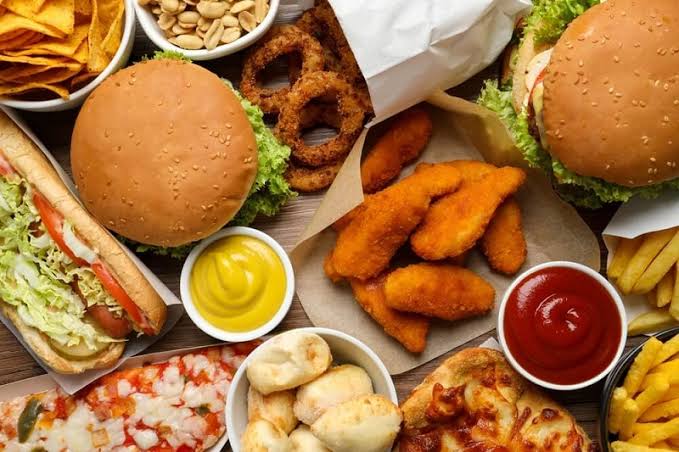
During a recent community workshop hosted by Caribbean agricultural non-profit Helen’s Daughters, University of the West Indies senior lecturer and program director Dr. Kadamawe Knife shared a provocative observation that has lingered with event attendee and Helen’s Daughters founder Keithlin Caroo-Afrifa: substandard, heavily imported food supplies are contributing to more preventable deaths across the Caribbean than gun-related violence. The comment lands with particular weight in Saint Lucia, where widespread public outcry and targeted policy action have long centered on the visible, traumatic toll of gun violence, which dominates local headlines, ravages marginalized communities, and leaves countless families reeling in public, shared grief. Yet Dr. Knife’s remark forces a difficult, long-overdue reckoning with a far quieter, normalized wave of loss: the thousands of annual deaths that unfold unremarkably in hospital wards and private homes, written off as inevitable outcomes of age or pre-existing illness, even as they claim working-age people in their prime. The Saint Lucian Ministry of Health’s official public health data confirms that noncommunicable diseases (NCDs) – including cardiovascular conditions, stroke, type 2 diabetes, and multiple forms of cancer – make up more than 80% of all recorded fatalities across the island. For context, the Organization of American States documented 73 homicide deaths in Saint Lucia in 2024, a staggering, unacceptable toll of human life that no one seeks to minimize. Every lost life, whether to gun violence or chronic diet-related illness, carries equal weight, and every grieving family deserves full public support and recognition. This framing is not an attempt to rank one tragedy as more urgent than the other, but to interrogate a stark double standard in public policy: why do highly visible, violent threats trigger immediate, coordinated government responses, while slow-moving, diet-linked public health crises are dismissed as unavoidable personal misfortune? The data does not claim that poor diet alone causes every NCD death, just as not all homicides involve firearms: tobacco use, excessive alcohol consumption, sedentary lifestyles, and genetic predispositions all play documented roles in chronic disease development. Even so, decades of peer-reviewed public health research confirm that unbalanced, nutrient-poor diets are a leading modifiable risk factor for preventable NCD mortality. All too often, casual local discourse frames small amounts of added sugar or mild high blood pressure as trivial, harmless inconveniences, ignoring the cascading societal costs: lost workplace productivity, overstretched family caregivers, and entire households forced to restructure their lives around long-term chronic illness management. Familiarity with these outcomes should never be misread as an unavoidable, unchangeable reality. Equally harmful is the pervasive myth that healthy eating is purely a matter of personal willpower and individual discipline. A 2023 United Nations food security report found that 52% of all Caribbean residents could not afford a nutritionally adequate, balanced diet as far back as 2020, meaning more than half the regional population is effectively locked out of accessible healthy eating options regardless of their personal choices. Telling a low-income Saint Lucian household to prioritize fresh leafy greens and local root vegetables is meaningless when those same households must choose between buying produce and covering their monthly electricity bills. Not all imported food is inherently unhealthy, nor is every locally grown crop automatically nutrient-dense: affordability, geographic access, and daily convenience are the primary forces that shape what ends up on the average family’s dinner plate. These barriers are not accidental, but the legacy of centuries of colonial agricultural policy that structured Caribbean food systems entirely around export crops for overseas markets, at the direct expense of developing robust local food production for domestic consumption. The region inherited a food economy built for extraction, not community sustenance – and post-independence governments have rarely done enough to dismantle that legacy and build systems designed first and foremost to feed local populations. This is why Caroo-Afrifa argues that the agricultural sector should no longer be valued solely as a profit-driven economic industry, but recognized as a core public health public good. A reimagined local food system would center nutritional outcomes as a key metric of success, not just total crop tonnage, and prioritize integrating local smallholder farmers into reliable, institutional supply chains for schools, public hospitals, and government food assistance programs. This model is already being piloted through Helen’s Daughters’ cross-community programming, which pairs hands-on sustainable farming training for women smallholders with public nutrition education, community cooking demonstrations, and simplified, budget-friendly recipes designed to make local produce accessible and easy to prepare for time-strapped working families. The organization’s work goes far beyond helping women farmers sell their harvests: it closes the gap between a vegetable sitting on a market stall and that vegetable becoming a nourishing meal on a family dinner table. For fresh produce to deliver public health benefits, households must be able to afford it, know how to cook it in appealing, time-efficient ways, and fit meal preparation into already overcrowded daily schedules of work and caregiving. This vision does not demand a full, unrealistic return to the arduous traditional agrarian lifestyles of previous generations; instead, it adapts longstanding Caribbean culinary traditions and local food knowledge to fit the realities of 21st century working life. Tradition and modern convenience do not have to be opposing forces, and the sectors of agriculture, public health, and education do not need to operate in isolated silos. The measure of a successful local food system is not how much it can export for overseas profit, but how effectively it supports the entire population to live long, healthy lives. This approach does not ask small-scale farmers to single-handedly solve the national public health crisis, or replace evidence-based clinical medical care with generic dietary advice. It simply requires centering preventative public health priorities at every stage of the food supply chain, from farm production to retail distribution to public institutional meal services. Public safety cannot be achieved through policing and law enforcement alone. Some of the most transformative, life-saving public investments will be made on small family farms, in public school kitchens, and at neighborhood community markets. A nation cannot call itself truly secure just because its residents are protected from violent harm: it must also guarantee every citizen a fair, equal opportunity to live a long, thriving life free from preventable chronic illness. For a region that proudly markets itself as a tropical paradise, that basic standard of collective wellbeing should not be an unreasonable, unachievable demand.