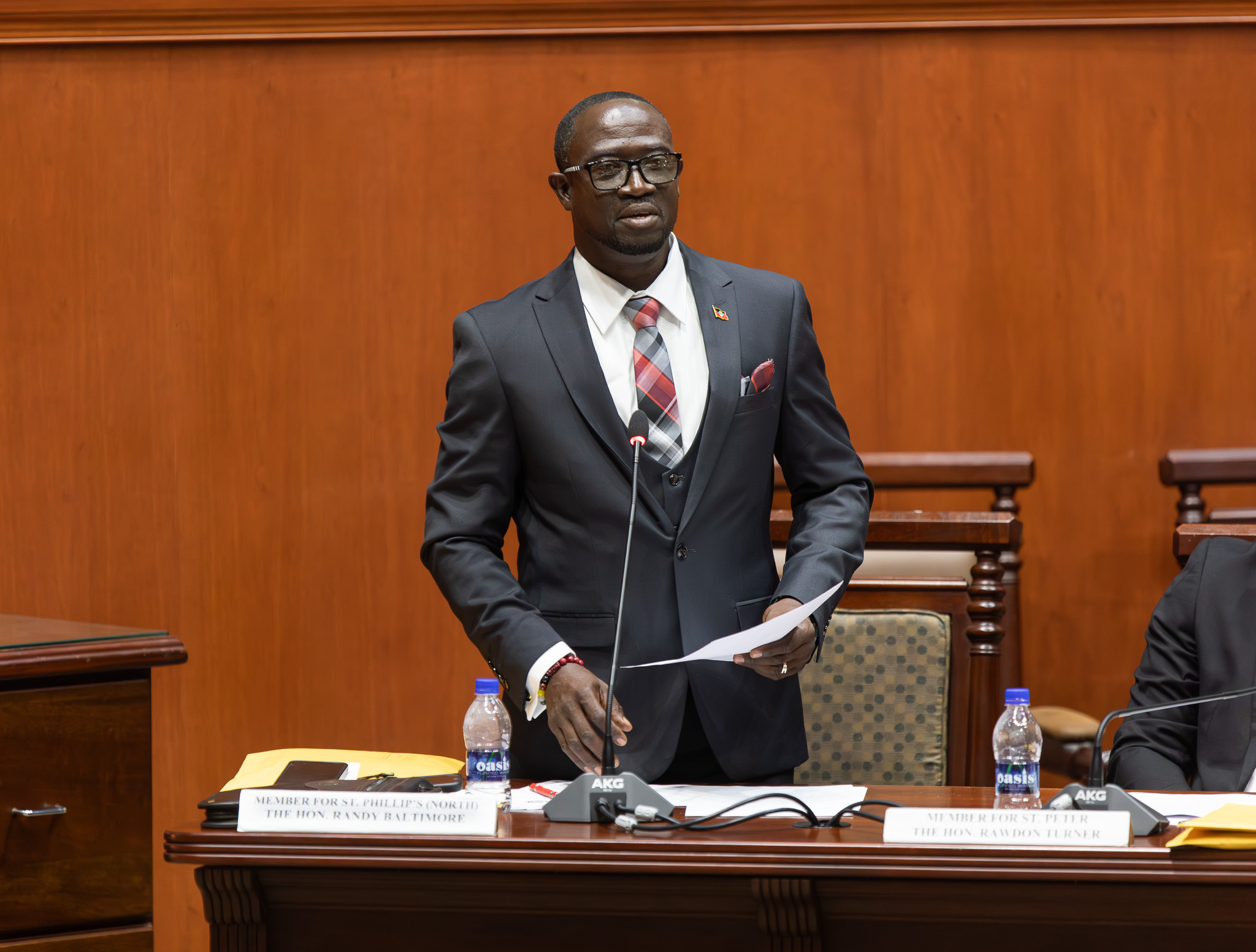
A high-level Commonwealth panel focused on shared ocean stewardship for small island developing states recently brought together senior government representatives from Caribbean and Pacific nations, alongside global marine conservation stakeholders. Hosted under the facilitation of Blue Marine Foundation CEO Clare Brook, the discussion featured prominent addresses from Antigua and Barbuda’s Minister of State in the Ministry of Agriculture, Lands, Fisheries and the Blue Economy, the Honourable Randy Baltimore, and Tonga’s Prime Minister Lord Fatafehi Fakafanua.
Minister Baltimore opened his remarks by laying out the cascading threats eroding Caribbean marine ecosystems, with unregulated overfishing and plummeting wild fish stocks emerging as the most immediate, pressing risks. He contextualised these regional trends within Antigua and Barbuda’s unique local realities, warning that widespread degradation of coastal and offshore marine habitats would trigger catastrophic ripple effects across two of the nation’s most critical economic pillars: the tourism sector that relies on pristine beaches and vibrant underwater attractions, and the small-scale fishing communities that have sustained generations of coastal residents. The minister stressed that robust, intact marine ecosystems are not a secondary environmental priority, but a foundational requirement for long-term national economic stability, requiring deliberate, balanced policy that protects biodiversity while supporting livelihoods tied to ocean resources.
To address these overlapping challenges, Minister Baltimore issued a formal call to action for all Commonwealth member states to move beyond superficial collaboration and establish structured, targeted knowledge-sharing frameworks for proven fisheries management and marine conservation models. He noted that small island developing states, which share disproportionate exposure to marine risks relative to their global emissions and economic output, stand to gain exponentially by adapting context-specific, locally tested solutions from peer nations rather than relying on one-size-fits-all policy frameworks designed for larger, more industrialised economies.
For his part, Prime Minister Fakafanua of Tonga centred his intervention on the existential threat of unmitigated climate change for Pacific island nations, sounding the alarm over the potentially irreversible damage to marine ecosystems that would occur if global average temperatures rise more than 1.5°C above pre-industrial baseline levels. He outlined the extreme vulnerabilities of low-lying Pacific territories, where ocean acidification, coral bleaching and rising sea levels are already displacing communities and collapsing traditional marine food supplies.
Moderator Clare Brook steered the cross-regional dialogue to bridge insights from Caribbean and Pacific island contexts, highlighting the remarkable alignment of priorities across geographically distant small island states. The panel collectively surfaced shared systemic challenges: accelerating climate disruption, rapid loss of marine biodiversity, and the persistent policy tension between enforcing strict conservation rules and preserving the sustainable economic activity that coastal communities depend on for survival. For Antigua and Barbuda, Minister Baltimore’s participation in the forum delivered a high-visibility platform to elevate the unheard perspectives of local coastal communities to a global Commonwealth audience, while building momentum for expanded international partnerships that will safeguard shared ocean resources for coming generations.