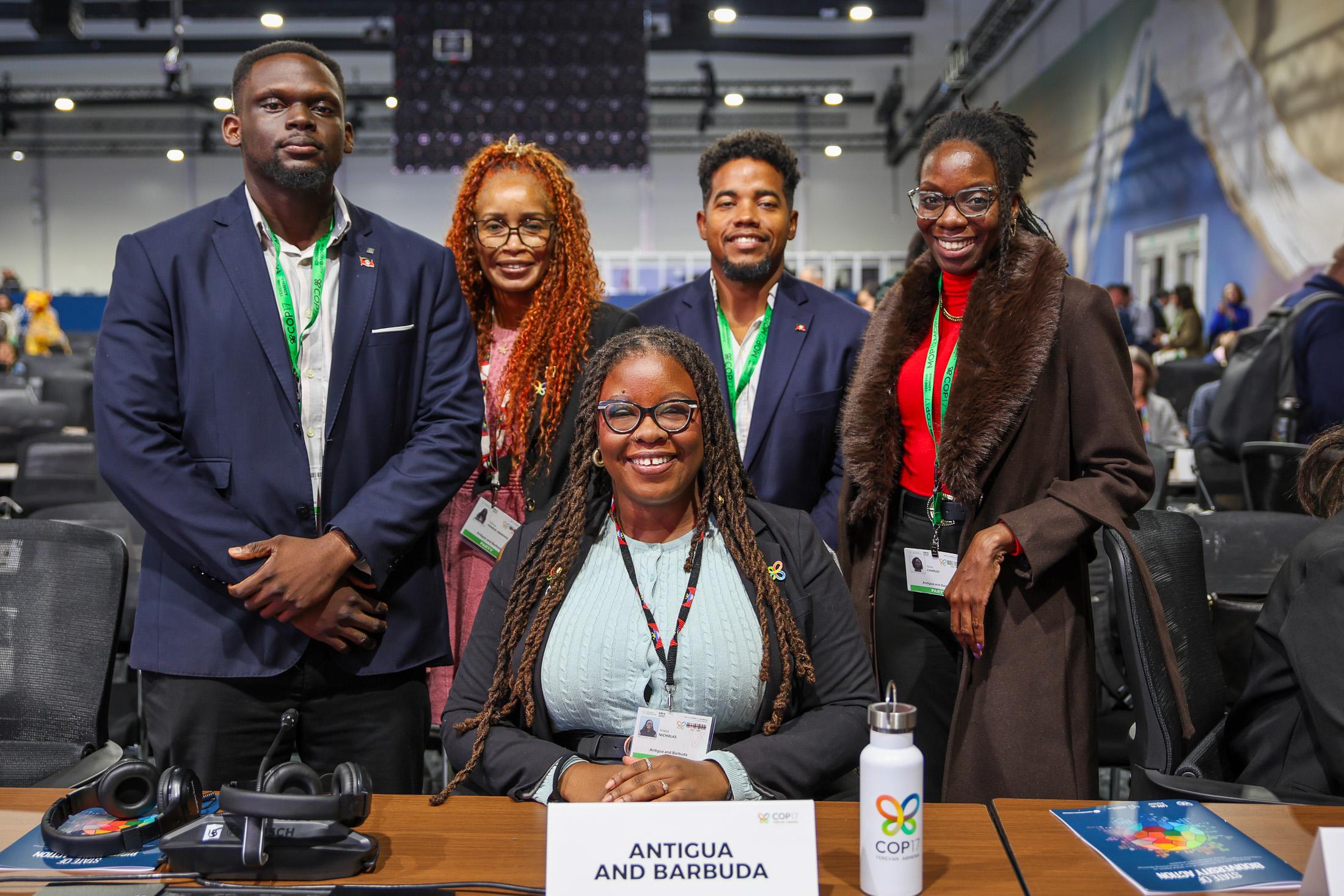
Fresh off the close of the 17th Conference of the Parties to the UN Convention on Biological Diversity (CBD COP17) in Yerevan, Armenia, Antigua and Barbuda’s official delegation has emerged as a vocal, proactive contributor to high-stakes global negotiations centered on turning the landmark Kunming-Montreal Global Biodiversity Framework from policy pledges into tangible, on-the-ground action. Running from October 19 to 30, 2026, the two-week summit gathered government representatives, conservation experts and multilateral stakeholders from across the world to tackle three core priority areas: unlocking scaled, equitable financial resources for conservation, conducting the first comprehensive global progress review of global biodiversity targets, and rolling out standardized, transparent systems for national planning, progress tracking, public reporting and collective performance auditing. Each member of Antigua and Barbuda’s delegation brought targeted expertise to advance the interests of Small Island Developing States (SIDS), which bear a disproportionate share of biodiversity loss risks but hold minimal access to the funding and technical support required to meet global conservation goals. Nneka Nicholas, Co-Chair of the Cali Fund Steering Committee, led deep-dive deliberations over digital sequence information linked to genetic resources and fair, transparent benefit-sharing structures administered via the Cali Fund, while actively participating in tense negotiations over resource mobilization and the convention’s core financial mechanism. Throughout these talks, she repeatedly underscored that developing nations cannot deliver on global biodiversity commitments without timely, unburdened, accessible funding streams that do not carry restrictive bureaucratic eligibility criteria. The Yerevan summit also marked the formal conclusion of Nicholas’s tenure as President of the fifth Meeting of the Parties to the Nagoya Protocol, where she successfully steered all formal sessions and oversaw the consensus adoption of a full suite of binding implementation decisions that strengthen the protocol’s genetic resource benefit-sharing rules. For marine specialist Ruleo Camacho, the summit’s core focus centered on safeguarding fragile marine and coastal biodiversity, as well as advancing integrated policy that addresses the inextricable links between biodiversity collapse and accelerating climate change. Camacho used his platform to draw global attention to the existential, escalating threats facing Caribbean coral reefs, which support local fisheries, coastal storm defense and tourism livelihoods for millions across the region. He also lent his support to efforts to strengthen the mandate, funding and operational capacity of the Intergovernmental Science-Policy Platform on Biodiversity and Ecosystem Services (IPBES), whose independent, peer-reviewed scientific assessments form the evidence base for nearly all national and global biodiversity policy and priority-setting. Technical policy expert Jaabari Reynolds contributed extensively to negotiations over the Global Review process and the unified global biodiversity monitoring framework, two critical tools designed to help nations of all capacities accurately measure, document and publicly report their progress against the Kunming-Montreal targets. His portfolio also covered resource mobilization negotiations, core convention budget deliberations, and the global protected areas work program, with every intervention calibrated to align global agreements with Antigua and Barbuda’s domestic conservation priorities, including expanding its national marine protected area network and protecting endemic terrestrial species. Kishma Primus-Ormond delivered a formal, widely cited plenary statement that championed expanded international partnerships and targeted technical cooperation for SIDS, pointing to the regional biodiversity risk assessment workshop recently hosted by Antigua and Barbuda as a proven, scalable model for delivering hands-on support to small island nations facing shared conservation challenges. As Co-Chair of the summit’s Biodiversity and Health Contact Group, she played a central mediating role to streamline overly complex draft decision text, resolve inter-regional disagreements, and produce a final coherent, actionable agreement that aligns public health and biodiversity protection goals. Across every working group and negotiation track, Antigua and Barbuda’s delegation framed its participation around a single overarching principle: that no global biodiversity framework can succeed if it fails to center the unique vulnerabilities, on-the-ground needs and national priorities of Small Island Developing States, which are on the front lines of both biodiversity loss and the climate crisis.
Antigua and Barbuda calls for easier access to funding to protect coral reefs, wildlife and other natural resources at global talks