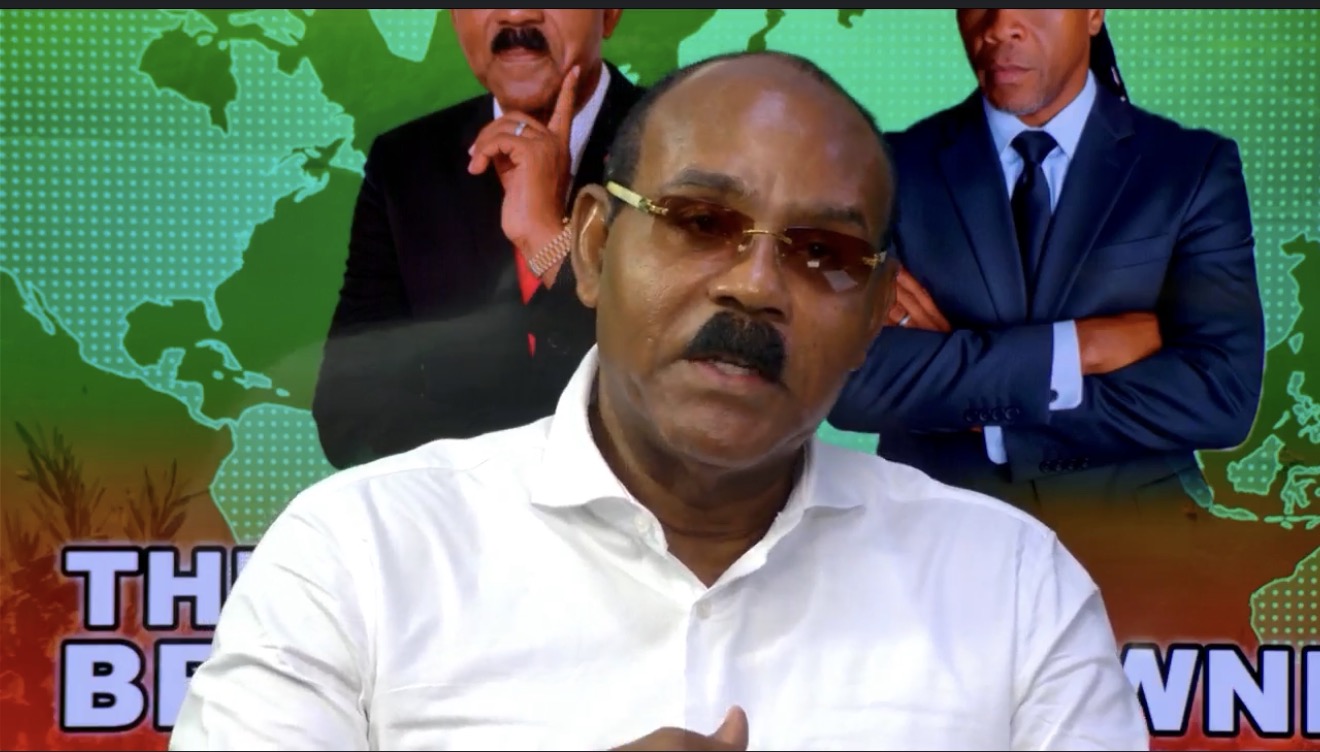
Antigua and Barbuda’s Prime Minister Gaston Browne has moved to clear widespread public confusion over the status of the country’s long-running Citizenship by Investment Programme (CIP), emphasizing that the upcoming November 12 deadline set by the European Union is not a cutoff date for the scheme to shut down, but merely the final date for the twin-island nation to formalize and submit its official negotiating position on the programme’s future to Brussels.
Addressing listeners during his weekly “Browne and Browne Show” broadcast on Saturday, Browne laid out the full timeline of ongoing negotiations with the EU, noting that the bloc initially tabled a proposal that would allow a gradual phase-out of the CIP stretching all the way to June 2028, on the condition that Antigua and Barbuda submits a formal binding commitment to that timeline by November 12. He also revealed that the original response deadline had been set for September 30, before the EU agreed to push the timeline back to give Caribbean jurisdictions more breathing room to consult domestic stakeholders.
Browne took direct aim at opposition political figures who he said had deliberately misrepresented his earlier public comments to falsely claim the CIP would be abruptly and permanently shut down on November 12, a misinformation narrative that sparked anxiety among programme applicants, industry operators and local communities that rely on the scheme for economic activity.
Instead of accepting the EU’s proposed 2028 phase-out date, the Antigua and Barbuda administration has put forward a counteroffer developed after coordinated consultations with other Caribbean regional leaders that operate their own CIP frameworks, pushing for a far longer transition window that would extend the programme’s wind-down to December 2030. Browne explained that the 4+ year extended timeline would give the government sufficient time to honor all existing binding contractual obligations with approved and pending CIP applicants, avoid costly legal disputes, and soften the blow of lost revenue to the national budget.
Beyond the extended phase-out timeline, Antigua and Barbuda has also submitted two additional formal requests to the EU: first, the funding and implementation of a comprehensive independent socioeconomic impact assessment to quantify the full downstream damage that ending the CIP and revoking Antigua and Barbuda citizens’ visa-free access to the Schengen Area would cause to the local economy, and second, targeted financial compensatory support from Brussels to offset projected annual revenue shortfalls once the programme is fully phased out. Browne noted that the CIP currently injects roughly $100 million in direct annual revenue into the national budget, a sum he described as large enough to trigger severe disruptions to core public services if lost without adequate replacement funding from the EU. “If your regulatory demand forces us to shutter a revenue stream that generates $100 million every year for our small nation, we are entitled to clarity on what budgetary support you are prepared to offer to fill that gap,” Browne stated during the broadcast.
The prime minister confirmed that no final agreement on any phase-out date has been locked in as of yet, and that the government is now waiting for formal feedback from EU negotiators on its counterproposal. He pledged to release a full public update to all residents and industry stakeholders as soon as Brussels issues its official response.
November 12 is a response deadline, not a CIP shutdown date, PM Gaston Browne says