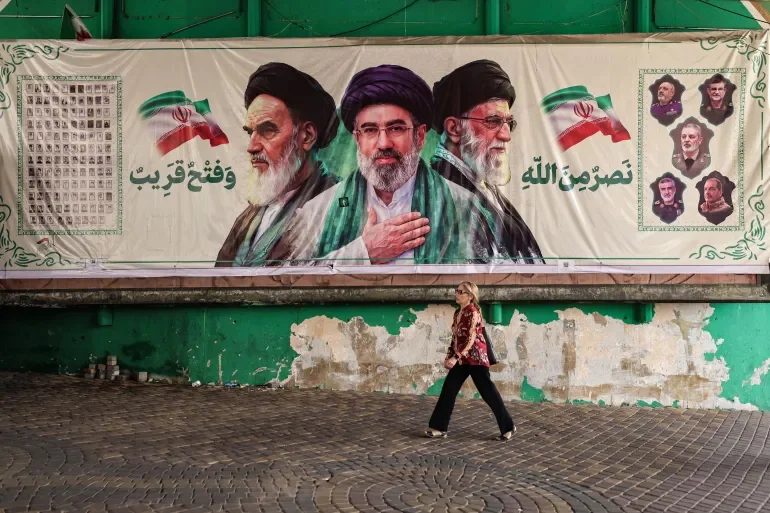
On October 31, regional tensions across the Middle East have surged to a critical new threshold, after Iran’s supreme leader Mojtaba Khamenei issued a public directive to all Iranian armed forces via his official office, ordering full military readiness to execute an immediate, large-scale, geographically unlimited retaliatory strike in the event of any new attack on Iranian territory. The announcement followed closed-door emergency consultations between Khamenei and top-tier Iranian military commanders, during which officials emphasized that Tehran reserves full, unilateral authority to set the timing and terms for ending any future conflict that is forced upon it, with state-run media mandating that all military units maintain maximum deterrence posture to respond instantaneously to any hostile threat.
This sharply escalated military rhetoric unfolds against a backdrop of prolonged volatility that began after joint U.S.-Israeli strikes on Iranian targets on February 28. While a non-binding memorandum of understanding was signed between relevant parties back in June, core longstanding disputes have remained unresolved, leaving the region perched on the edge of renewed full-scale conflict. Parallel to Iran’s military mobilization, quiet diplomatic backchannels are actively operating to head off a catastrophic direct military confrontation between Iran, the United States and Israel. Senior Qatari mediators held closed-door negotiation sessions in Tehran on Friday, with follow-up diplomatic contacts scheduled for the weekend to de-escalate frictions.
Unconfirmed diplomatic dispatches also revealed a rare direct outreach from the U.S. side: U.S. Vice President JD Vance sent an official letter to Mohsen Rezaei, a high-ranking influential figure within Iran’s national security apparatus. Initial unconfirmed leaks suggested the correspondence touched on potential arrangements for Iran’s nuclear program, including demands for unfettered access for international nuclear inspectors and full transparency over Iran’s stockpiles of highly enriched uranium – a request Tehran has previously rejected, alongside its longstanding refusal to transfer its enriched uranium reserves outside its national borders. U.S. President Donald Trump later publicly dismissed reports of a new round of formal peace talks, claiming Vance’s letter exclusively addressed arrangements to allow unimpeded delivery of humanitarian medical supplies to Iran. As of press time, Tehran has not issued any official public response to the U.S. correspondence. Even regime-aligned Iranian daily *Jomhouri-e Eslami* published an editorial over the weekend urging the government to exhaust all remaining diplomatic avenues, noting that while the probability of reaching a comprehensive agreement with Washington remains low, a full-scale war should never be treated as an inevitable outcome.
The strategically vital Strait of Hormuz, a narrow chokepoint linking the Persian Gulf to the Gulf of Oman that carries roughly a third of global seaborne oil and liquefied natural gas trade, has emerged as the most volatile flashpoint in the unfolding crisis. Both Iran and the United States are actively maneuvering to assert influence over commercial shipping transiting the waterway: Iran’s Islamic Revolutionary Guard Corps has issued repeated public warnings over unsafe, unauthorized shipping lanes in the zone, while U.S. naval forces have deployed assets to escort energy-carrying commercial vessels through the strait. Iranian authorities claimed on Saturday that two fishing vessels operating south of Qeshm Island were targeted by a U.S. drone, leaving multiple fishermen wounded, though no independent third-party verification of the incident could be confirmed with available evidence. Additional conflicting reports detail multiple tanker incidents: the Revolutionary Guard stated four commercial oil tankers caught fire after entering unauthorized restricted routes in the strait, while the UK Maritime Trade Operations (UKMTO), the global leading maritime incident monitoring body, separately reported that one tanker was struck by an unidentified projectile while exiting the strait, and a second vessel sustained fire after an impact south of Lavan Island, with all crew members on the second ship reported unharmed in initial updates. It remains unclear if the two sets of reported incidents refer to the same group of vessels, and none of the reported attacks have received independent, neutral confirmation.
The pervasive climate of insecurity has already delivered a devastating blow to commercial maritime traffic in the strait: UKMTO data shows that in the seven days ending October 28, only 155 vessels transited north through the strait and 122 sailed south, marking a total drop of roughly 70% in overall shipping volume compared to pre-conflict levels. This sharp decline in traffic has sparked cascading uncertainty for global shipping operators, marine insurance providers, and global energy traders, with rerouting costs, skyrocketing insurance premiums, and potential energy supply chain disruptions looming as imminent risks to the global economy. U.S. military leadership has confirmed that U.S. fixed-wing aircraft and unmanned surface vessels are now deployed to support escorted shipping through the chokepoint, while Iranian officials continue to stress that the safety of the strait cannot be decoupled from the broader military and political standoff between the two sides.
Senior Iranian officials have also echoed Khamenei’s warnings that any new joint U.S.-Israeli attack on Iranian soil will trigger a regional spillover that extends far beyond Iran’s national borders. Iranian armed forces spokesperson Mohammad Akraminia stated Saturday that a new U.S.-led military campaign would expand the conflict across a far wider geographic area. Iranian Foreign Minister Abbas Araghchi also pushed back sharply against recent remarks from German Chancellor Friedrich Merz, who estimated that the ongoing conflict has already cost the European Union more than 100 billion euros in economic damages, noting that the retaliatory damage Iran could inflict in response to a new attack would vastly exceed that figure, underscoring Tehran’s refusal to accept military pressure from Washington and Israel without a decisive response.
Across the Atlantic, U.S. policymakers are also voicing deep alarm over the risk of renewed hostilities: Democratic Senator Chris Murphy warned that a new large-scale U.S. military campaign against Iran would trigger catastrophic, uncontrollable escalation and place unprecedented strain on the existing international rules-based order. Independent regional security analysts have also cast doubt on the core U.S. strategic assumption that large-scale aerial bombardment would force Tehran to make concessions on its nuclear program, warning that any new attack would almost certainly prompt Iran to target U.S. military assets and allied interests across the entire Middle East region.
For the time being, no diplomatic breakthrough appears imminent. Tehran’s core non-negotiable demands include the full removal of U.S. blockades on Iranian ports, sweeping relief from longstanding international oil sanctions, and coordinated multilateral action to resolve parallel regional conflicts across the Middle East. Washington, by contrast, is insisting on binding, verifiable guarantees that Iran will never develop a nuclear weapons capability. With both sides refusing to compromise on their respective core red lines, the path to a de-escalatory comprehensive agreement remains deeply uncertain, leaving the entire region at imminent risk of a devastating new large-scale conflict.