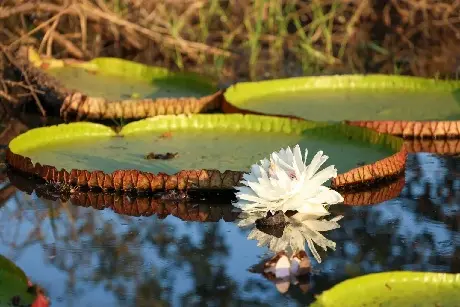
Georgetown, Guyana – October 31, 2026: A landmark cross-border botanical partnership announced Saturday by the British High Commission in Guyana will see Guyana’s iconic national flower, the Victoria Amazonica giant waterlily, make its long-awaited return to the United Kingdom more than 170 years after its first documented arrival from the South American nation. The species will take centre stage at London’s world-renowned Royal Botanic Gardens, Kew, as part of a collaborative initiative with Guyana’s Protected Areas Commission, timed to coincide with the 2027 reopening of Kew’s historic Waterlily House. Originally completed in 1852 explicitly to house and showcase the Victoria Amazonica, the Victorian-era glasshouse has been undergoing extensive restoration work in recent years to preserve its architectural heritage and create optimized growing conditions for the giant aquatic plant. The announcement follows a series of high-profile engagements during King Charles III’s recent state visit to Guyana, where the monarch joined a cohort of local students from across the country at Georgetown’s Promenade Gardens for a hands-on educational session diving into the taxonomy, cultivation practices, and rich cultural history of the Victoria waterlily species. During the event, King Charles III was given a detailed briefing on the specially sourced waterlily seeds earmarked to restart Kew’s cultivation of the native Guyanese species. The fieldwork phase of the initiative wrapped up earlier this week, when Kew’s leading Scientific & Botanical Research Horticulturist Carlos Magdalena partnered with Andrew Amin, Head of Guyana’s Botanical Gardens, on a targeted exploratory expedition to the remote North Rupununi Wetlands, located in Guyana’s southwestern Rupununi region close to the Brazilian border. The team’s core objectives were to locate naturally occurring wild populations of the Victoria Amazonica, collect ethically sourced seed and specimen samples to transport back to Kew for propagation, and document the rich Indigenous oral histories and cultural significance tied to the national floral treasure. Reflecting on the expedition, Magdalena noted that the trip to the Rupununi River and surrounding savannah offered unprecedented, first-hand insight into Guyana’s extraordinarily diverse and largely undisturbed ecosystems, and expressed hope that the field visit would lay a robust foundation for long-term multidisciplinary collaboration to document and protect the nation’s unique biodiversity. British High Commissioner to Guyana Joseph Fisher emphasized that the partnership unites Kew’s world-leading scientific botanical expertise with Guyana’s generations of local and Indigenous ecological knowledge, creating a rare opportunity to deepen global collective understanding of Guyana’s unparalleled biodiversity, advance targeted conservation efforts, and spark curiosity for environmental stewardship among young people across both nations. He added that the project builds on nearly two centuries of shared historical botanical ties between the UK and Guyana, opening new pathways for impactful joint action through collaborative research, public education programming, and cross-cultural knowledge exchange. Damian Fernandes, Advisor to Guyana’s Protected Areas Commission, highlighted that the Victoria Amazonica’s first journey from Guyana to the UK in the 19th century directly inspired the construction of Britain’s iconic waterlily glasshouses and even informed the structural design of London’s famous Crystal Palace, marking a little-known but significant chapter in shared UK-Guyana botanical history. Fernandes noted that the agency is proud to steward this new chapter of that legacy, and that the recent youth engagement session at Promenade Gardens marks the starting point for deeper, ongoing partnerships with Kew and other global botanical institutions to celebrate and safeguard Guyana’s irreplaceable botanical heritage. A wide network of local Guyanese stakeholders played critical supporting roles in making the Rupununi expedition a success, including the Ministry of Agriculture, the Centre for the Study of Biological Diversity, the Environmental Protection Agency, and Melanie Mc Turk from the Karanambu Lodge conservation site. Looking ahead, the partnership will roll out a series of joint workshops and structured knowledge exchange programmes between Kew and the Protected Areas Commission, designed to upskill local Guyanese practitioners in advanced botanical identification, sustainable cultivation, and ex-situ conservation techniques, to strengthen long-term protection for Guyana’s unique native plant species.
Guyana’s ‘Queen of the River’: the Victoria Amazonica at the heart of botanical collaboration with Royal Gardens