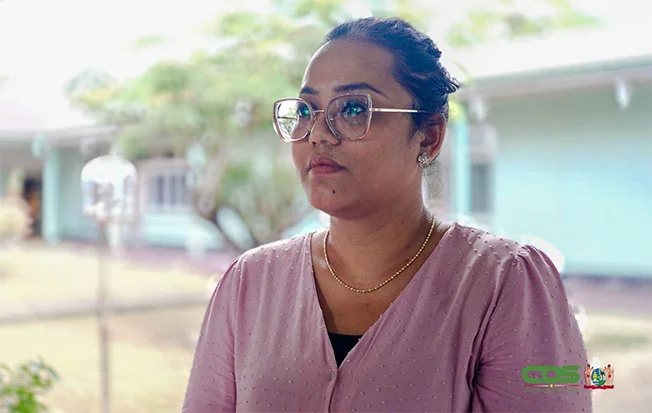
On October 30, senior official Romarlisa Bisphan, acting deputy director of Agri Health under Suriname’s Ministry of Agriculture, Animal Husbandry and Fisheries (LVV), confirmed longstanding critical gaps in the country’s food safety oversight for agricultural exports, amid fresh unconfirmed reports of Suriname-sourced vegetables being rejected in the Netherlands for excessive pesticide residues. Decades-old legislation dating back to 1972, the outdated Pesticides Control Act, currently governs the sector, and the LVV holds no legal authority to conduct independent pesticide residue testing, seize unregulated agrochemicals, or enforce limits on harmful chemical levels in farm produce. A draft updated pesticide law was tabled before Suriname’s National Assembly in 2024 but has yet to pass, leaving regulators hamstrung in their enforcement capabilities. While the physical building for a dedicated pesticide residue testing laboratory has already been completed, the facility is not expected to become fully operational until the first half of 2027, leaving the country with no domestic capacity to run independent, targeted tests for harmful chemical traces in vegetables prior to export. Bisphan noted that the LVV has not received any official formal notification from Dutch authorities regarding the recently reported rejected shipments, only learning of the alleged incidents via public media reports. The unconfirmed claims point to excessive levels of carbendazim, a fungicide, in yardlong beans, and acetamiprid, an insecticide, in bitter melon, though Bisphan emphasized that the origin of the contaminated produce has not been verified, as identical vegetable varieties are exported to the Netherlands from multiple other Caribbean and South American nations. Currently, the LVV only conducts phytosanitary health checks to verify that exports are free of plant pests and diseases, a standard that does not include targeted laboratory analysis for pesticide residue concentrations. The regulatory gaps have already created tangible enforcement hurdles: during recent routine inspections of agrochemical vendors, LVV teams uncovered stocks of unregistered, illegal, and expired pesticides, but lacked the legal power to seize the dangerous products directly, forcing the department to refer all cases to the Ministry of Economic Affairs, Entrepreneurship and Technological Innovation for enforcement action. To address these systemic weaknesses, the LVV is rolling out parallel long-term initiatives: drafting a formal residue regulation framework, developing a full agricultural product traceability system to quickly pinpoint the source of contaminated shipments, delivering targeted training programs for smallholder farmers and agricultural cooperatives, and preparing a nationwide public awareness campaign to promote safe, compliant pesticide application practices, including adherence to recommended dosage limits and pre-harvest waiting periods. Bisphan also stressed that farmers bear shared responsibility for food safety, as improper chemical use remains a leading cause of residue violations. The latest disclosures follow a wave of EU alerts in May 2024, when Suriname’s exported red peppers and yardlong beans were flagged for exceeding legal pesticide residue limits, sparking public criticism over why safety breaches were only being detected at European border checks rather than before produce left Suriname’s ports.
LVV mist bevoegdheden en laboratorium om pesticiden in groenten aan te pakken