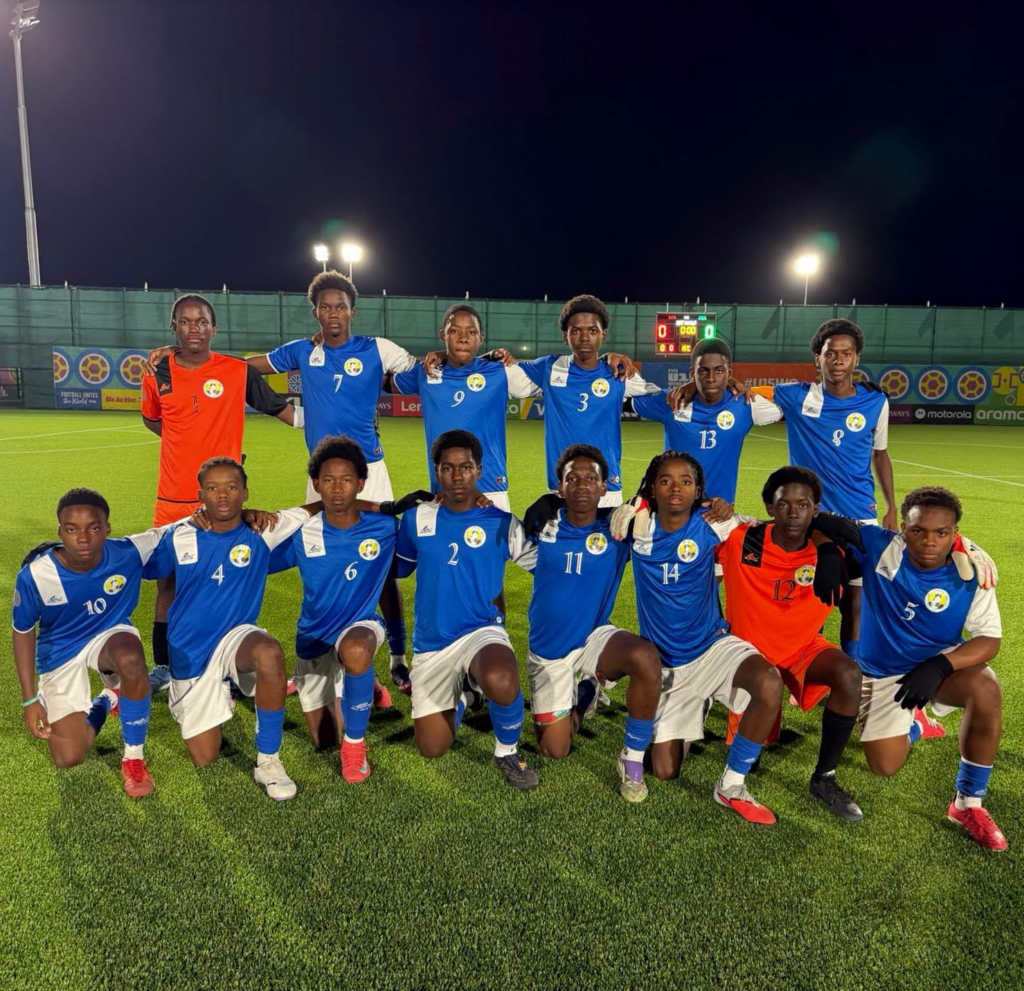
Saint Lucia’s under-15 boys national football squad, affectionately nicknamed the Piton Boyz, capped off their week-long campaign at the FIFA Under-15 Boys World Cup & Festival in Baku, Azerbaijan, with two dominant consecutive shutout victories in Tier F, marking their first and only wins of the international youth tournament. The pair of decisive triumphs followed a punishing opening phase of competition that tested the young players’ physical endurance, mental grit, and adaptive capacity to an unprecedented degree.
The squad faced a brutal initiation in the preliminary Group N stage, where they suffered five consecutive defeats against globally established youth football sides including Croatia, Greece, Yemen, Aruba, and Palestine, conceding a total of 24 goals across those opening fixtures. They also dropped two narrow close-contest matches against fellow Concacaf regional neighbors: a 2-1 loss to the Turks and Caicos Islands that saw Jesse Noel net Saint Lucia’s sole goal, followed by a tightly fought 3-2 defeat to Suriname where Ajani Walker and Stewart Emmanuel found the back of the net. Compounding the challenge, the tournament schedule required the teenage schoolboy athletes to compete in nine total matches over just seven days, with fixtures held twice per day for much of the week, in an unfamiliar climate thousands of miles from their home island.
The long-awaited breakthrough arrived on Thursday at Baku’s Hovsan Competition Complex, when the young Caribbean side routed Oceania representative American Samoa 6-0, powered by two goals apiece from Leon Vidal and Jayden Emmanuel, plus additional strikes from Jesse Noel and Leon Griffith. They followed that performance 24 hours later with a second identical 6-0 shutout win over Asian side Bhutan, with Mikel Florent notching a brace and Anaj Polius, Ajani Walker, Leon Vidal, and Randall Monroe each contributing one goal to the final scoreline.
Earl Jean, head coach of the Saint Lucian U-15 squad, emphasized that the entire tournament represented an invaluable, hands-on developmental experience for the young athletes, far beyond the final scorelines. “These boys had to adjust to unfamiliar weather conditions, build up their mental resilience, and gain a real, tangible understanding of the high caliber of elite youth football across the globe,” Jean explained. “They were playing two matches a day for a full week, and they quickly learned how critical off-field preparation is to their on-pitch performance. Many of the opponents they lined up against came from renowned youth academies run by top European clubs including Juventus, Ajax, and Feyenoord.”
Jean noted that the high-intensity tournament structure, which former Arsenal manager and global football development advocate Arsene Wenger has publicly endorsed as a benchmark event, was specifically designed to help national youth programs assess their players’ technical proficiency, decision-making in tight playing spaces, and ability to perform under elevated competitive pressure. Alongside FIFA Talent Identification coach Michael McLaughlin, Jean confirmed that the Baku tournament provided a critical baseline assessment of the current cohort’s skill levels, identifying key areas for targeted improvement – most notably the need for the young Saint Lucian players to develop tighter, more confident ball control in high-pressure scenarios.
With new standardized regional and international age-group competitive pathways set to roll out across Concacaf and global FIFA circuits starting in 2027, the Saint Lucian youth football coaching team now faces a clear roadmap of work ahead. Many of the young players who cut their teeth at the Baku World Cup are expected to represent Saint Lucia at the upcoming Concacaf Under-16 tournament, where they will carry the lessons learned from their rigorous Caspian coast baptism of fire into future regional competition.