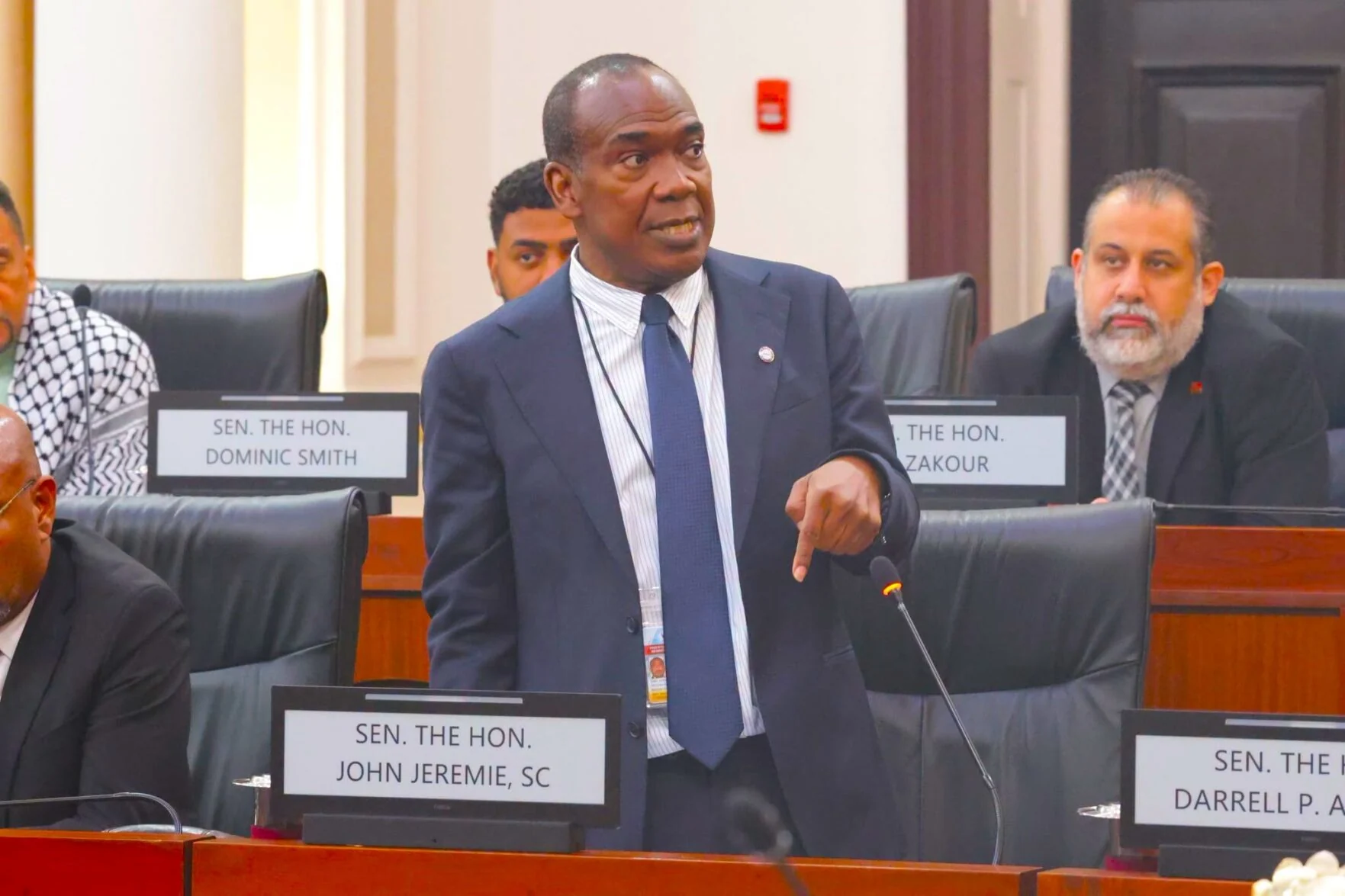
A fiery, unplanned confrontation unfolded on the floor of Trinidad and Tobago’s Senate during late-night budget debate proceedings on Monday, as Attorney General John Jeremie forcefully pushed back against scathing allegations from Independent Senator Anthony Vieira that the ruling administration was shirking its parliamentary accountability duties and potentially distributing public funds along partisan lines.
Vieira, delivering a sharp, extended critique earlier in the sitting, voiced deep frustration that after nearly 11 hours of Senate proceedings that had opened at 10 a.m., every Opposition senator and all five Independent senators had already contributed to the debate, while government representatives had failed to offer substantive, detailed responses to pressing questions about the allocation of billions of dollars in public funds. He argued that the core purpose of the annual budget debate extended far beyond simply securing the partisan votes needed to pass the Appropriation Bill: it was a constitutional mechanism to hold the executive branch fully accountable for every financial decision it made.
The independent legislator went further to raise alarms over potential inequities in resource distribution across the country, noting that as a resident of western Trinidad, he had a direct stake in funding allocations for the Diego Martin Regional Corporation. He emphasized that the national treasury did not belong to the sitting government, but was held in sacred trust for every citizen of Trinidad and Tobago, regardless of their political affiliation, geographic location, or social status. He warned that even the perception that funding decisions were being guided by partisan loyalty rather than demonstrated community need would erode public trust in democratic institutions, and that the national budget should act as a unifying force for the country, not a source of division. “A government is elected by some of the people, but it is entrusted with responsibility for all of the people,” Vieira stated firmly, adding that there was a critical line between governing with a legitimate electoral mandate and governing with a narrow, partisan mentality that disenfranchised entire communities.
The remarks drew an immediate interjection from Government Senator Anil Roberts, who accused Vieira of levelling unsubstantiated improper motives against the administration and using insulting language, but the Senate Vice-President ruled that Vieira be permitted to continue his address without interruption. Undeterred, Vieira pressed for clear, documented justifications for all high-value spending decisions, noting that a simple legislative majority did not absolve the government of its duty to explain and defend its budget priorities to the public.
It was these comments that prompted a rare, visibly angry response from Attorney General Jeremie, who noted that he was famously slow to anger but found Vieira’s accusations of government lawmakers being lazy and unengaged completely indefensible and far over acceptable parliamentary lines. “For the senator to sit on his derriere over there today for the first time, and to accuse those of us on this side of sloth, I reject that,” Jeremie declared, pushing back against claims that government legislators had skipped meaningful budget scrutiny. He explained that the country’s Constitution clearly delineates separate roles for the House of Representatives and the Senate when reviewing money bills, noting that the Appropriation Bill is legally required to undergo full line-by-line committee stage review in the lower chamber. Jeremie confirmed that he and multiple other government senators had participated in five consecutive days of exhaustive committee deliberations on the budget, and that he had only left the Parliament building late on the preceding Saturday, moments after the bill successfully passed its committee review stage.
Jeremie went on to flatly dismiss all allegations of inequitable resource distribution, stating that the 2024 budget represented the most fair and geographically balanced allocation of national resources in the country’s recorded history, with every line item vetted and approved during the extended House of Representatives review process. He clarified that he had no intention of descending into a shouting match across the Senate floor, but had chosen to speak up formally to place the government’s official position on public record to counter the unsubstantiated criticisms.
Angry Jeremie: Vieira crossed the line with budget criticism