The recent quiet departure of Olive Strachan from the presidency of the Dominica Association of Industry and Commerce (DAIC) has flown almost entirely under the public radar, a development that comes as little surprise in a local media landscape that rarely fulfills its role as a rigorous public watchdog, and against a social media ecosystem heavily skewed to amplify narrow, partisan narratives. What casual observers may dismiss as an unremarkable administrative shuffle is in reality a revealing symptom of long-entrenched, plantation-style power dynamics that threaten to undermine the credibility of one of Dominica’s most respected cross-border business institutions.
To contextualize the saga, it is first necessary to unpack the true nature of the so-called Dominica Business Forum (DBF). Though it markets itself as a formal, representative collective for local commercial interests, the group has never published a single evidence-based business policy white paper, nor has it made any credible attempt to advise the government on evidence-led industry regulation. Instead, it operates unofficially as an opaque pressure group that masquerades as a broad civic coalition claiming to speak for the full consensus of Dominican people at home and abroad, without disclosing its membership or core mandates to the public.
This stands in stark contrast to the DAIC, a body that commands genuine regional and international credibility as Dominica’s equivalent of a standard chamber of commerce. Across most of the world, a non-partisan, independent chamber of commerce that maintains constructive, good-faith engagement with national governments is considered a cornerstone of a healthy, functional private sector. In Dominica, however, that standard has been redefined as an unforgivable transgression by a small, well-connected faction of local business elites.
Strachan, a globally decorated business leader, boasts a resume unmatched by nearly any recent local DAIC head: she was named to the list of the top 100 Black women business leaders in Northern England, and was awarded an MBE in Queen Elizabeth II’s 2018 Birthday Honors List for her professional contributions. Despite her unparalleled credentials, her refusal to bend to the demands of a small powerful business clique triggered the chain of events that ended her tenure.
The catalyst came in recent weeks, when the DBF joined prominent local businessman Gregor Nassief in drafting an open letter addressed to dozens of regional and international governance bodies, lobbying for a three-month extension to Dominica’s voter confirmation deadline. The DAIC’s leadership, under Strachan’s direction, opted not to co-sign the document — a decision that drew fierce public pushback from Gregor Nassief’s brother, fellow prominent businessman Yvor Nassief. Yvor Nassief publicly announced his resignation from the DAIC’s board in protest, with a faction of allied board members signaling their lack of confidence in Strachan’s leadership shortly after.
The sequence of events bears all the hallmarks of a pre-planned chess sacrifice: Nassief and his allies knew full well that his high-profile resignation would put unmanageable pressure on Strachan, a seasoned professional who recognized the public rebuke as an irreversible vote of no confidence. Her eventual decision to step down was framed by the clique as a voluntary, professional choice, but the fallout was precisely what the faction had engineered: under DAIC bylaws, the sitting vice president would automatically be elevated to the presidency to fill Strachan’s vacancy. That vice president, it turns out, serves as the general manager of Tropical Shipping’s Dominica operations — a local branch run by Archipelago Trading, a firm directly owned by Yvor Nassief.
The glaring conflict of interest at the heart of this power play has gone almost entirely unchallenged, with no widespread public outcry from the country’s usual advocates for social justice, transparency, and good governance. Dominica’s so-called intellectual class, quick to call out government overreach whenever warranted, has remained almost universally silent out of fear of retaliation from the small, tight-knit circle of dominant local business figures that now effectively controls key private sector institutions. Strachan, a universally respected trailblazer, was effectively cast aside with zero public pushback.
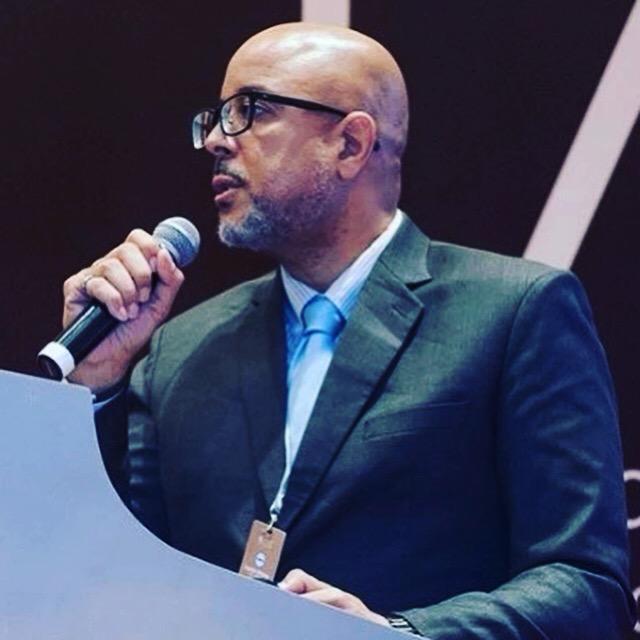
The author, Kenneth Green — a former DAIC president and former board member of the global IN+ Icom Ad Agency Network, the largest advertising collective of its kind in the world — is calling for the entire sitting DAIC board to resign immediately, with an emergency special annual general meeting called to elect a fully transparent, independently verified new board. Even if the same members are re-elected by the full DAIC membership, the process would at least dispel widespread public suspicion that a tiny group of elites conspired to oust a sitting, high-credibility president to fast-track a figure with direct ties to their business interests into the DAIC’s top role ahead of schedule.
The power grab, the author warns, will have severe unintended consequences: regional and international business observers are already closely monitoring the saga, and the DAIC risks being reduced to a mute, impotent mouthpiece for a handful of unelected business tycoons, erasing decades of hard-won institutional credibility. For the health of Dominica’s private sector ahead of political election season, industry bodies like the DAIC and the Dominica Hotel and Tourism Association must remain fully independent of control by small, unaccountable elite cliques, to avoid a backlash that inflicts far broader damage to the national economy beyond the harm already done to Strachan’s reputation.