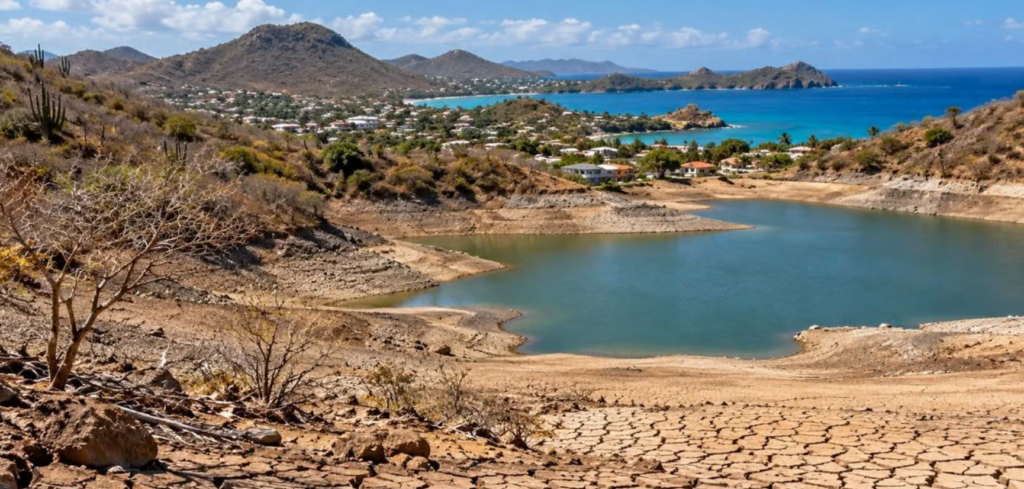
A joint technical alert co-developed by the Organization of American States (OAS), the World Meteorological Organization (WMO), and the International Research Center on El Niño (CIIFEN) has sounded a high-stakes alarm for Caribbean regional governments, urging accelerated drought resilience building to be completed no later than the end of 2026, as a projected intense El Niño event in 2027 threatens to slash rainfall by as much as 80% across swathes of the island chain. The cross-agency assessment maps out cascading, multi-sector risks that will unfold if no proactive measures are put in place: critical freshwater infrastructure will face unprecedented strain, as extended dry spells can trigger saltwater intrusion into fragile underground aquifers that supply drinking water for most island communities, almost certainly forcing mandatory water rationing for residential, commercial and agricultural users. Beyond water access, the crisis will ripple across hydropower-dependent electricity grids, disrupting stable power supplies for homes, hospitals and local businesses. Food security is also projected to face severe pressure, with rain-reliant smallholder crop farming and livestock operations facing widespread losses. Additional secondary risks highlighted in the brief include a sharp spike in wildfire hazard across parched coastal and forest zones, and elevated transmission rates of dengue fever: as households stockpile stored water to cope with shortages, uncovered containers will create ideal breeding habitats for Aedes aegypti mosquitoes, the primary vector for the viral disease. The report also notes that the same El Niño system that will parch the Caribbean will deliver the opposite extreme to large swathes of South America, where above-average extreme rainfall is projected to trigger widespread flooding and deadly landslides. Andrés Sánchez, head of the OAS Water Section, emphasized that while the climatic phenomenon itself cannot be prevented, proactive intervention can drastically mitigate its worst outcomes. “El Niño cannot be avoided, but a large part of its consequences can,” Sánchez stated. The OAS has released a targeted, actionable set of preparedness recommendations tailored for Caribbean nations, including deploying backup desalination capacity, upgrading aging water distribution networks to cut unaccounted-for water loss, rolling out enhanced real-time aquifer monitoring systems, strengthening localized early warning alert platforms for communities, securing backup off-grid power supplies for critical public facilities, and scaling up targeted public health surveillance for mosquito-borne diseases. The organization underscored that targeted, resourced action rolled out as early as the final quarter of 2026 will deliver the most substantial reductions to both human harm and projected economic losses from the looming 2027 climate emergency.
OAS warns El Niño in 2027 Could Bring Severe Drought to the Insular Caribbean