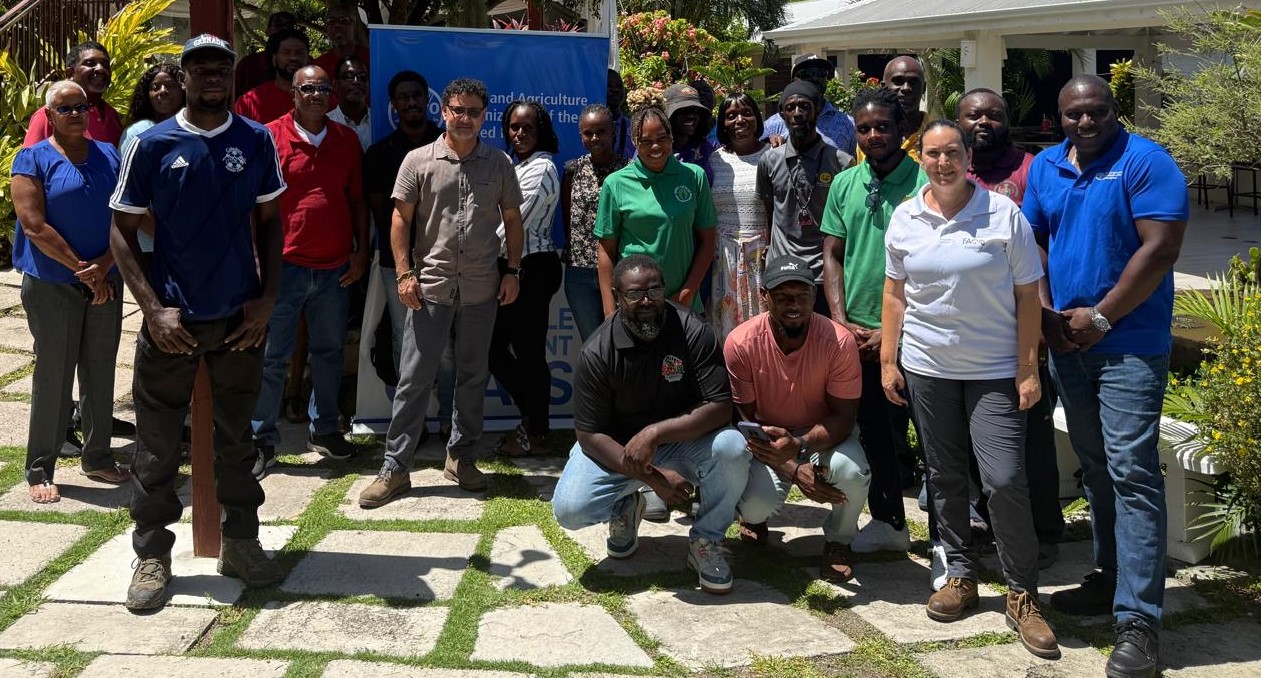
A targeted two-day immersive practical training workshop held 24–25 September 2026 has upskilled 31 agricultural stakeholders across Antigua and Barbuda, equipping farmers, frontline extension officers, and industry professionals with cutting-edge, actionable techniques to optimize nutrient delivery, irrigation scheduling, and fertigation operations for higher vegetable yields and reduced resource waste. Co-organized by the Food and Agriculture Organization of the United Nations (FAO) in partnership with the nation’s Ministry of Agriculture, Lands, Fisheries and the Blue Economy, the initiative falls under two parallel regional development projects: “Sustainable Water Management and Access for Better Production in Antigua and Barbuda” and “Digital Solutions to Improve Horticultural Crop Management in the Caribbean.”
The training blended structured classroom sessions, guided quantitative calculation drills, and on-site field demonstrations to cater to participants across varied experience levels, with a cohort consisting of 10 women and 21 men from local agricultural communities. Day one was dedicated to building foundational technical expertise: attendees deep dived into core plant nutrition principles, exploring essential nutrient functions, crop uptake pathways, shifting nutritional demands across different growth stages, common nutrient deficiency symptom identification, and the critical link between intentional irrigation management and maximum nutrient accessibility for plants. Additional modules covered fertilizer selection criteria, nutrient concentration profiling, solubility and cross-product compatibility checks, and custom fertilization roadmap development for both traditional soil-based and modern hydroponic soil-less cultivation systems. Trainees gained hands-on practice with a specialized nutrient-management calculation tool, converting crop-specific nutritional benchmarks into exact fertilizer volumes and timed application schedules to eliminate guesswork from farm planning, and got a preview of an upcoming in-development digital nutrient management mobile application designed to further streamline data-backed, precision decision-making at the individual farm level.
Day two moved all learning off the lecture floor to a working commercial operation, MSB Enterprises located in St. Mary’s Parish, where participants applied their newly acquired knowledge directly in a thriving open-field eggplant growing plot. Attendees weighed precise fertilizer batches, mixed custom nutrient solutions aligned with their pre-calculated crop requirements, inspected the farm’s existing drip irrigation and fertilizer injection infrastructure, and administered their custom blends through formal fertigation workflows to experience targeted, efficient nutrient delivery first-hand. A standout component of the field activities was guided hands-on operation of portable, high-speed soil scanners, which generated instant, plot-specific data on existing soil nutrient levels and key physical soil properties. Trainees input these on-site assessment results directly into their nutrient calculation software to generate fully customized, plot-tailored fertilizer recommendations, rather than relying on generic, one-size-fits-all guidance that often leads to over-application or nutrient gaps.
This end-to-end integrated workflow — combining real-time soil scanning data, digital calculation tools, and targeted fertigation — demonstrated clear potential to cut unnecessary input costs, reduce nutrient runoff waste, boost resource use efficiency, and drive measurable improvements in overall vegetable productivity. Local participating farmers emphasized the immediate, real-world applicability of the new skills. “I walked away with so much actionable knowledge. This calculation tool will cut so much guesswork out of my daily operations, I can plan all my irrigation and fertilization schedules weeks in advance and give my farm staff clear, exact instructions,” shared Antiguan farmer Ralph Iton Henry. Fellow attendee Sheir Williams echoed that sentiment, noting that the spreadsheet-based calculation framework would make pre-season farm planning far simpler and help her map out full crop cycle nutrient requirements well before planting begins. The training also built capacity for local extension officers, who act as a critical link between technical research and on-the-ground farm practice. “Armed with these new skills, we can help local farmers make far more intentional, informed fertilizer choices: they give their crops exactly the nutrients they need, no more, no less, which cuts unnecessary input expenses while reducing environmental harm from excess runoff,” explained Victor Wade, a participating Extension Officer.
As lead technical partners for the two supporting projects, FAO and the Government of Antigua and Barbuda are prioritizing scalable, accessible digital and field-based technologies to lift the entire domestic agricultural sector’s performance. “Our core goal is to put practical, easy-to-adopt tools directly in the hands of farmers that remove the guesswork from water and nutrient management. By merging low-cost, on-site soil assessments with user-friendly digital calculation tools, we can drive far more precise input use, boost overall operational efficiency, and deliver long-term, sustainable gains in horticultural crop productivity,” stated Anne Desrochers, FAO Plant Production and Protection Specialist and Lead Technical Officer for the associated FVC project.
FAO equips farmers in Antigua and Barbuda with tools for more precise nutrient and water management