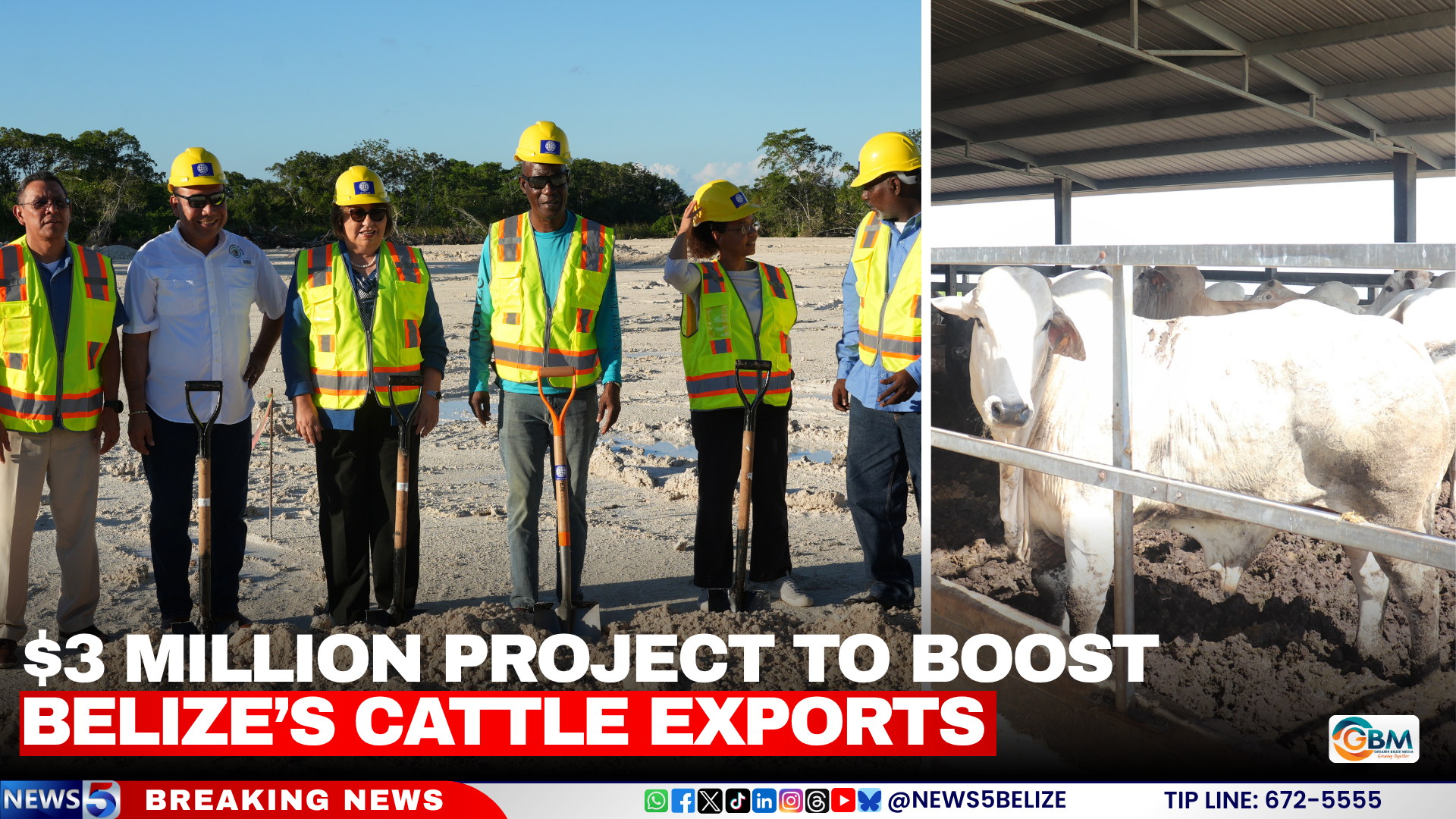
On October 26, 2026, Belize’s agricultural and economic development authorities announced a $3 million targeted investment to build a purpose-built cattle export inspection corral in Chan Chen Village, Corozal District, a move designed to shore up the country’s thriving livestock sector and formalize seamless access to its key Mexican trading partner. The infrastructure initiative is funded via the World Bank’s Climate Resilient and Sustainable Agriculture Project (CRESAP), rolled out through a coordinated partnership between the Belize Social Investment Fund (BSIF), the Ministry of Agriculture, Food Security and New Growth Industries, and the Ministry of Economic Transformation. Arden Edwards, Chairperson of the Belize Livestock Producers Association (BLPA), emphasized that the new facility is a non-negotiable requirement to sustain cross-border live cattle shipments to Mexico, as mandated by Mexico’s national agricultural health regulatory body SENASICA, which rules that all live cattle for import must be processed through an official inspection corral located no more than seven miles from the shared international border. Edwards confirmed that construction work is already well underway, with the project site fully cleared, graded and filled, and a dedicated on-site water supply system fully installed to support day-to-day operations. Official trade data released by Narda Garcia, Chief Executive Officer in the Office of the Prime Minister, shows that Belize shipped roughly 7,750 head of live cattle to Mexico in 2025, generating over $16 million in export revenue, while remaining well under the 10,000-head annual quota allocated by Mexican authorities. Garcia noted that these figures underscore the massive untapped potential for local cattle farmers to scale their sales to the neighboring market once the required inspection infrastructure is operational. Senior agricultural official Ferguson further outlined that Belize’s national cattle herd has already expanded from an estimated 203,000 head in 2025 to 217,000 head in 2026, creating an urgent need to identify additional market outlets beyond the existing Mexican quota to avoid oversaturation in domestic markets. Ferguson highlighted that a planned commercial beef-processing plant in Fireburn, Orange Walk District, will serve as a complementary downstream solution to absorb excess cattle supply and add value to local livestock output for both regional and international export. Carlos Pol, Chief Executive Officer at the Ministry of Economic Transformation, noted that the $3 million investment is explicitly designed to translate local smallholder and commercial farmers’ livestock production into tangible, higher-value commercial returns, with all project stakeholders prioritizing timely completion of the corral and full adoption by producers to streamline export transactions. Melissa Brown, senior agricultural economist at the World Bank, added that the border corral was not part of CRESAP’s initial project blueprint, but was added to the program following targeted advocacy from the BLPA and coordinated cross-agency collaboration, marking a flexible, demand-driven adjustment that directly addresses the most pressing growth bottleneck for Belize’s livestock sector.