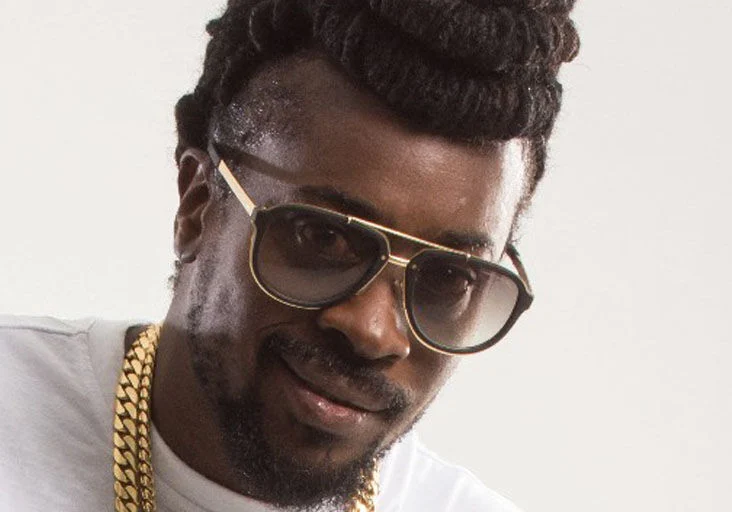
Iconic Jamaican dancehall legend Beenie Man, whose legal name is Moses Davis, has released a public video address to Trinidad and Tobago to defuse widespread online furor that erupted after a recent viral interview clip appeared to position Jamaica as the original birthplace of Caribbean Carnival, a claim that directly contradicts T&T’s long-documented centuries-old Carnival heritage. The controversial remarks first emerged last week during a sit-down with Shani Kulture, a Queens-based radio host on New York’s Hot 97 station. In the widely shared snippet, Kulture pressed the veteran artist for confirmation that Jamaica’s Carnival predated Trinidad and Tobago’s, asking “So just for clarity, Jamaica started Carnival before Trinidad? You’re standing on that?” Beenie Man immediately affirmed the assertion, attributing the milestone to the late legendary Jamaican producer and musician Byron Lee, widely celebrated as the “Father of Jamaican Carnival” for formally launching Jamaica’s national Carnival celebration on April 22, 1990, in downtown Kingston. “Remember Trinidad Carnival was junkanoo and all of them thing there. It wasn’t the big truck and them. Byron Lee started them thing there,” Beenie Man stated in the interview, adding that anyone who took the time to verify historical records would confirm his framing. The comments immediately ignited a firestorm across Trinidadian social media platforms, as generations of T&T residents pushed back fiercely against the narrative that erased their nation’s Carnival heritage, which traces its formal origins back to 1783 and stands as one of the most sacred cornerstones of Trinidad and Tobago’s national cultural identity. Thousands of users flooded feeds with playful but pointed memes mocking the star, including satirical “Beenie Man fact” posts that absurdly claimed fellow Jamaican dancehall icon Sean Paul had invented T&T’s beloved signature street food doubles, while some joked that the artist’s erroneous take stemmed from a past romantic heartbreak involving a Trinidadian woman of mixed descent. To add authoritative context to the debate, local media outlets reached out to Dr. Jerome Teelucksingh, a prominent historian at the University of the West Indies St Augustine Campus, who offered a measured, fact-based breakdown of Carnival’s cross-regional lineage. “Carnival has ancient roots stretching all the way back to Egypt and pre-modern civilizations, layered with deep French cultural influence and a uniquely Trinidadian interpretation that cannot be replicated, with iconic traditional mas elements such as Moko Jumbies that are entirely our own,” Teelucksingh explained. He further emphasized that Trinidad’s Carnival ranks among the earliest documented such festivals in the entire Caribbean, born when enslaved African communities under 19th century British colonial rule playfully subverted the elite French settler class’s private masked balls and public celebrations to create a distinct, people-centered cultural tradition. “Nearly all English-speaking Caribbean Carnival traditions share similar emancipation-era origins, for example Grenada’s festival grew directly out of 1834 Emancipation Day celebrations,” he added in a follow-up email statement, noting that unfounded viral claims like Beenie Man’s were unfortunate distractions that risked fostering unnecessary division across the Caribbean region. In his subsequent damage-control video address, Beenie Man moved quickly to walk back the widely misinterpreted remarks, stressing that he had never intended to challenge Trinidad and Tobago’s well-documented status as a Carnival pioneer. “Let me clear up this for you. I was only speaking about my personal experience with Carnival in Jamaica and the role that Byron Lee played, bringing the big parade trucks, road marches and street party energy to our local festival,” he stated. “I could never, ever come and steal away nothing from Trinidad. I don’t speak about Trinidad with anything but respect. I love Trinidad and Trinidad knows I love them and I know Trinidad loves me. All I was referencing was my own lived experience growing up here in Jamaica, watching Byron Lee build our local bashment-style Carnival from the ground up.” He concluded the address with a full affirmation of T&T’s cultural legacy: “Please don’t get me wrong. Trinidad Carnival is Trinidad Carnival. It started from way back when. There is no hatred to Trinidad. I love you all. Blessings, respect.” The high-profile cultural dispute marks the second time in as many years that Beenie Man has landed in hot water with Trinidadian audiences over viral comments about their national heritage. In February 2025, he drew widespread condemnation during an appearance on the Drink Champs podcast with hosts N.O.R.E. and DJ EFN, when he stated that he refused to eat doubles – T&T’s iconic curried chickpea-filled street snack – because even stray dogs would not consume the food, a remark that prompted a wave of backlash and a subsequent public apology video from the artist.