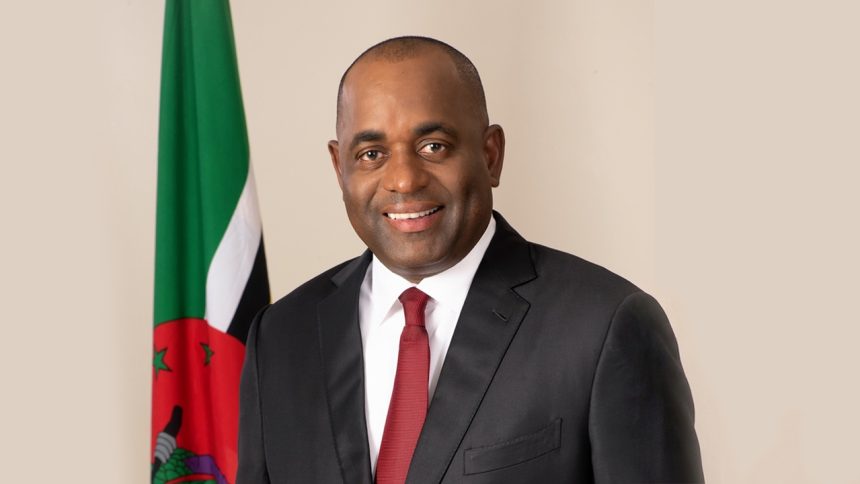
During a post-meeting press briefing following a landmark high-level gathering between Caribbean Community (CARICOM) heads of government and U.S. officials in Washington D.C. last week, Dominican Prime Minister Roosevelt Skerrit framed the discussions as a pivotal, forward-moving step to reverse years of lopsided U.S. engagement with the Caribbean region, which he noted had for too long prioritized security cooperation alone over broader, people-centered development partnerships.
Skerrit emphasized that the conversations represented a long-overdue shift, with U.S. counterparts acknowledging that Washington had largely sidelined the Caribbean in non-security collaborative frameworks for extended periods. While he welcomed preliminary U.S. pledges to roll out targeted support to help regional states close persistent critical development gaps, the prime minister stressed that the true value of the dialogue extended far beyond the promise of direct financial infusions. For Dominica, he explained, the highest priority was securing consistent, mutually respectful bilateral engagement rather than one-off funding injections, particularly as small island nations race to upgrade crumbling public infrastructure, build climate resilience, and advance shared national development goals.
The Dominican leader specifically noted the U.S. Export-Import Bank’s stated plan to make development financing accessible to Caribbean nations, but outlined strict, non-negotiable guardrails to ensure the arrangements do not overburden already constrained national budgets. Skerrit clarified that regional governments would prioritize full grant funding for large-scale public projects wherever possible, but added that low-interest, flexible loans could serve as a viable alternative if structured appropriately. He emphasized that any financing packages must carry highly concessionary terms, with interest rates at minimum matching the favorable rates offered by the World Bank, alongside transparent procurement processes and lenient, context-appropriate repayment schedules tailored to the unique fiscal realities of small Caribbean economies, rather than harsh conventional commercial terms that could trigger unsustainable debt burdens.
Parallel to the multilateral CARICOM talks, Skerrit held a dedicated bilateral meeting with senior U.S. Department of State representatives to raise Dominica’s long-running, top-tier grievance over unilateral U.S. visa restrictions imposed on Dominican citizens, a measure he maintained has no factual or policy justification. He confirmed that he raised the concern firmly but respectfully during the closed-door discussion, submitted a formal detailed policy proposal outlining Dominica’s position, and received a commitment from U.S. officials that the matter would be escalated to senior leadership for full review before a formal written response is shared with the Dominican government.
While acknowledging that some U.S. administration officials have demonstrated a clear understanding of Dominica’s concerns, Skerrit noted that the next procedural steps rest entirely with Washington, and his administration will maintain consistent, constructive follow-up engagement as it awaits the official U.S. response. Even with the unresolved visa dispute, Skerrit reaffirmed that the U.S. remains an irreplaceable key ally and development partner for Dominica and the broader Caribbean, pointing to deep, decades-long ties including cross-border family connections, vibrant cultural exchange, and the tens of thousands of Caribbean students who pursue higher education at U.S. institutions each year. He closed by stating that all opportunities to deepen and strengthen the CARICOM-U.S. bilateral relationship would be fully embraced, as regional nations work to advance their core development priorities amid growing global economic and climate pressures.