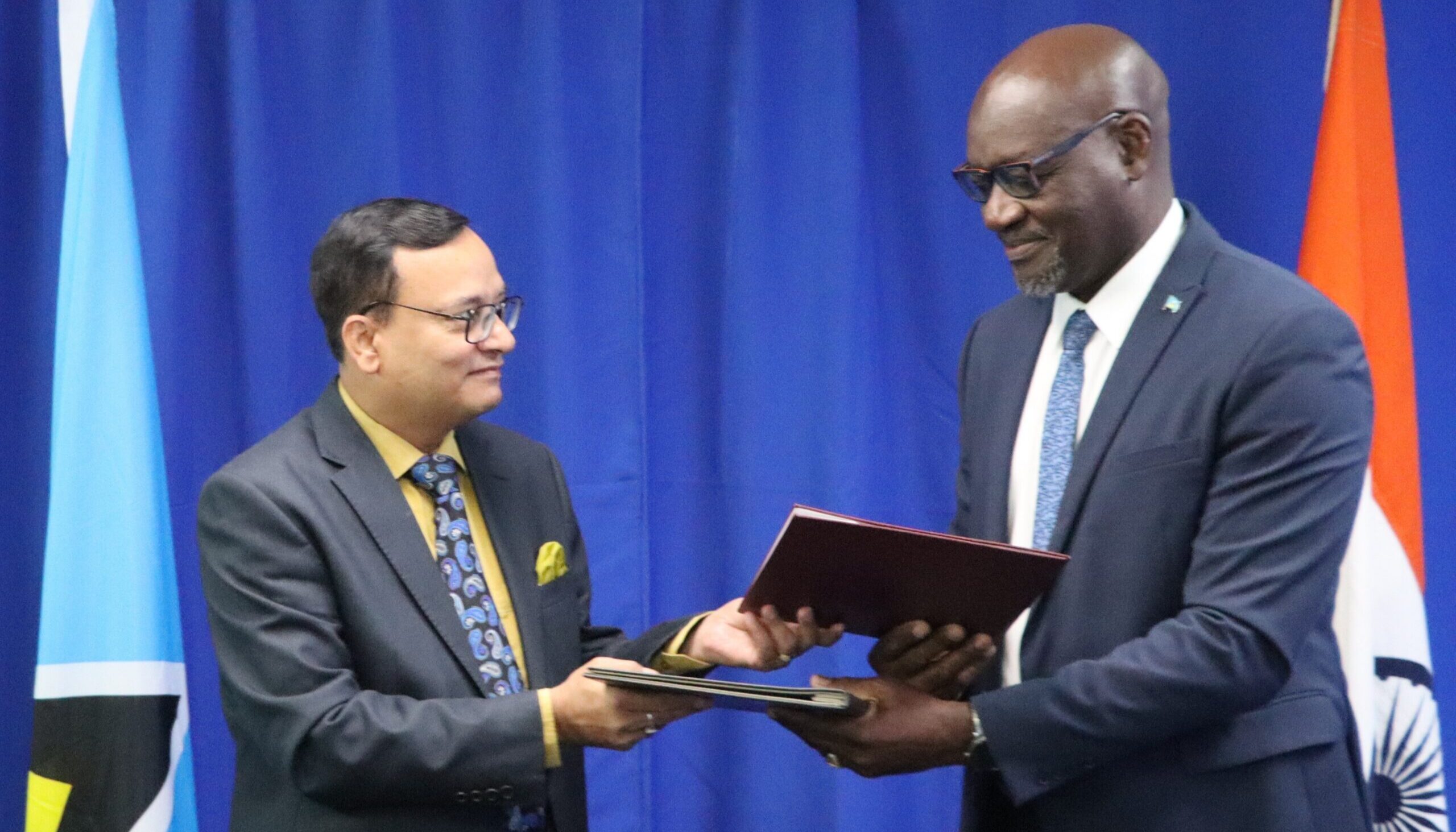
Thousands of residents across the Caribbean island nation of Saint Lucia are poised to gain faster, more cost-effective access to life-saving pharmaceutical products, following a newly signed memorandum of understanding (MOU) between the Saint Lucian government and the Indian Pharmacopoeia Commission (IPC), a statutory body operating under India’s Ministry of Health and Family Welfare. The landmark bilateral accord lays out a formal, structured framework for cross-border cooperation on pharmaceutical regulatory practices, as well as systematic information sharing between the two nations’ health authorities. At the core of the new partnership is Saint Lucia’s official formal recognition of the Indian Pharmacopoeia, the official public standard for the quality, safety, and purity of all medicines manufactured and sold in India, as a fully valid benchmark for pharmaceutical products entering its domestic market. This regulatory alignment is set to reinforce the island’s existing medication quality assurance protocols, while simultaneously cutting down lengthy administrative barriers that have long complicated the import of safe pharmaceutical goods from the South Asian pharmaceutical giant. A second critical provision of the MOU eliminates the redundant requirement for locally conducted duplicate laboratory testing for all medicine shipments from Indian manufacturers that operate in full compliance with Indian Pharmacopoeia standards, as Saint Lucian regulators will now directly accept the official certificates of analysis issued by these certified Indian production facilities. Senior health officials from both nations project that these combined regulatory adjustments will drive down overall medication costs for consumers, drastically cut the waiting time for new medication stock to reach local pharmacies, and expand the range of low-cost generic drugs available to patients across the island. India’s High Commissioner to Saint Lucia Subhash Gupta emphasized that the agreement fits into a wider strategy of global public health collaboration aligned with longstanding Indian foreign policy priorities. “By formally recognizing the Indian Pharmacopoeia, Saint Lucia is streamlining the import and quality registration pathways for Indian pharmaceutical products, directly clearing the way for its population to access high-quality, low-cost generic medications that have served communities across the Global East and Global South for decades,” Gupta stated. He further noted that the MOU creates a pathway to adapt India’s world-renowned, massive public medicine distribution network for the Saint Lucian context, with plans for dedicated local outlets that can deliver affordable pharmaceuticals directly to residents. He added that the partnership embodies the traditional Indian cultural principle of Vasudhaiva Kutumbakam, or “the whole world is one family,” and represents a meaningful step toward greater global solidarity on shared public health and well-being goals. For his part, Saint Lucia’s Minister of Health, Wellness and Nutrition Moses Jn. Baptiste framed the MOU as a historic milestone that directly advances his administration’s top domestic policy priority. “This landmark pharmacopoeia agreement is perfectly aligned with our government’s overarching mission to deliver universal, accessible, high-quality health care to every single Saint Lucian citizen, no matter their location or income level,” Jn. Baptiste explained. “By harmonizing a key segment of our pharmaceutical regulatory framework with a globally respected standard, we are immediately unlocking expanded access to safe, affordable, life-saving generic drugs that would have otherwise taken months or years to clear our old import approval processes.” The minister also outlined that the new accord serves as a foundational building block for far-reaching future bilateral health cooperation, opening doors to expanded joint public health initiatives and the procurement of high-priority, hard-to-source medical infrastructure for the island. These planned future projects include expanded national generic drug distribution programs, as well as the acquisition of critical medical assets such as haemodialysis units for kidney care, specialized cancer treatment equipment, and purpose-built sea ambulances to deliver emergency care to residents of Saint Lucia’s more remote coastal communities.