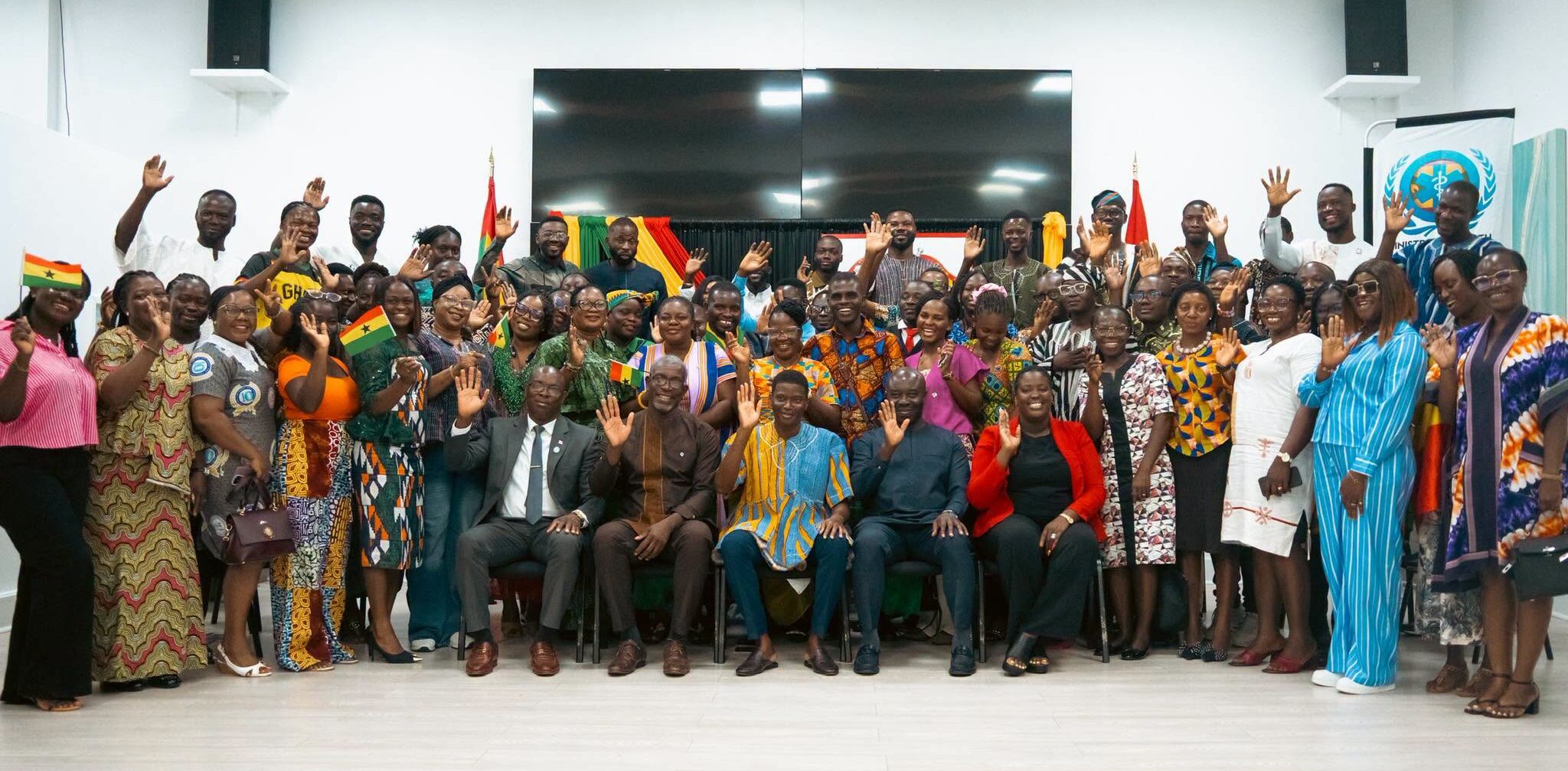
The tri-island nation of Grenada, including its territories Carriacou and Petite Martinique, has formally received its first cohort of 57 Ghanaian healthcare workers as part of the newly launched Ghana-Grenada Health Cooperation Programme, marking a landmark milestone in the Caribbean government’s multi-year push to upgrade national healthcare delivery for all residents. This targeted deployment of skilled medical personnel directly aligns with the Grenadian administration’s stated policy priority of investing in public well-being to address longstanding staffing shortfalls that have strained local health services for years. The incoming delegation is composed of 52 registered nurses, 2 laboratory technologists, 2 ultrasound specialists, and 1 board-certified general surgeon, who will be distributed across public hospitals, community health clinics, and national mental health facilities across the three islands. Grenada’s Ministry of Health has outlined a clear deployment framework: 34 of the new arrivals will support acute hospital services, 17 will be assigned to primary community care, and the remaining 6 will reinforce understaffed mental health programmes. The Ghanaian nurses will immediately help reduce dangerously high patient-to-nurse ratios that have persisted amid widespread regional healthcare workforce shortages, boosting the quality of bedside care in both inpatient and community settings. The two laboratory technologists will fill critical gaps in diagnostic testing capacity, while also supporting the ongoing rollout of the national Laboratory Quality Management System and advancing longstanding efforts to secure international accreditation for the Grenada Pathology Laboratory. The two ultrasound technicians will expand local access to diagnostic imaging at Princess Alice Hospital and Carriacou’s Princess Royal Hospital, eliminating the need for many Grenadian patients to travel to overseas jurisdictions to access routine ultrasound scans, a costly and logistically burdensome process for low-income families. The newly deployed general surgeon will expand local surgical capabilities, cutting long wait times for non-emergency procedures and creating structured opportunities for peer-to-peer knowledge sharing between local and visiting medical staff. Grenadian Prime Minister Hon. Dickon Mitchell framed the initiative as part of a deliberate, broader foreign policy strategy to deepen ties with African nations, rather than a one-off ad-hoc arrangement. He noted that the deployment represents a tangible demonstration of the growing bilateral partnership between Accra and St. George’s, designed to deliver measurable, on-the-ground benefits for ordinary citizens on both sides of the Atlantic. Minister for Foreign Affairs, Trade and Export Development Hon. Joseph Andall emphasized that the health programme is only the first step of a wider collaborative roadmap that will expand beyond medical cooperation to include increased cross-border trade, investment flows, and cultural exchange across the Caribbean Community (CARICOM) and African nations. Ghana’s Minister for Labour, Employment and Job Creation Hon. Emmanuel Kwadwo Agyekum, speaking on behalf of the West African nation’s government, reaffirmed Accra’s commitment to supporting Grenada and the wider CARICOM region through targeted skilled labour exchanges, and noted that the two nations stand ready to expand future cooperation into the education and trade sectors to build mutually beneficial long-term partnerships. Ghana’s Health Minister addressed the departing cohort ahead of their journey, urging them to uphold the highest standards of medical ethics and act as cultural ambassadors for their home country, highlighting the deep historical and cultural ties that bind the two nations. Grenada’s Minister for Health Hon. Philip Telesford welcomed the delegation, acknowledging the extraordinary pressure that local healthcare teams have navigated in recent years to sustain services, and noted that the exchange would create mutual learning opportunities for both local and newly arrived staff. The Grenadian Ministry of Health has also confirmed it will provide full support for the incoming workers’ transition, including structured orientation programmes, guided departmental integration, and ongoing welfare assistance to help them settle into their new roles and communities. Beyond immediate service improvements, the Ghana-Grenada Health Cooperation Programme is designed to foster sustained professional knowledge sharing, advance workforce development for both national health systems, and strengthen long-term diplomatic and cultural ties between the two countries, as part of Grenada’s broader strategy to build a more resilient, self-sufficient public health system through targeted international partnerships.