Authored by Yadirys Echenique Paz, Cuba’s Ambassador, the statement outlines that on October 27 and 28, the United Nations General Assembly will convene for its regular debate and non-binding vote on the landmark resolution titled “Necessity of ending the economic, commercial and financial blockade imposed by the United States of America against Cuba.” For more than three consecutive decades, this annual vote has served as a global platform for UN member states to voice their stance on a unilateral U.S. policy that has inflicted cascading, severe harm on Cuban civilians, and has been repeatedly resoundingly rejected by the vast majority of the global multilateral body’s membership.
With the high-stakes vote looming, the Cuban government has publicly condemned a sharp uptick in targeted U.S. political and diplomatic operations designed to erode long-standing international support for the Cuban-backed resolution. This aggressive pressure campaign, officials note, is not an unprecedented tactic: for years, Washington has activated its full diplomatic apparatus in the lead-up to the UNGA debate to defend the indefensible policy and stave off yet another humiliating defeat on the world stage. What marks this year’s campaign as uniquely alarming, however, is the unprecedented scope of coercion, which includes direct, high-level outreach to heads of state and government across multiple regions, explicitly pressuring sovereign nations to alter their long-held supportive positions ahead of the ballot.
These heavy-handed interventions directly contravene the foundational norms of the post-WWII international system, including mutual respect for territorial integrity, non-interference in internal affairs, and the sovereign equality of all nations. No UN member state, the Cuban envoy emphasizes, should be subjected to threats or lobbying pressure for exercising their inherent sovereign right to cast a free, uncoerced vote within a multilateral forum.
The damaging reality Washington’s lobbying efforts seek to obscure is increasingly impossible to ignore: the six-decade U.S. blockade remains the single largest structural barrier to Cuba’s sustainable economic and social development. Far from a limited set of trade restrictions, the policy’s sweeping extraterritorial sanctions, global financial persecution, cross-border trade bans, and explicit threats against third-party corporations operating in or with Cuba directly cripple the island nation’s ability to import life-saving medicines, staple food supplies, stable fuel reserves, critical industrial raw materials, and essential public services technologies.
New restrictive measures implemented over the past 12 months have compounded this humanitarian crisis drastically. Tightened fuel import curbs have gutted performance across core economic sectors and disrupted critical public services ranging from public transit to hospital power supplies. Parallel restrictions on global shipping have left thousands of cargo containers bound for Cuban ports stranded at international transshipment hubs, as global freight carriers and logistics providers avoid all transactions linked to Cuba out of fear of punitive U.S. secondary sanctions.
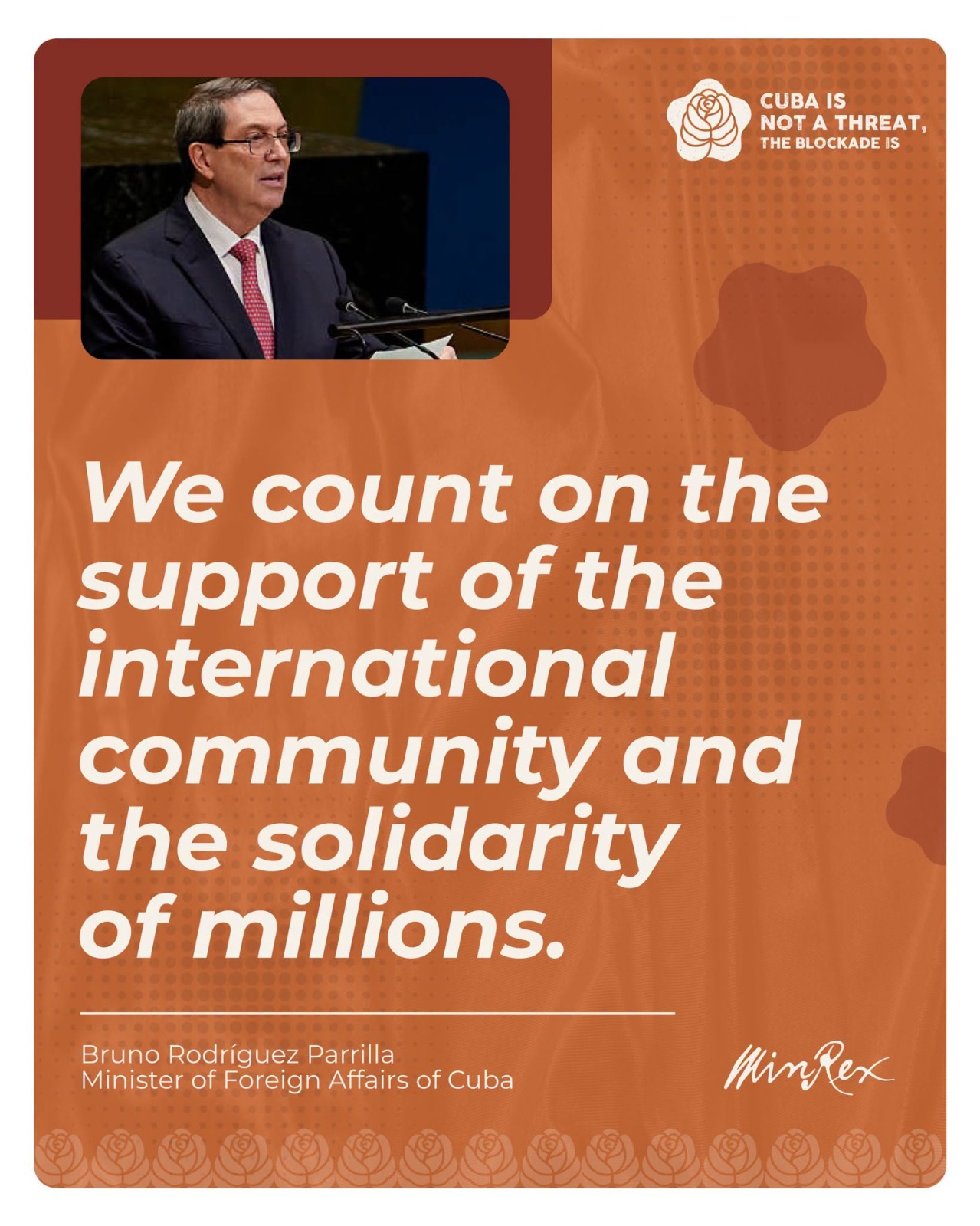
As Cuban Minister of Foreign Affairs Bruno Rodríguez Parrilla has repeatedly highlighted in public addresses, this year’s U.S. diplomatic offensive is intentionally designed to distract global stakeholders from the core, universally recognized truth at the heart of the upcoming UNGA debate: the U.S. blockade is an illegal, immoral, and inhumane policy that has inflicted devastating, long-term harm on ordinary Cuban people.
Washington is fully aware that its decades-old blockade policy is almost entirely isolated on the global stage. Every successive UNGA vote on the resolution over the past 30 years has laid bare the United States’ near-total lack of international support for the policy, as the overwhelming majority of UN member states vote annually to demand the immediate, unconditional full lifting of the blockade, and reaffirm their commitment to the core principles laid out in the UN Charter.
The upcoming October 27-28 debate, Ambassador Paz stresses, carries stakes far beyond the specific fate of Cuban communities. It represents a global referendum on the future of multilateralism itself, the inviolable sovereign equality of all nations regardless of size or geopolitical weight, and the fundamental right of every national population to chart their own development path free from external threats and coercive interference.
Cuba has expressed full confidence that the international community will once again rally behind these foundational global principles. Against deliberate diplomatic pressure, national sovereignty will prevail. Against orchestrated transnational intimidation campaigns, the inherent dignity of all independent nations will prevail. And against last-ditch attempts to erode global support for Cuba’s resolution, the widely documented truth of a policy that the world has condemned for decades will emerge vindicated, alongside the growing, near-universal global demand for its permanent, definitive end.