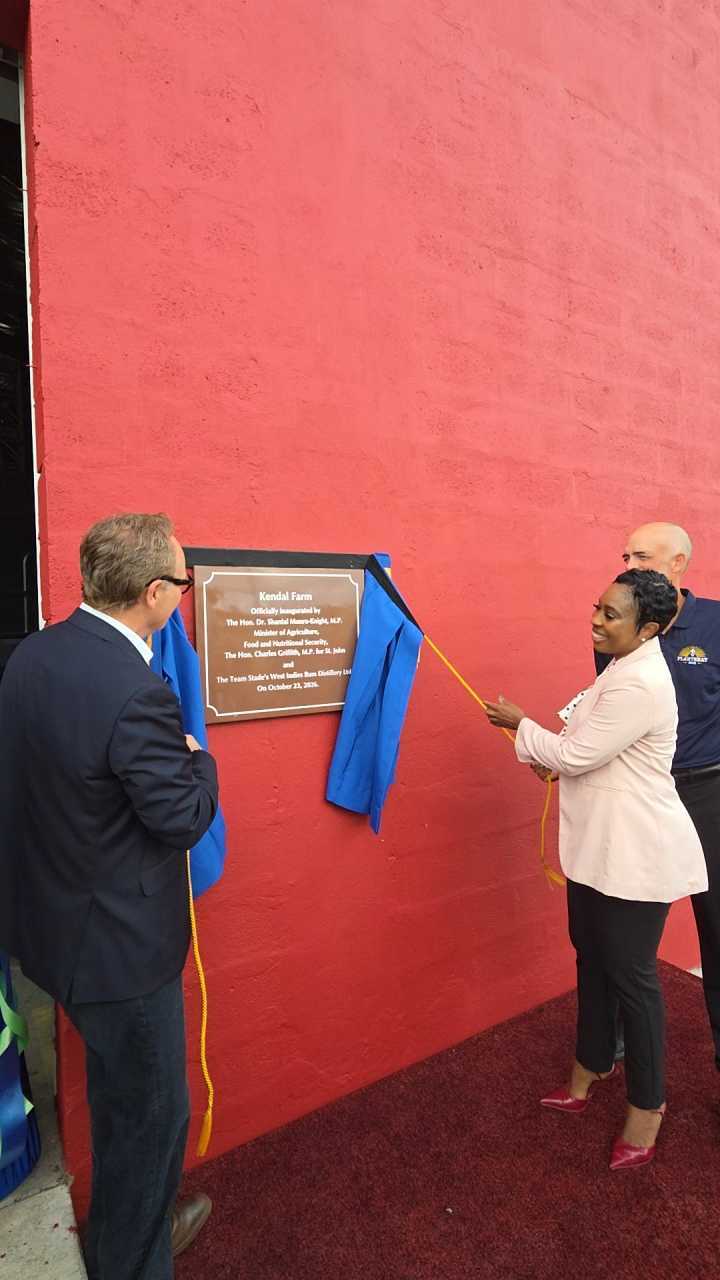
During a landmark ceremony marking the official takeover of Barbados’ iconic 17th-century Kendal Plantation by French-owned spirits producer West Indies Rum Distillery (a subsidiary of Stade’s), Agriculture Minister Dr. Shantal Munro-Knight announced on Friday that a state-of-the-art export packhouse will launch across the island in the coming weeks, in partnership with national trade agency Export Barbados, to unlock unprecedented global market access for local agricultural producers. The long-celebrated Kendal Estate, first established in 1648 — just eight years after sugarcane was initially introduced to Barbados — carries deep cultural and historical roots woven into the island’s national folklore, and forms the core of Stade’s new integrated model that unites commercial farming, cutting-edge agronomic research, time-honored rum production, and heritage spirit maturation on a single contiguous site. The event gathered cross-sector stakeholders including senior government officials, agricultural sector leaders, local business partners, international media outlets, and the distillery’s entire on-site operational team, with attendees including St John constituency MP Charles Griffith, Stade’s owner and master blender Alexandre Gabriel, managing director Andrew Hassell, farm controller Jason Gibson, and the full Kendal operations cohort. During his keynote address tracing the estate’s 375-year history, Hassell cited archival records linking Kendal to prominent colonial-era figures such as Thomas Modyford and the Kendall family, who controlled 470 acres of the property by 1680, alongside references to Richard Ligon’s seminal 1657 text *A True and Exact History of the Island of Barbados* that documented the island’s earliest sugar cultivation systems. He also referenced the enduring local legend of Inkle and Yarico, honored with a site monument unveiled in 2015, and the legacy of Adam Waterman, the enslaved Barbadian stonemason who led reconstruction of St John’s Parish Church following the catastrophic 1831 hurricane, as well as the groundbreaking 1859 discovery by agronomist John Redman Bovell that sugarcane could be propagated from seeds — a breakthrough that cemented Barbados’ global reputation as a world-leading sugarcane breeding hub. While acknowledging the estate’s layered past, Hassell framed Kendal’s legacy as one defined far more by collective Barbadian ingenuity, cross-generational achievement, and 375 years of continuous sugarcane stewardship than the trauma of the chattel slavery system that dominated much of the island’s early modern history. For his part, master blender Gabriel emphasized that despite the distillery’s global footprint — exporting award-winning spirits to 121 countries and recently earning top international manufacturing industry honors — centering local community collaboration remains the non-negotiable core of its operational mission. He paid special tribute to long-tenured distillery staff, including veteran craftsman Digger Anderson whose family has maintained ties to the rum production facility spanning 92 years, and detailed the multi-year, thousands-of-hours manual restoration of an authentic 1780s copper still completed in partnership with master coppersmiths and coopers. Gabriel further highlighted how the fusion of traditional local agricultural practices and modern production techniques, such as integrating homegrown Barbadian coconuts into the brand’s award-winning Cut & Dry coconut rum, creates a distinct, authentic product that carries the unique identity of Barbados to global consumers. In her formal address, Dr. Munro-Knight lauded the 10-year continuous investment Stade’s has made in Barbados, particularly its climate-hardened production infrastructure engineered to withstand category 5 hurricanes, as a model of the island’s signature resilience and innovative spirit. She outlined that the upcoming export packhouse forms a key component of the national agricultural strategy designed to empower small local growers, reduce post-harvest loss, and streamline compliance with international food safety standards for cross-border shipments. The minister stressed that investing in the upskilling of local agricultural workers, rather than only focusing on physical infrastructure, forms the fundamental pillar of a sustainable, intergenerational agricultural sector that can help small island developing states navigate the growing complexities of the global trade landscape, while preserving traditional craftsmanship such as historic rum vatting arts for future generations.