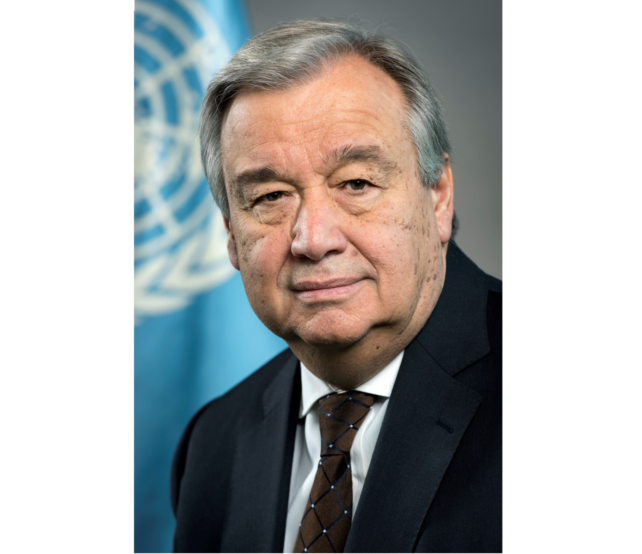
On October 24, 2026, United Nations Secretary-General Antonio Guterres released his official annual message marking United Nations Day, a commemoration that honors both the 81-year history of the intergovernmental body and the foundational ideal that unites all its member states: that humanity’s shared future can only be secured through collective, collaborative action to advance three core pillars of global progress: lasting peace, inclusive sustainable development, and universal human rights.
Since its founding in 1945, the United Nations has turned that guiding vision into tangible, real-world impact across every corner of the globe. For eight decades, the organization has prioritized diplomatic mediation and international legal frameworks as the primary tools to resolve cross-border disputes, rejecting violent conflict and armed confrontation as a solution to inter-state tensions. Its decades-long campaigns to eliminate extreme poverty and systemic hunger have lifted hundreds of millions of people out of deprivation, while its global advocacy for equal human rights protections has pushed nations to roll back discriminatory policies and expand safeguards for marginalized communities. For populations caught in the crossfire of armed conflict, hit by catastrophic natural disasters, or displaced by humanitarian crises, the UN’s frontline aid operations have delivered life-saving food, medical care, shelter, and logistical support that often cannot be provided by any single national government.
Beyond these direct humanitarian efforts, the United Nations has become an irreplaceable backbone of global governance that touches nearly every aspect of modern public life: it sets harmonized standards for cross-border transportation, fair international trade, and responsible emerging technology deployment; leads coordinated global action to protect public health and curb the accelerating devastation of the climate crisis; spearheads global campaigns to close gender gaps, expand access to education and economic opportunity for women and girls; and ensures even the smallest, most resource-limited nations have an equal platform to voice their priorities on the world stage, rather than being sidelined by more powerful geopolitical actors.
Against the backdrop of 2026’s cascading global challenges, Guterres emphasized that the UN’s core mission is more critical now than at any point in recent history. The international community today faces a landscape roiled by multiplying armed conflicts across multiple regions, escalating climate disaster impacts that are displacing millions and destroying critical ecosystems, widening economic and social inequalities that are splitting societies apart, and rapid advances in frontier digital and biotechnologies that are outpacing existing global regulatory frameworks, creating unforeseen new risks for communities worldwide.
In his closing call to action, the Secretary-General urged all UN member states to reaffirm the founding values that underpinned the creation of the United Nations 81 years prior: to choose constructive dialogue over hostile division, mutual cooperation over dangerous confrontation, and collective solidarity over isolated fear and self-interest. He implored global leaders to renew their formal commitments to these shared principles and the binding international obligations that support them, stand unwavering in their dedication to upholding the UN Charter and international rule of law, and pursue targeted reforms to strengthen the United Nations system so it can better serve the needs of all people and effectively address the defining challenges of the current era.
United Nations Secretary General’s message on United Nations Day