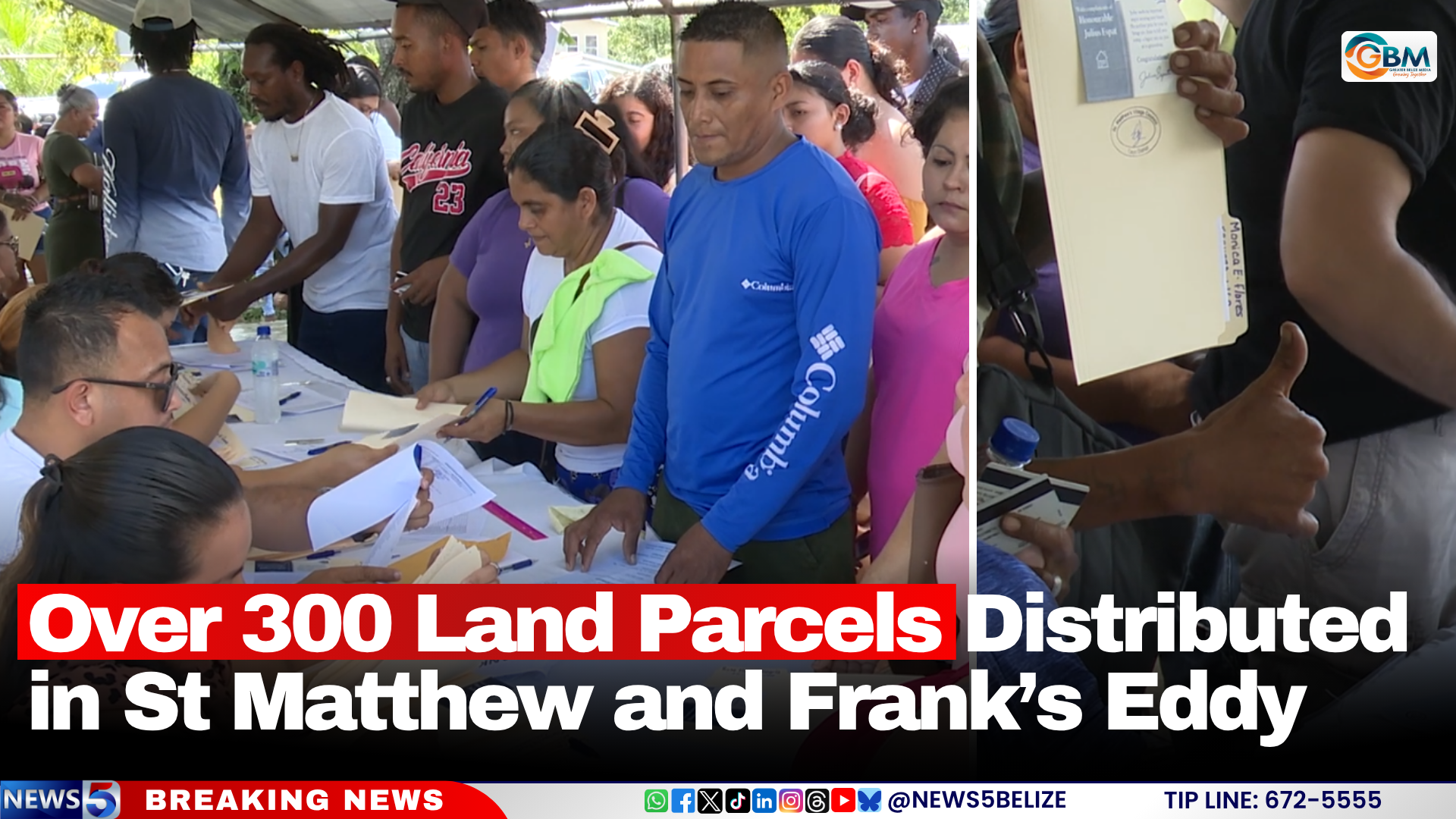
On October 23, 2026, a landmark public land access initiative jointly led by Belize’s Ministry of Natural Resources and Cayo South Area Representative Julius Espat delivered formal land tenure to hundreds of residents across the St Matthew and Frank’s Eddy communities in the Cayo District. In total, 343 distinct land parcels, split between residential lots and agricultural-use plots, were allocated to qualifying local residents and vulnerable households from surrounding areas, marking one of the largest targeted land distribution efforts in the constituency’s recent history. Deputy Prime Minister Cordel Hyde emphasized during the announcement that the program addresses a longstanding systemic gap where only a small privileged subset of local families hold inherited formal land deeds, leaving the vast majority of the population without tangible intergenerational assets to fall back on during periods of financial strain. “A small handful of families have the good fortune of passing down titled land to their children, but that is a rarity for most working people in this country,” Hyde noted. A core component of the scheme resolves decades of informal residency in Frank’s Eddy, where 88 residential lots were granted to households that had occupied the land for years without formal legal documentation, eliminating the risk of displacement for those long-term community members. The allocation framework is structured to prioritize local residents first: 75% of all parcels are reserved for permanent inhabitants of St Matthew and Frank’s Eddy, while the remaining 25% are earmarked for low-income landless households from other nearby communities. Espat explained that selection teams prioritized young, landless adults who are married, in common-law partnerships, or raising children, giving that demographic first right of refusal for parcels to help young families establish roots and build long-term stability. During the official handover ceremony, Hyde explicitly urged all new title holders to retain their parcels rather than selling them off quickly, framing formal land ownership as a foundational stepping stone to reduced monthly financial pressure, long-term economic resilience, and buildable generational wealth that can benefit future family members. The land distribution rollout is not an isolated intervention: Espat confirmed it forms part of a broader multi-pronged development agenda for Cayo South, which is also rolling out targeted infrastructure upgrades across all 13 villages in the constituency to complement the new land access gains.