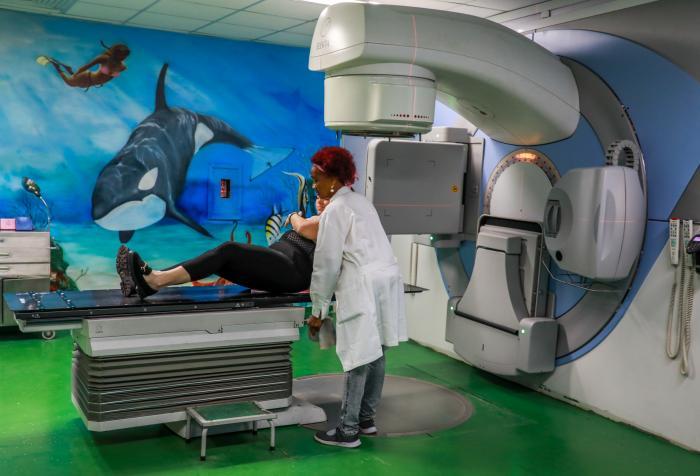
On October 22, 2026, a high-profile parliamentary public hearing themed “Cuba Is Not a Threat—the Blockade Is” convened at Havana’s National Institute of Oncology and Radiobiology (INOR), convened by Cuban legislative leaders to lay bare the devastating human costs of the decades-long U.S. economic, commercial, and financial blockade ahead of a scheduled United Nations General Assembly vote on October 27–28 that will consider a binding draft resolution demanding an immediate end to the unilateral coercive measure. Chaired by Esteban Lazo Hernández, member of the Communist Party of Cuba’s Political Bureau and President of the National Assembly of People’s Power, alongside Teresa Amarelle Boué, Secretary-General of the Federation of Cuban Women, the event brought together lawmakers, medical practitioners, pharmaceutical industry experts, cultural leaders, and youth representatives to testify to the blockade’s cascading harms across every sector of Cuban society, framing the policy as a flagrant violation of international law and the core principles enshrined in the UN Charter. Opening the testimonies, Council of State member and Federation of University Students president Lawmaker Litza Elena González Desdín emphasized that the hearing spoke directly on behalf of all Cuban people, particularly its youth, who are calling for a global order rooted in peace, cross-national solidarity, and mutual respect, free from arbitrary threats and punitive blockades. She echoed recent statements from Cuban President Miguel Díaz-Canel Bermúdez and Foreign Minister Bruno Rodríguez Parrilla, decrying ongoing U.S. diplomatic pressure on UN member states to alter their longstanding support for the resolution calling for an end to the blockade. Physician and expectant mother Josefina Prosper Bruff, an INOR staff member, humanized the abstract economic damage figures by noting that the Cuban public health sector sustained $367 million in losses between March 2025 and February 2026 alone, with every statistical figure tied to a real, vulnerable life. She outlined cascading crises facing the national healthcare system: 300 of the 395 essential medications on Cuba’s national formulary are currently out of stock due to impossible barriers to importing raw materials and finished pharmaceutical products; frequent energy shortages force hospitals to delay non-emergency surgeries, disrupt vaccination campaigns, and threaten the continuity of life-sustaining hemodialysis treatments. In neonatal intensive care units, over 95% of life-support equipment relies on unstable power grids, forcing clinical teams to improvise mid-operation when blackouts strike. Most alarmingly, the survival rate for Cuban children and adolescents diagnosed with cancer annually (between 300 and 400 new cases) has plummeted from 85% to 65% due to shortages of specialized chemotherapies and diagnostic equipment, leading Prosper Bruff to declare that lifting the blockade at this juncture is not a partisan political demand, but an urgent ethical imperative. Deputy Carlos Antonio Leyva Isaac, a chemical engineer with deep ties to Cuba’s domestic pharmaceutical sector, explained how overlapping financial and trade sanctions have crippled local drug manufacturing operations, describing the production pipeline as a puzzle permanently missing critical pieces: while Cuba has skilled workforces, existing production facilities, and full pharmaceutical formulas ready to deploy, restricted access to imported active pharmaceutical ingredients, packaging materials, and lab reagents means that most planned production batches cannot be completed. The Valles Pharmaceutical Laboratory, which produces 70% of the country’s intravenous parenteral solutions and 100% of its oral rehydration salts, faces constant supply chain disruptions that directly endanger renal patients, pediatric care recipients, and people dependent on routine intravenous treatments. Leyva Isaac emphasized that the blockade’s impacts extend far beyond direct U.S.-Cuba trade restrictions: Washington’s secondary sanctions penalize third-country suppliers, cut off Cuban entities from global bank financing, and create pervasive “financial fear” that makes even sympathetic international partners hesitant to engage in commercial relations with Cuba. He stressed that Cuban representatives will not beg for charity at the UN, but rather demand consistency from the global community to acknowledge the blockade’s well-documented harms and uphold international law. Leidys María Labrador Herrera, deputy director of the official newspaper *Granma*, testified that no segment of Cuban society has escaped the blockade’s reach, framing the policy as a form of collective punishment imposed solely because the Cuban people have exercised their sovereign right to self-determination and rejected foreign interference. She highlighted the quiet heroism of Cuban workers, from medical staff who show up to work at hospitals even when they face the same food and utility shortages at home, to mothers navigating scarce household supplies to care for their children, and commuters who overcome crippling transportation gaps to fulfill their job responsibilities. She also called out ongoing U.S. diplomatic efforts to coerce UN member states to abstain or skip the upcoming vote, noting that Washington’s aggressive lobbying exposes the absurdity of U.S. claims that the blockade is a non-existent or benign policy. Labrador Herrera pointed out that the fight against the U.S. blockade is not an exclusively Cuban cause: by defending its own sovereignty, Cuba is setting a precedent that protects the right to self-determination for every small nation across the globe. Yasel Toledo Garnache, president of the Hermanos Saíz Association that represents young Cuban artists and creators, outlined how the blockade’s economic and energy crises have limited access to art supplies, performance equipment, and travel opportunities for cultural workers, but emphasized that Cuban creators have continued to produce defiant, joyful art that preserves national cultural identity even under extreme hardship. She expressed solidarity with U.S.-based artists and intellectuals who advocate for normalized, respectful relations between the two nations. The hearing closed with Litza Elena González Desdín issuing a global call to young people, elected representatives, and ordinary communities across all continents to stand in solidarity with Cuba, demand the immediate end to the U.S. blockade, energy siege, and all other unilateral coercive measures imposed on the island, ahead of the landmark UN General Assembly vote.