At the 22nd Forum of Cuban Civil Society against the Blockade held on October 23, 2026, health and civil society officials delivered a damning assessment of the six-decade U.S.-imposed economic, commercial, and financial embargo on Cuba, framing the long-running policy as a genocidal, increasingly aggressive campaign designed to suffocate the entire Caribbean nation. For generations, Cuba’s widely celebrated National Health System, once a regional benchmark for equitable, high-quality care, has been forced to operate under relentless external pressure that has escalated into an unprecedentedly inhumane phase in recent years, with harms felt daily in clinics, hospital wards, and ordinary Cuban households across the country.
José Armando Arronte, head of the International Organizations Department at Cuba’s Ministry of Public Health (Minsap), outlined cascading, life-threatening strains on the system compounded by a deliberate U.S.-driven “energy strangulation” campaign and the unjust, politically motivated designation of Cuba as a purported state sponsor of terrorism. These false pretexts have pushed the Cuban population, and its health infrastructure in particular, to breaking point. Current data shows more than 100,000 Cuban patients are stuck on surgical waiting lists, 12,000 of whom are children, forcing Minsap to ration care by prioritizing only oncological and life-saving emergency procedures to avoid preventable premature deaths. An additional 39,750 pregnant women cannot access timely diagnostic ultrasounds, while 67,000 infants under one year old face disrupted immunization schedules, as broken supply chains and restrictions make it impossible to maintain the strict temperature-controlled “cold chain” required to safely transport and store vaccines across all Cuban regions. The country’s historic infant mortality rate, which for years held steady below 5 per 1,000 live births, rose to 9.6 by the end of 2025 — a figure that remains comparatively low for the Latin American and Caribbean region, but one that officials stress does not reflect the true capacity of Cuba’s world-class medical professionals or the standard the national system was designed to deliver.
The blockade’s stranglehold on medical supplies and equipment has gutted care for some of Cuba’s most vulnerable patient groups. Childhood cancer survival rates have plummeted, as care teams are forced to rely on less effective second- and third-line treatments when first-line therapies are unavailable. Roughly 16,000 patients currently rely on radiotherapy, 12,400 are undergoing chemotherapy, and 3,000 depend on regular hemodialysis to survive, yet only 30% of Cuba’s list of essential medicines is reliably in stock. Local pharmacies face crippling shortages of insulin, common antihypertensives, and core diagnostic agents. State medical supply enterprise MediCuba S.A. confirmed that 100 shipping containers bound for Cuba, including 10 holding life-sustaining hemodialysis supplies such as intravenous lines, fistula needles, and dialyzers, are currently being detained in Jamaican ports, as the French shipping company contracted to move the goods refuses to complete delivery out of fear of harsh U.S. secondary sanctions that penalize firms doing business with Cuba. Medical equipment stockpiles have also suffered catastrophic deterioration: just 32 of Cuba’s 68 CT scanners remain functional, representing a 41% operational rate; only 4 of the country’s 9 angiographic systems are in working order; just 4 of 21 MRI machines can be used for patient care; and the technical availability rate of linear accelerators for radiotherapy dropped to 33.3% by 2025. Forum participants repeatedly emphasized that upholding the fundamental human right to health must always take precedence over narrow political or economic geopolitical interests.
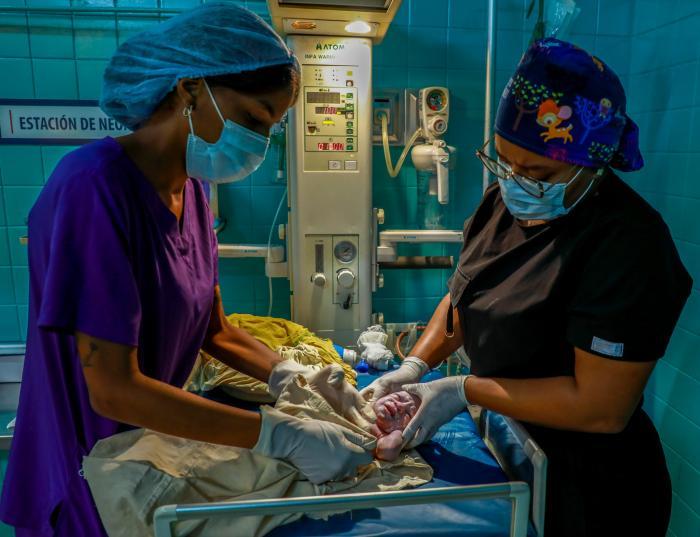
Maternal and child health services have been disproportionately impacted by the blockade’s restrictions, according to Dr. Dayana Couto, president of the Cuban Society of Gynecology and Obstetrics. Shortages of medications designed to prevent postpartum hemorrhage — the leading cause of maternal mortality in Cuba — have driven sharp rises in severe bleeding cases, maternal anemia, and the need for emergency blood transfusions and life-saving interventions. Pregnant women routinely face barriers to accessing ultrasounds, genetic testing, and specialized prenatal care, delaying early detection of infectious diseases and pregnancy complications that would otherwise be caught and treated quickly. In extreme emergency scenarios, frontline medical staff have even been forced to use the light from personal mobile phones to complete deliveries or cesarean sections, when power cuts and oxygen supply outages leave operating rooms without adequate lighting. Widespread shortages of contraceptives, condoms, and infertility treatments have also upended the family planning goals of countless Cuban individuals, couples, and households.
Osmayda Hernández Beleño, a national secretariat member of the Federation of Cuban Women, noted that the blockade’s harms do not fall on abstract government structures, but directly on ordinary people, with women bearing a disproportionate share of the burden. Women across Cuba are now tasked with navigating daily hurdles to secure stored food, safe household drinking water, and care for children, adolescents, elderly relatives, sick household members, and people with disabilities, all while juggling paid work and rearranging family schedules to compensate for unstable basic public services. These endless, uncompensated domestic demands cut into women’s rest and personal time, and limit their ability to fully participate in formal employment, education, social and community life, and formal decision-making spaces — even after decades of targeted policy progress that had secured exceptional gender equity outcomes across Cuban society.
Norma Goicochea, president of the Cuban United Nations Association, added that the decades-long blockade violates the Cuban people’s fundamental right to self-determination by disregarding their sovereign, democratically expressed choice of national political and social system. The policy also violates longstanding global principles of free trade and freedom of navigation, a reality underscored by the detention of more than 7,000 Cuba-bound shipping containers in ports across every region of the world. Forum participants concluded that the blockade remains the single largest obstacle to Cuba’s broader economic and social development, and directly undermines the country’s ability to meet all 17 United Nations Sustainable Development Goals. “The Cuban people show extraordinary resilience and endurance every single day, but this genocidal blockade claims preventable lives on a daily basis,” forum representatives stated in a joint closing denunciation.