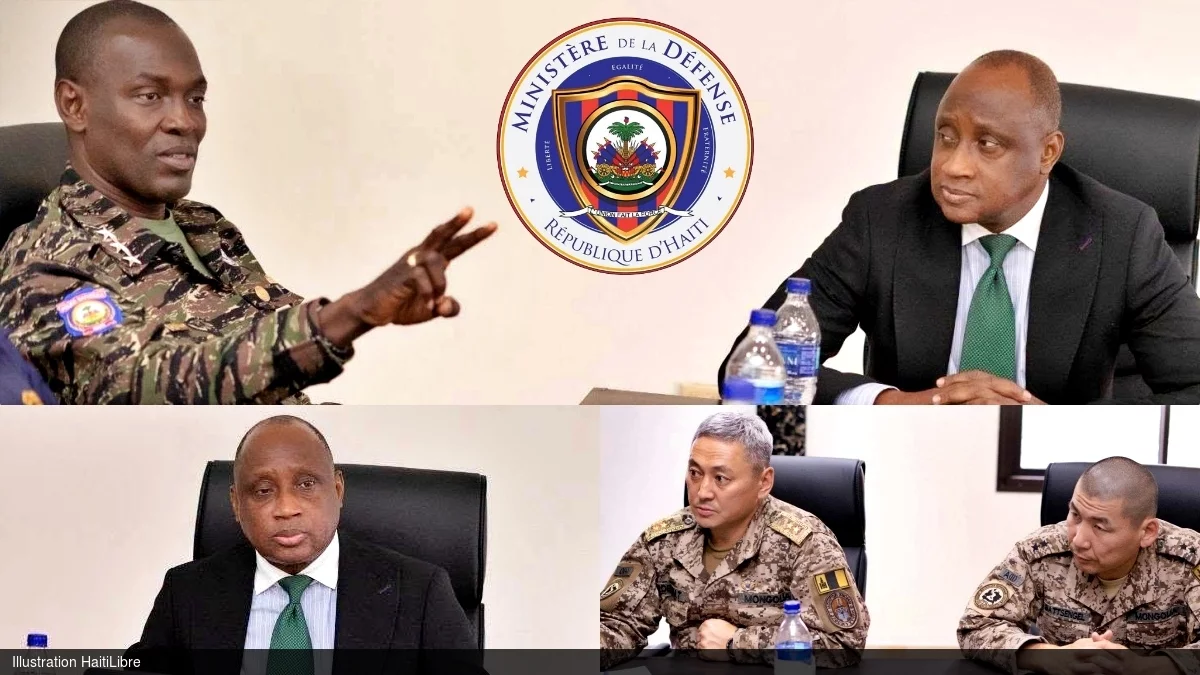
On November 9, 2026, Haiti’s Minister of Defense Mario Andrésol, flanked by two senior leaders from the Armed Forces of Haiti (FAd’H) High Command, led a pivotal cross-agency working session focused on elevating national security operations amid ongoing widespread gang violence across the Caribbean nation. The gathering brought together key stakeholders including Haitian National Police (PNH) Director General Vladimir Paraison and Major General Erdenebat Batsuuri, commanding officer of the specialized Gang Suppression Force (GSF), to align priorities for countering armed criminal groups designated as terrorist entities by Haitian authorities. Core deliberations during the closed-door session centered on drafting unified joint operational frameworks that break down historical silos between Haitian military, national police, and specialized anti-gang units, to create greater functional complementarity between deployed teams and deliver more consistent, rapid response actions in high-risk communities. Participants also conducted a granular review of the current geographical deployment of security personnel across Haiti’s multiple active operational zones, with a clear mandate to reallocate underused resources to underserved high-crime areas to eliminate coverage gaps and maximize the impact of limited operational assets. A third critical pillar of the discussions focused on rolling out enhanced layered security protocols for Haiti’s most critical national strategic sites, including port facilities, government installations, energy infrastructure, and key transportation hubs, to shield critical public assets from gang incursions and disruption. The high-profile consultation comes at a time when the Gang Suppression Force is already active in field operations, alongside over 2,000 deployed Salvadoran military support personnel, marking a tangible step by Haiti’s national security leadership to harmonize the actions of all domestic and international security contributors and build a far more cohesive, synchronized national security architecture to curb the country’s long-running gang crisis.