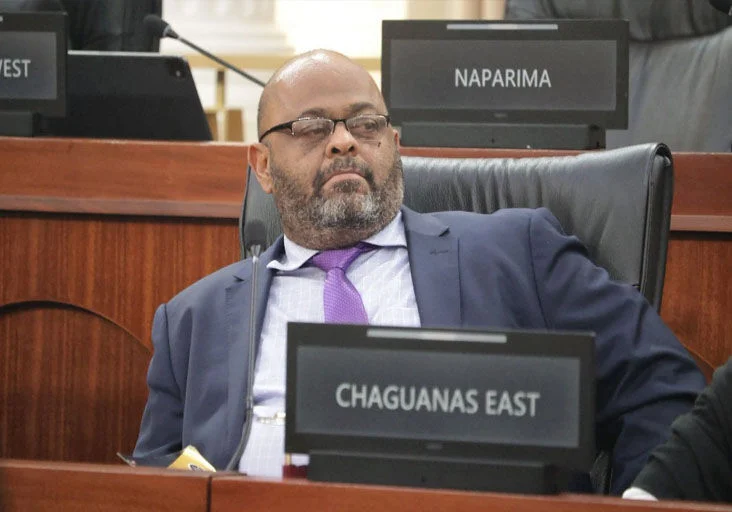
During a Wednesday session of Trinidad and Tobago’s Parliament Standing Finance Committee, Defence Minister Wayne Sturge laid out a slate of planned national security investments for fiscal 2027, spanning Coast Guard maritime assets, unmanned aerial systems, critical base infrastructure upgrades, and Air Guard operational equipment. In response to queries from Port of Spain North/St Ann’s West MP and former Prime Minister Stuart Young, Sturge confirmed that no new high-speed interceptor patrol vessels have been acquired to date, despite a prior cross-government initiative launched by the previous administration that included a signed financing agreement with U.S. EximBank for interceptor procurement. The current administration has earmarked $2 million in the 2027 fiscal budget for these interceptor craft, which are purpose-built for rapid maritime interdiction and coastal patrol operations. Sturge declined to disclose the exact number of vessels the funding would cover, citing that public disclosure of such operational details would not serve national public interest, noting that the ministry is finalizing plans largely aligned with the original project scope drafted under the prior government. Additional allocations outlined during the sitting include $30 million for integrated ongoing support services for all existing naval assets, which Sturge confirmed all Dutch-manufactured Damen vessels remain fully operational, with one currently deployed in Colombia. For the Cape-class patrol vessel fleet, nearly the full $65 million allocated for integrated logistics support in the previous fiscal year has been expended, with a combined $42 million earmarked for the 2027 and 2028 fiscal cycles to cover full support for both active Cape-class craft. The committee also reviewed separate lines of funding for unmanned aerial capabilities across the country’s security forces: a $5 million allocation to establish a dedicated Air Guard military unmanned aerial vehicle unit, which includes full personnel training, and a separate $2 million budget line for Coast Guard unmanned aerial systems. Sturge invoked public interest immunity to withhold specific details on the number, model, and full technical specifications of the drones being procured, noting the government is prioritizing cost-effective, field-proven platforms rather than premium, high-cost systems. He added that final specifications for the Coast Guard drone fleet have been finalized, and the procurement proposal will be submitted to the National Security Council for formal approval before any tender processes launch. The session also covered a series of critical infrastructure upgrades for defence facilities across the country. A $20 million budget allocation is proposed for a full utility overhaul of the Staubles Bay base in Chaguaramas, following the expenditure of a $396,000 revised 2026 fiscal estimate on partial electrical system upgrades. The 2027 works will cover full overhauls of the potable freshwater network, wastewater management system, remaining electrical infrastructure, and base firefighting systems, to be executed by state agency Nipdec. While Sturge confirmed procurement processes have already commenced, he could not verify if public tender advertisements have been released, advising MP Kareem Marcelle of Laventille West to submit a Freedom of Information Act request to Nipdec to access those specific records. A separate $10 million allocation is set aside for full upgrades to the shared Cedros Coast Guard station, a multi-agency facility that also hosts Trinidad and Tobago Police Service, Immigration Division, and Customs and Excise Division personnel. Sturge noted the facility was found to be severely dilapidated during an inspection in August of the previous year, posing significant occupational health and safety risks to all assigned staff, prompting a joint follow-up visit with the Minister of Works and Infrastructure to fast-track repairs. The committee also addressed long-running delayed projects at the Ulric Cross Air Station: the long-stalled sewer interconnection project, which faced 2026 delays due to extended negotiations over work scope and associated costs, is now over 90% complete, with national water authority WASA confirming full completion within six months, supported by a $600,000 proposed final payment allocation. A separate plumbing system upgrade at the station, delayed to revise its work scope, is scheduled to restart and be fully completed within fiscal 2027, while plans for a new above-ground diesel refuelling station have resolved all prior tank specification disputes, pending final regulatory approval from the Airports Authority and a formal facilities alteration permit, with the Air Guard set to execute the construction work once approvals are granted. Finally, a $2 million allocation for new Air Guard vehicles and associated operational equipment has had all technical specifications finalized, with formal procurement tendering set to launch imminently.