New preliminary data released by Suriname’s General Bureau of Statistics (ABS) on Thursday shows the country’s annual inflation rate has slowed to 7.3% in September 2026, down from 8% recorded in August, marking a continued downward trend in monthly price growth across the nation.
When compared month-over-month, average consumer prices rose just 0.1% between August and September, a further weakening of monthly inflation that followed a 0.2% increase in the previous month. While the overall inflation pace has cooled, the data reveals stark disparities in price changes across different consumer goods and service categories, with fresh produce leading the annual price surges.
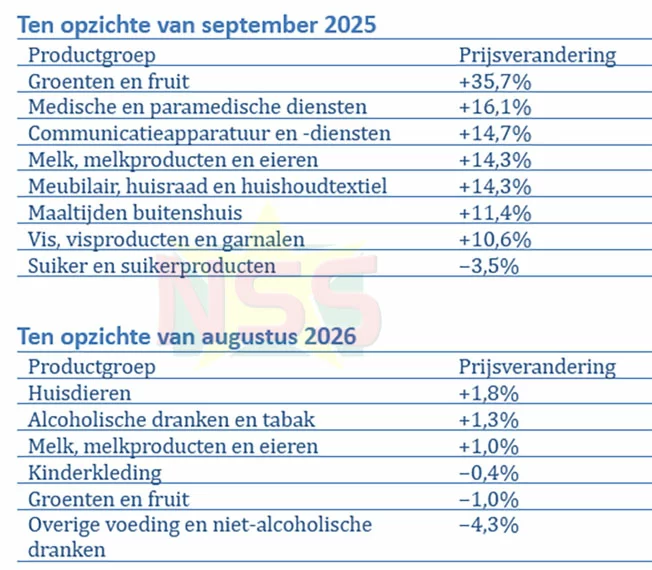
Year-over-year, fruits and vegetables remain the most impacted category, with average prices jumping 35.7% from September 2025 levels. Behind fresh produce, medical and paramedical services recorded a 16.1% annual price increase, while communication equipment and services saw prices rise by 14.7%. Dairy products including milk, along with eggs, posted a 14.3% annual price gain – the same rate of increase logged for furniture, household goods and home textiles. Out-of-home meals rose 11.4% year-over-year, and fish, seafood and shrimp products increased by 10.6% annually.
Against these widespread hikes, only one product category recorded an annual price decline: sugar and sugar-based products, which were 3.5% cheaper in September 2026 than in the same month a year prior. When looking at month-over-month changes from August to September, more categories saw price drops. The largest monthly decline was 4.3% for miscellaneous food products and non-alcoholic beverages. Fruits and vegetables dipped 1% on average from August levels, and children’s clothing fell 0.4% in price.
At the same time, month-over-month increases were recorded in a number of smaller categories: pet product prices rose 1.8%, alcoholic beverages and tobacco went up 1.3%, and dairy and eggs increased 1% from August.
ABS officials emphasize that easing inflation does not equate to falling overall consumer prices. Even with the slowdown in annual growth, average consumer prices remain 7.3% higher than they were 12 months prior, keeping cost-of-living pressures elevated for households across the country. To produce its inflation estimates, the ABS tracks prices for a fixed basket of 316 different goods and services. Price data is collected from roughly 630 monitoring points spread across seven districts: Paramaribo, Wanica, Nickerie, Coronie, Saramacca, Commewijne and Para, ensuring the dataset reflects nationwide consumer cost trends.