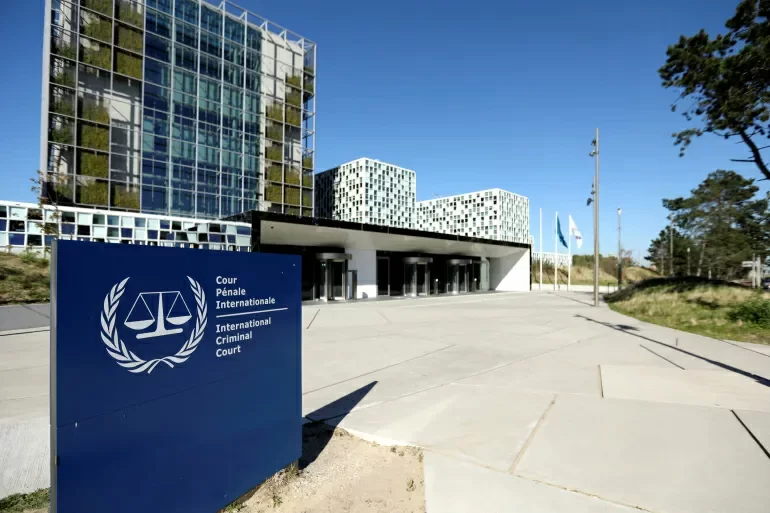
In a striking show of support for international law amid growing geopolitical tension, the International Criminal Court (ICC) has been awarded the 2026 Sakharov Prize for Freedom of Thought by the European Parliament. The prestigious award recognizes the global judicial body and its staff for their unwavering commitment to upholding international law and advancing universal justice, and it comes at a moment when the ICC faces intensifying pressure and punitive measures from the United States government under former President Donald Trump.
European Parliament President Roberta Metsola made the official announcement of the award this Thursday in Strasbourg. She emphasized that the honor underscores the European Union’s enduring commitment to multilateralism and to independent international institutions tasked with overseeing compliance with global legal norms.
ICC President Tomoko Akane welcomed the recognition, acknowledging the extraordinary challenges that the court and its personnel currently navigate. Akane noted that the prize reaffirms the critical importance of independent judicial bodies and cross-border international collaboration, both of which are essential to enable the ICC to fulfill its mandate impartially and without external interference.
The award comes in direct response to expanding U.S. sanctions targeting the ICC. The Trump administration first implemented punitive measures against ICC judges and prosecutors, and on October 9, 2026, the U.S. broadened these sanctions to cover the ICC as an entire institution. Washington has repeatedly pushed back against ICC investigations and prosecutions that it claims threaten U.S. and allied national interests. Most recently, the U.S. has vehemently objected to the 2024 ICC arrest warrants issued for Israeli Prime Minister Benjamin Netanyahu and former Israeli Defense Minister Yoav Gallant.
The ICC has publicly rejected the sanctions, arguing that they unlawfully obstruct the court’s independent work. Established by international treaty, the ICC’s core mandate is to investigate and prosecute individuals accused of genocide, war crimes, crimes against humanity, and the crime of aggression. While the U.S. sanctions aim to curtail the court’s operational capacity by restricting its financial and commercial transactions, limited exceptions and temporary licenses are in place for certain activities, meaning the ICC’s work is not immediately halted across the board.
The European Union has been vocal in its opposition to U.S. pressure on the court. Following the Sakharov Prize announcement, European Commission President Ursula von der Leyen stressed that the ICC must be allowed to carry out its mandate independently, free from intimidation and political coercion. EU policymakers are currently exploring legal avenues to protect EU institutions, businesses, and individuals from the spillover effects of U.S. sanctions, with a bloc-wide blocking statute cited as a potential policy response. It is important to note that the awarding of the Sakharov Prize does not reverse the U.S. sanctions, nor does it automatically enact any such countermeasures.
The official Sakharov Prize award ceremony is scheduled for December 16 in Strasbourg. Established in 1988, the annual prize honors individuals or organizations that have demonstrated exceptional dedication to defending human rights and fundamental freedoms.
The ICC’s recognition comes less than two weeks after former ICC judge Navi Pillay was awarded the 2026 Nobel Peace Prize on October 9 for her decades-long work advancing peace and international law. A former United Nations High Commissioner for Human Rights, Pillay has spent her career strengthening international judicial frameworks and protecting vulnerable communities around the world. The twin recognitions of Pillay and the ICC have reignited global attention on the critical role of international law and accountability for mass atrocities in today’s fragmented geopolitical landscape.