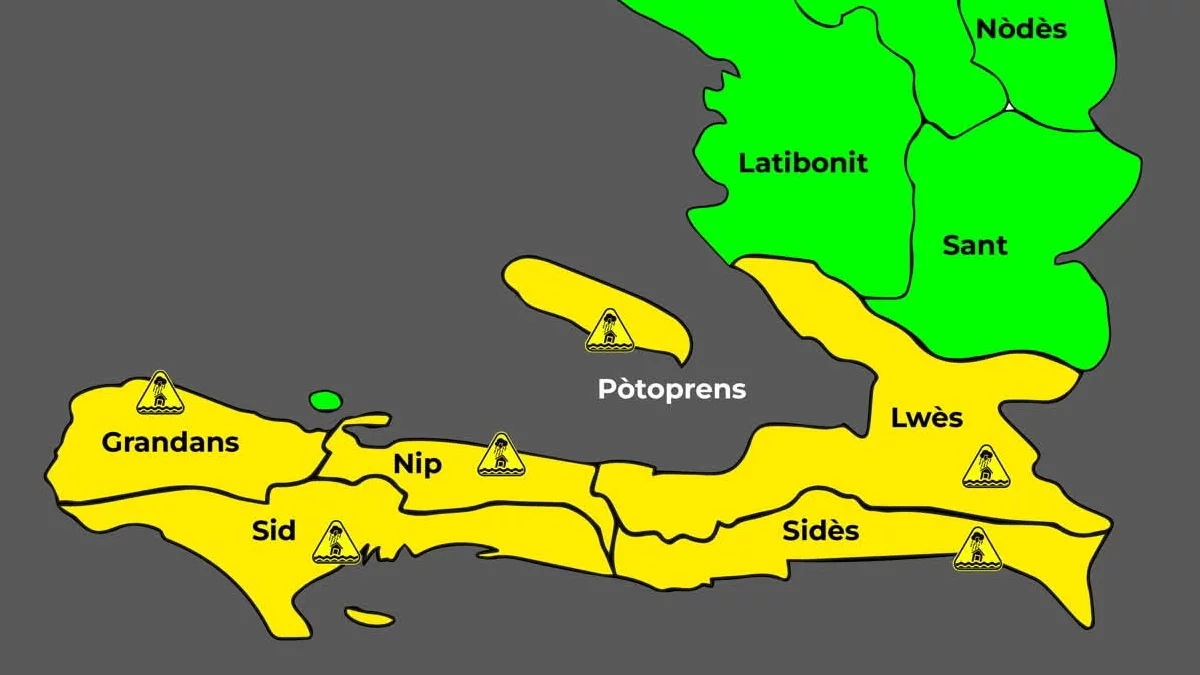
On October 22, 2026, Haitian national disaster management authorities issued an urgent yellow level weather alert for five of the country’s administrative departments, warning of impending heavy rainfall, thunderstorms, and associated hazards driven by a shifting low-pressure system.
The storm system, currently positioned over the central and northwestern Caribbean Sea, is projected to bring sustained severe weather to the Grand’Anse, South, Nippes, South-East, and West departments. Per official projections, adverse conditions will begin impacting affected regions by the afternoon of October 22 and continue through the end of Friday, October 23.
Meteorological data forecasts total rainfall accumulation between 50 and 100 millimeters across the alert zones, paired with gusty strong winds. Officials warn that these conditions create elevated risk of flash flooding and mudslides in geographically vulnerable areas of the five departments, many of which already face chronic structural vulnerabilities to extreme weather.
The joint alert was issued by three leading Haitian emergency and weather agencies: the National Disaster Risk Management System (SNGRD), the Haitian Hydrometeorological Unit (UHM), the General Directorate of Civil Protection (DGPC), and the Permanent Secretariat for Disaster Risk Management (SPGRD). In addition to activating the yellow alert, authorities have released a set of clear safety guidelines to help residents prepare for the incoming severe weather.
Public officials are urging all residents, particularly those settled in high-risk, flood- and landslide-prone zones, to maintain constant vigilance over the coming 48 hours. The guidance emphasizes that residents should prioritize accessing official weather updates and emergency directives through verified channels, including radio broadcasts, television reports, and official government statements, and avoid spreading or acting on unconfirmed rumors circulating on social media or informal networks.
Additional preparatory steps recommended by authorities include moving personal property and critical legal, identification, and financial documents to elevated, flood-safe locations ahead of projected rainfall. Residents are also advised to assemble a multi-day emergency kit stocked with essential supplies, including non-perishable food, bottled drinking water, extra batteries, a portable radio, a working flashlight, and any necessary prescription medication, to sustain households if travel becomes unsafe or access to services is interrupted. Finally, officials strongly advise against all non-essential travel to mountainous regions or travel along waterways during the active alert period, when hazards can develop rapidly with little warning.