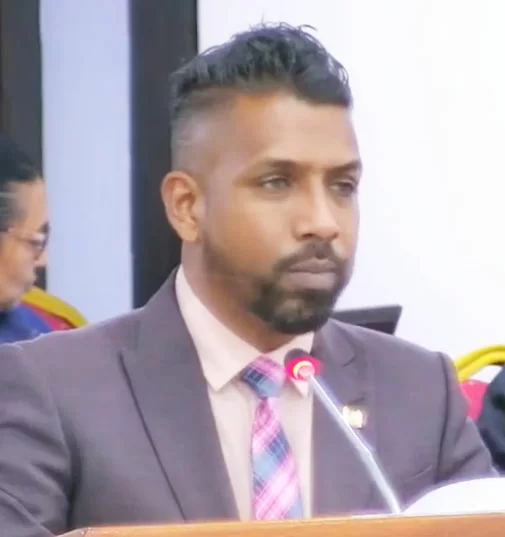
PARAMARIBO, Suriname – Suriname’s national legislature, the Nationale Assemblée (DNA), has approved legislation to adopt four international child protection conventions agreed at The Hague, with a three-year transition period for the government to complete organizational and legal preparations before the treaties enter into force. Justice and Security Minister Harish Monorath introduced an amendment during parliamentary debate that sets the delayed effective date, addressing lawmakers’ concerns about the country’s readiness to meet the conventions’ requirements while outlining plans to overhaul the nation’s family law regulatory body.
The four treaties cover cross-border issues critical to child welfare: international child abduction, intercountry adoption, parental responsibility and child protection, and the cross-border enforcement of child support payments. Once fully implemented, the agreements will strengthen legal protections for children and families when cross-border family law disputes arise. While the legislation received broad cross-party support in the DNA, passing with 30 unanimous votes, lawmakers raised pointed questions about government preparations, resource allocation, and the rationale for the three-year transition.
Under the new governance framework outlined by Minister Monorath, two existing state bodies will take on central coordinating roles. The Bureau for Family Law Affairs (BUFAZ) will act as the national central authority for the adoption, child support, and general child protection conventions. The Public Prosecutor’s Office (OM) will take the lead on the international child abduction convention, as Monorath noted the OM already has the specialized expertise and cross-agency networks needed to handle cross-border abduction cases.
Monorath acknowledged that BUFAZ currently faces significant operational challenges, so the government is moving forward with a plan to restructure the bureau into a full directorate for family law affairs. This restructuring is intended to lay the groundwork for the eventual establishment of a dedicated national Child Protection Council in Suriname. A special commission has already been formed to oversee the transformation process, and UNICEF is providing both technical and financial support to the initiative. The minister confirmed that recommendations from a 2022 independent assessment have been integrated into the operational transformation plan.
Lawmakers pressed the minister on why a three-year transition period was necessary, given that preparations for joining the conventions have been underway for several years. Monorath explained that the timeline aligns with the planned restructuring of BUFAZ. Converting the existing department within the Ministry of Justice into an independent directorate requires substantial organizational changes, and he argued that immediately creating a fully operational Child Protection Council would be unrealistic.
In addition to the transition timeline, the amendment introduced by Monorath clarifies that the ministers of justice and foreign affairs will hold joint responsibility for implementation of the conventions. Lawmakers raised further questions about the impact of the delayed timeline and the possibility of Suriname entering reservations to specific provisions of the treaties, including issues around age limits for child support and alignment with existing national law. They also asked whether the government has fully accounted for the costs of international legal procedures, legal aid, and institutional strengthening.
Monorath responded that agreements on cost allocation and coverage will be finalized in the coming months, but emphasized that Suriname must take full financial responsibility for costs related to protecting its own citizens, including children. Lawmakers stressed that the transition period cannot be used to delay preparatory work, and called for a clear public timeline listing required national legal amendments, budget allocations, and assigned responsibilities for implementing bodies.
The minister also addressed ongoing questions about the status of the Suriname Children’s Ombudsman Institute. Although DNA approved legislation to create the institution in 2024, it is not yet fully operational. A presidential working group was convened to develop the institute’s organizational structure, staffing plan, compensation framework, and implementing regulations. The working group’s original mandate has expired, and a decision on whether to extend its work is still pending.
Monorath framed the Children’s Ombudsman Institute and the four Hague conventions as complementary components of a comprehensive national child protection system. The ombudsman will focus on protecting children’s rights within Suriname, while the international treaties will enable cross-border cooperation to resolve transnational child welfare cases.
During the parliamentary debate, lawmakers also drew attention to ongoing child protection challenges within Suriname, including child labor, domestic violence, sexual abuse, and unequal access to education. They emphasized that international agreements have limited practical impact if domestic child protection institutions do not function effectively. While DNA’s approval of the four conventions marks an important expansion of international legal protection for children, the government now faces the task of delivering on the required organizational, legal, and budgetary commitments over the three-year transition period to bring the treaties into force.