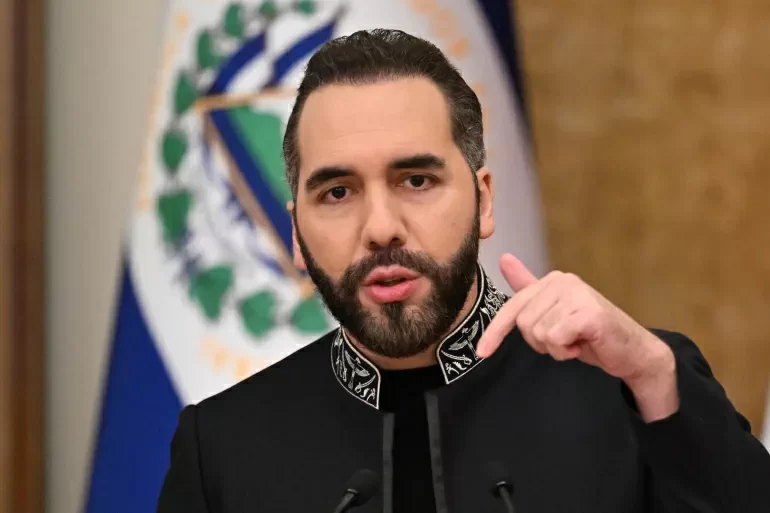
A high-stakes international crisis has unfolded in Haiti, where El Salvadoran President Nayib Bukele has ordered a full military rescue operation to free four of his country’s citizens, who are being held captive by armed gangs in the Caribbean nation. The abduction, which has put the global anti-gang mission in Haiti under intense scrutiny, comes amid years of spiraling violence and political instability in the country.
The four captives are air force technicians serving as part of the international Gang Suppression Force (GSF), the multinational security mission deployed to support Haitian security services in their campaign against powerful armed criminal groups that control large swathes of Haitian territory. Bukele publicly addressed the suspected kidnappers directly in a post on the social platform X on Wednesday, issuing a stark ultimatum: release the four hostages alive and unharmed, or face a far more aggressive military response from El Salvador.
“Today’s opening action is nothing compared to what will come if you do not release the four hostages alive,” Bukele warned in his statement, adding that gangs should not dismiss his warning as empty rhetoric. Drawing on his well-documented hardline crackdown on organized crime in his home country, Bukele emphasized: “We have already taken down gangs in El Salvador, and we can do the same to you.”
The four Salvadoran service members went missing on Sunday, October 18, after their armored vehicle came under heavy fire in the Santo neighborhood of Croix-des-Bouquets, a municipality on the outskirts of Haiti’s capital Port-au-Prince. The vehicle caught fire during the attack; the crew managed to escape the burning vehicle, but all contact was lost immediately after. Ever since, Salvadoran and international security forces have worked to locate the missing men, but their search efforts have been severely hampered by intense ongoing combat in the area.
Support helicopters sent to aid the search have also come under enemy fire, and neither ground nor aerial reconnaissance missions have yielded confirmed information about the captives’ condition or whereabouts to date. Bukele stressed that the Salvadoran contingent in the GSF is not a frontline combat unit, noting their core mission within the international deployment focuses on aviation support, medical evacuations, and saving lives.
For its part, the Haitian government has named the safe release of the four troops an absolute top priority. According to an official government statement, Haitian Prime Minister’s office held coordinating talks Wednesday to review ongoing intervention efforts and plan additional measures to strengthen rescue operations, in close collaboration with GSF leadership. As of Thursday, Haitian authorities have not released public confirmation that the four men are still alive, nor have they officially named which gang is responsible for the abduction. International security forces continue to operate in the attack zone, and local residents have been ordered to shelter in place amid continuing clashes.
The abduction marks one of the most severe attacks on the GSF since the mission launched, and represents a critical test of the international deployment’s ability to operate in gang-controlled territory. The GSF was established to back Haitian police as they attempt to retake control of areas dominated by armed groups that hold sway over most of Port-au-Prince and its surrounding regions. Multiple countries contribute personnel to the mission beyond El Salvador.
The incident underscores the extreme risks that international troops face in Haiti, where gangs have effectively restricted the movement of official security forces across large parts of the country. The rescue operation carries extra urgency as Haiti prepares to hold its first general election in more than a decade; persistent widespread insecurity remains one of the largest barriers to restoring state authority and running a credible, inclusive vote.
Haiti has been trapped in a deep security and political crisis for years, as armed gangs have expanded their influence through systematic killings, kidnappings, extortion, and targeted attacks on civilian populations and government institutions. United Nations data shows that thousands of people have been killed or injured in gang-related violence in the first months of 2026 alone, and nearly 1.5 million Haitians have been internally displaced by conflict in recent years. The attack zone near Port-au-Prince is known to be a stronghold for three of Haiti’s most powerful gangs: Chèn Méchan, Kraze Barye and 400 Mawozo. Senior leaders of all three groups are already subject to sanctions from the United Nations and the United States.
The Salvadoran government has not yet released additional operational details about the announced rescue mission, including whether the operation will be led exclusively by Salvadoran troops, or what level of additional support the broader GSF will provide. At this stage, locating the hostages and securing their safe return remains the immediate top priority for all involved parties.