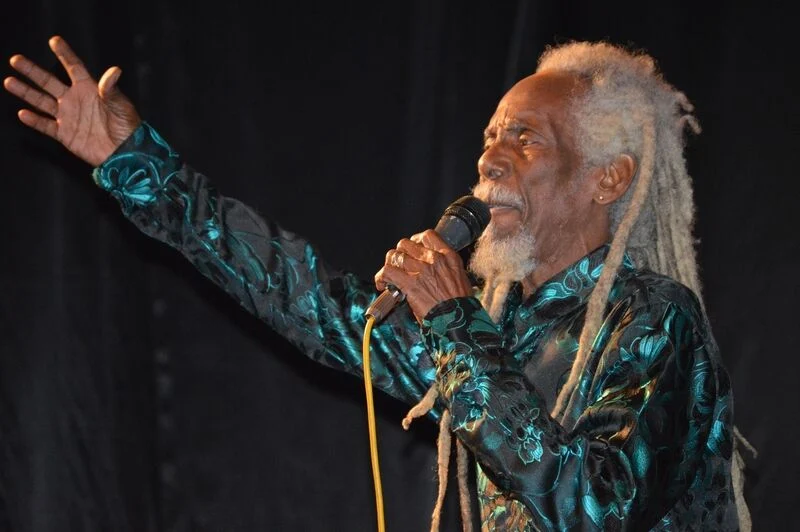
The global calypso community is mourning the loss of one of its most iconic voices: Anthony Emrold Phillip, professionally known as Brother Valentino, has passed away at the age of 85. The Trinbago Unified Calypsonians’ Organisation (TUCO), the governing body for calypso artists across Trinidad and Tobago, officially confirmed the veteran musician’s death, though no specific details regarding the cause or circumstances of his passing have been made public to date.
Born Anthony Emrold Phillip on July 7, 1941, in Grenada, Brother Valentino spent the first five years of his life in Cherry Hill before his family relocated to Trinidad. The young boy arrived in his new home on Carnival Monday, a moment that would foreshadow his lifelong connection to the iconic Caribbean cultural celebration. He grew up in the St. James district on Long Circular Road, and began his education at Mucurapo Boys’ RC Primary School, before advancing to a private secondary institution. Unfortunately, the unexpected death of his father and subsequent financial strain forced Phillip to drop out of school before completing his studies.
A naturally skilled craftsman from a young age, Phillip worked a series of odd jobs across multiple trades to support himself before committing fully to a career in calypso music. Over his early working years, he trained and worked as a printer, electrician, mechanic, and even a highly skilled tailor, honing discipline and a keen eye for detail that would later inform his songwriting. He launched his performance career under the stage name Robin, making his early debut at the Big Bamboo calypso tent located on Park Street in Port of Spain. When he joined the iconic Kitchener’s Revue, he was forced to abandon his first stage name after discovering another working calypsonian already performed under the name Robin. It was legendary bandleader Kitchener who gave him the new stage name Lord Valentino. It was not until the 1970s Black Power movement that Phillip rebranded once more, adopting the name Brother Valentino that he would be known by for the rest of his career. Decades later, fellow calypso legend Black Stalin bestowed on him the beloved title of “the People’s Calypsonian”, a moniker that stuck with him throughout his later career.
Brother Valentino earned widespread acclaim for his unflinching, straight-talking lyrical style, never shying away from calling out social injustices or centering the lived experiences of working-class Caribbean communities. Across a decades-long career, he wrote and recorded dozens of enduring calypso classics, including fan and critical favorites such as 1972’s *Life is a Stage*, 1974’s *Barking Dogs*, 1975’s *Dis Place Nice*, 1979’s *Stay Up Zimbabwe*, 1982’s *Birds That Fly High*, 1986’s *Time And Space*, 1992’s *Calypso In Trouble*, 1996’s *Time To Love Again*, 2001’s *The Radio*, and 2004’s *Where Kaiso Went*.
In an official statement released earlier this week, TUCO paid tribute to the late artist, writing, “The calypso fraternity mourns the passing of Brother Valentino, the People’s Calypsonian. His fearless voice and powerful social commentary gave expression to the struggles, hopes and experiences of generations. His contribution to calypso will remain an enduring part of Trinidad and Tobago’s cultural legacy.” The organization extended its deepest condolences to Phillip’s family, loved ones, fellow artists, and the thousands of fans whose lives were touched by his work, closing the statement with: “Rest in peace, Brother Valentino.”