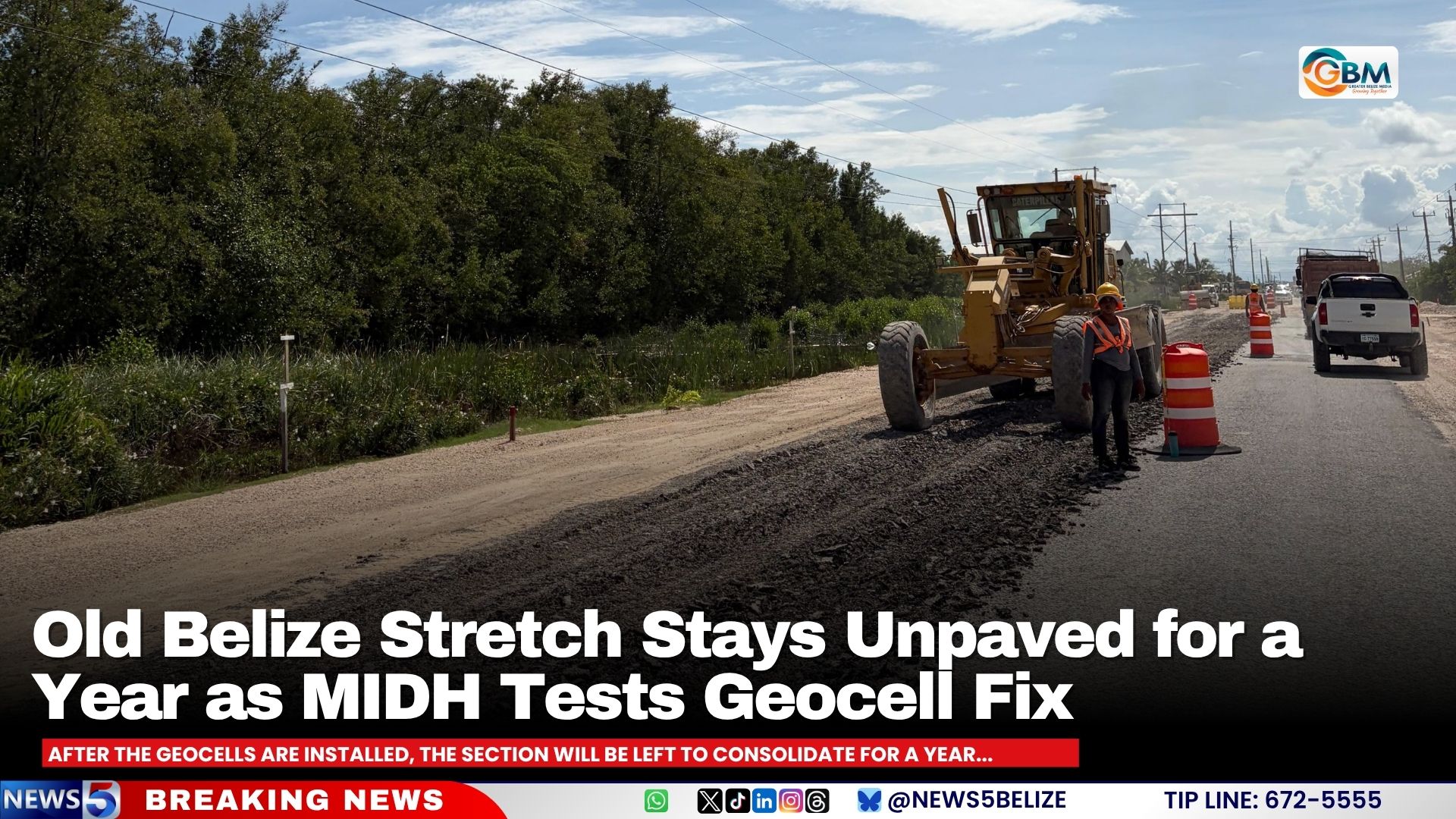
A years-long battle against persistent ground subsidence along a key stretch of Belize’s George Price Highway is entering a new experimental phase, with transportation officials opting to leave a 1.2-kilometer section near Old Belize unpaved for 12 months to test a promising geocell stabilization solution.
The problematic corridor between Burton Canal and the Old Belize community has long been plagued by soil consolidation, a gradual process that causes the underlying ground to sink under the weight of roadway infrastructure, leading to uneven surfaces, costly repeated repairs, and safety risks for passing motorists. Evondale Moody, chief engineer with Belize’s Ministry of Infrastructure Development and Housing (MIDH), explained that the experimental approach targets this long-standing issue at its source.
Motorists traveling the corridor in recent weeks have already noticed large black modular platforms laid across the roadway: these are the geocells at the heart of the trial. The three-dimensional honeycomb-structured cells are filled with compacted aggregate material to reinforce the road’s base layer, distributing the weight of passing traffic more evenly and slowing the destructive consolidation process that has repeatedly damaged the highway.
Unlike traditional full repaving projects that would only temporarily resolve the subsidence issue, MIDH is taking a deliberate, data-driven approach to this test. After installing the geocell system, crews have left the section covered only in gravel, allowing normal vehicle traffic to run over the stabilized base for a full 12 months. This extended settling period will let engineers measure how much consolidation occurs over time, evaluate the performance of the geocell solution, and determine whether it delivers the long-term stability that previous repairs have failed to achieve. Full paving will not be completed until the year-long trial concludes and results are analyzed.
The project also includes a second major upgrade for the area: the replacement of an undersized existing culvert that connects the Old Belize lagoon to the Caribbean Sea with a full new bridge. Moody noted that the current culvert cannot handle adequate water flow, creating flood risk in the area that further contributes to roadway degradation. Construction of the new bridge will require a temporary traffic diversion through the work zone, designed to maintain two-way vehicle access throughout the build process.
This experimental approach reflects Belize’s efforts to test cost-effective, long-lasting engineering solutions for recurring infrastructure problems that have strained maintenance budgets for years, rather than relying on repeated short-term patchwork repairs.