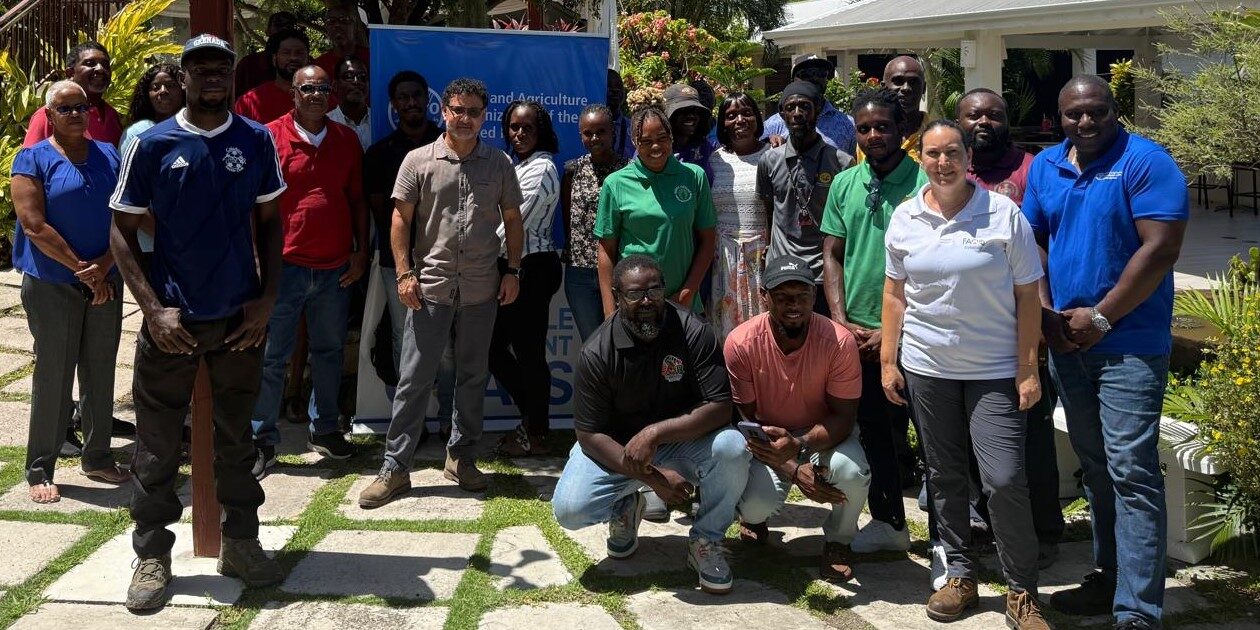
In a collaborative effort to advance sustainable agriculture in the Caribbean, the United Nations Food and Agriculture Organization (FAO) has partnered with Antigua and Barbuda’s Ministry of Agriculture, Lands, Fisheries and the Blue Economy to deliver a hands-on two-day training program focused on precision nutrient and water management for local farmers, extension officers, and agricultural professionals. Held in late September 2026 and bringing together 31 participants (10 women and 21 men), the initiative is backed by two key regional projects: “Sustainable Water Management and Access for Better Production in Antigua and Barbuda” and “Digital Solutions to Improve Horticultural Crop Management in the Caribbean.”
The training program was structured to blend classroom learning, interactive calculation exercises, and on-site field demonstrations to ensure participants gained both theoretical knowledge and practical experience. The first day was dedicated to building a foundational understanding of core agricultural principles, including the role of essential plant nutrients, nutrient uptake and availability in different soil types, crop nutrient requirements across varying growth stages, and common nutrient deficiency symptoms. Participants also explored how strategic irrigation management directly impacts nutrient availability, uptake, and overall crop health. Additional classroom sessions covered critical practical topics such as fertilizer selection, nutrient content verification, solubility and compatibility testing, and the development of customized fertilization plans for both soil-based and soil-less cultivation systems.
A key component of the classroom training was the introduction and hands-on practice with a specialized nutrient management calculation tool. Participants learned to use this tool to convert crop-specific nutrient requirements into exact fertilizer quantity recommendations and tailored application schedules, equipping them to plan and regulate fertilizer use far more effectively than traditional estimation-based methods. Trainees also got an early look at an under-development digital nutrient management application, designed to further streamline data-driven decision-making for precision nutrient management at the individual farm level.
On the second day, participants moved from the classroom to a working eggplant farm at MSB Enterprises in St. Mary’s Parish, where they put their new knowledge into practice on an open-field plot. Following the calculations generated by the nutrient management tool, participants weighed and mixed fertilizer blends according to the specific needs of the eggplant crop. They then inspected the farm’s existing drip-irrigation and fertilizer injection systems before applying the prepared nutrient solutions via fertigation, gaining direct experience in delivering targeted, precise nutrient doses directly to crop root zones.
One of the most significant highlights of the field day was the hands-on use of portable soil scanners, which allowed participants to walk through the entire end-to-end process of precision nutrient management: from on-site soil assessment and real-time nutrient analysis to the development of customized fertilizer recommendations and their final application in the field. The portable scanners deliver rapid, location-specific data on soil nutrient levels and key soil properties, which participants then input into the calculation tool to generate crop-specific requirements and tailored recommendations aligned with the unique conditions of the test plot. From there, participants calculated and measured the exact fertilizer quantities needed, prepared the nutrient solution, and applied it through the existing irrigation system, demonstrating a fully integrated data-driven approach to precision nutrient management.
This integrated method, which combines on-site soil scanning, digital calculation tools, and modern fertigation practices, offers multiple benefits for both farmers and the environment. By enabling precise, crop-specific nutrient management, the approach helps optimize fertilizer use, cut unnecessary input costs, reduce nutrient runoff and waste, and boost overall crop performance, resource-use efficiency, and agricultural productivity. For participating farmers, the skills and tools gained through the training are immediately applicable to farm planning and daily operations.
Ralph Iton Henry, a local Antiguan farmer, shared his positive impression of the training: “I learned so much today. This tool is going to make my job much easier, I can prepare everything in advance and guide my workers on irrigation and fertilization.” Another participating farmer, Sheir Williams, echoed this sentiment, noting: “The training was very informative. Using the spreadsheet will make it easier for me to plan at the farm and understand the expected nutrient requirements before the crop cycle is completed.” Williams also emphasized how the calculation tool adds significant value to long-term farm planning. Beyond benefiting working farmers, the training also built the capacity of local extension personnel to better support farmers in making informed nutrient management decisions.
Victor Wade, a local Extension Officer, explained the broader impact of the capacity building: “This training will help farmers make more informed decisions about fertilizer application, giving crops what they actually need while reducing unnecessary fertilizer use and costs.” Through the combined work of the two supporting projects, FAO and the government of Antigua and Barbuda are working hand-in-hand to support farmers and technical staff in improving water management, nutrient regulation, and overall production practices, while encouraging the adoption of digital tools and field-based technologies that enable more precise, efficient, and informed decision-making at the farm level.
Anne Desrochers, FAO Plant Production and Protection Specialist and Lead Technical Officer for the FVC project, outlined the core goal of the initiative: “Our objective is to give farmers practical tools that help them make better decisions on water and nutrient management. By combining field-based assessments with digital tools, we can support more precise use of inputs, improve efficiency and ultimately strengthen crop productivity.”