A community in Suriname’s remote interior has taken an unusual stand in a heated national debate over Amazon rainforest development, formally petitioning the government to approve two planned large-scale agricultural projects that have already sparked environmental and political pushback.
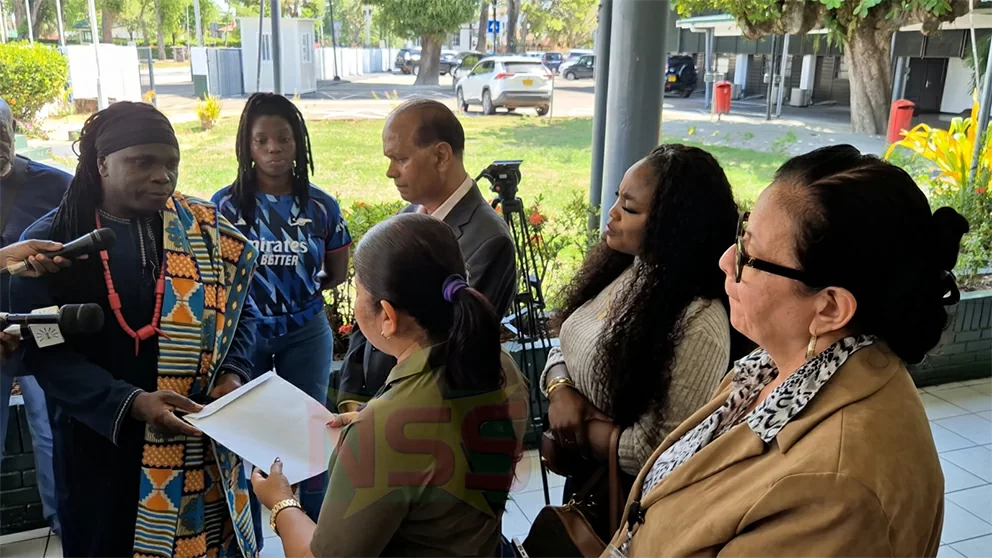
Head Captain Harold Souvenir, alongside local village leaders and residents of Witagron in Sipaliwini District, submitted the September 29, 2026 petition to President Jennifer Simons and the National Assembly (DNA), calling for state support for projects led by Braganza Marketing Group NV and Mennonite farming groups. For decades, the community has been sidelined from national economic growth, residents argue, and this initiative represents the first realistic chance to lift the region out of stagnation.
The projects are slated for the Tibiti and Kabalebo regions along the highway leading to western Suriname, where Mennonite farmers from Belize and Mexico plan to cultivate soy and maize at scale. The Witagron community says its early interactions with Braganza and the farming groups have been overwhelmingly positive. Residents note that binding agreements have already been struck to guarantee local job creation, shared responsibility for infrastructure maintenance, and community investment. Beyond direct employment, backers argue the projects will reverse a decades-long brain drain by giving young Surinamese reason to return to their home communities to work or launch their own small businesses. Braganza has also committed to funding local community projects and covering ongoing infrastructure upkeep, according to the petition.
The document lays out three clear requests for the Surinamese government. First, officials should clear space for the collaboration and large-scale farming operations to move forward in Tibiti and Kabalebo, with all legal requirements — including mandatory environmental impact assessments — fully respected. Second, the government should recognize that Braganza and the Mennonite farmers have already poured millions of dollars into Suriname’s economy and interior development, and back the project’s expected spillover benefits, including training for local farmers in modern agricultural techniques and expanded educational opportunities. Third, the government should partner on infrastructure maintenance plans and provide targeted support for community priorities, particularly expanded energy access for the region.
Souvenir emphasized that the community is determined not to let this development opportunity slip away, referencing earlier large-scale agricultural proposals dating back to 2020 — including a planned commercial orange production project — that never moved past the planning stage despite years of waiting.
The community’s public support comes as the proposals face growing scrutiny from national leaders and environmental advocates. President Simons has already publicly opposed large-scale clearing of old-growth Amazon rainforest for agricultural development, arguing that commercial farming can be expanded on already degraded land without damaging critical rainforest ecosystems. The projects still require multiple key permits, including approvals for logging and farm operations, and the National Environment Authority (NMA) is currently reviewing the projects’ environmental compliance processes. While the petition stresses that all legal and environmental rules must be followed, it does not specify which permits have already been granted and which are still pending, meaning resident support does not guarantee final approval for the initiative.
Last week, the petition was formally received by Deputy Clerk Agatha Ramdass at the National Assembly, in a meeting attended by NDP Parliamentary Leader Rabin Parmessar, NDP MP Jennifer Vreedzaam, and ABOP MP Genevievre Jordan. Parmessar confirmed to petitioners that the proposal will be debated by the full National Assembly, though lawmakers are still waiting on key documentation related to the project before moving forward. The coming months of legislative review will determine whether the government aligns with the Witagron community’s demands, and under what terms the controversial agricultural projects may ultimately move forward.