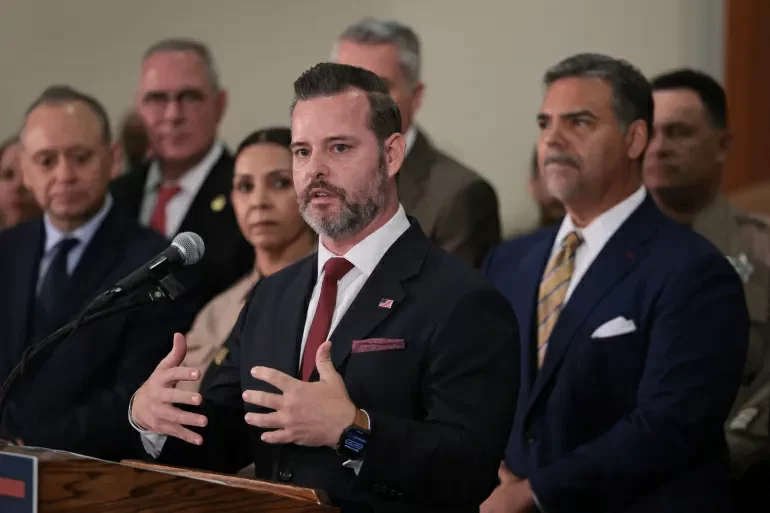
On October 19, Florida Attorney General James Uthmeier announced a new development in a decades-old cross-border diplomatic and legal dispute: the U.S. state of Florida has issued an arrest warrant for 95-year-old former Cuban president Raúl Castro. The warrant charges Castro with conspiracy to commit premeditated murder, linked to the 1996 downing of two civilian aircraft that left four people dead.
The incident at the center of the charges dates back to February 24, 1996, when two planes belonging to Brothers to the Rescue, a Miami-based activist organization that searches for Cuban migrants attempting to flee the island by sea, were shot down by Cuban fighter jets. According to U.S. authorities, the two unarmed aircraft were operating over international waters at the time of the attack, and all four people on board — Carlos Costa, Pablo Morales, Mario de la Peña, and Armando Alejandre Jr. — were killed.
At the time of the 1996 incident, Castro served as Cuba’s Minister of Defense. Prosecutors allege that he played a direct role in the decision-making process that authorized the attack. To date, none of the charges against Castro have been proven in a court of law.
This state-level arrest warrant follows a federal indictment announced by the U.S. Department of Justice in May 2026, which charged Castro and five other individuals with involvement in the downing. The federal charges include conspiracy to murder U.S. citizens, destruction of aircraft, and four counts of murder. U.S. prosecutors also claim that Cuban intelligence agents infiltrated Brothers to the Rescue and shared detailed flight information with Cuban government officials ahead of the attack.
The Cuban government has long defended its 1996 action, arguing that prior flights by Brothers to the Rescue had repeatedly violated Cuban airspace despite repeated official warnings. The U.S. maintains that the two downed planes were in international waters and were attacked without any prior warning.
Despite the formal issuance of the arrest warrant, practical enforcement remains highly unlikely. Castro currently resides in Cuba, and there is no clear path for U.S. authorities to take him into custody to stand trial. Uthmeier acknowledged that the warrant could still have tangible impacts, noting that it may restrict any potential international travel Castro might attempt. For the families of the four victims, who have waited nearly 30 years for some form of legal accountability, the warrant marks a long-awaited milestone in their quest for justice. Federal prosecutors have confirmed they will coordinate with Florida state officials to pursue prosecution at both the state and federal levels.
The latest legal action against Castro is part of a broader campaign of intensified pressure on Cuba by the administration of U.S. President Donald Trump. In recent months, the White House has tightened long-standing economic sanctions on the island and further strained Cuba’s energy sector by imposing new restrictions on oil shipments.
Cuba has been grappling with severe systemic economic challenges for years, including widespread fuel shortages and recurring widespread power outages. The latest U.S. measures have only exacerbated tensions between the two nations, which have been strained for more than 60 years.
Raúl Castro succeeded his older brother Fidel Castro as Cuban president in 2008, holding the office until he stepped down in 2018. He retired from his post as head of the Cuban Communist Party in 2021, but he still remains a highly influential figure within Cuba’s ruling political structure. Analysts view the new charges and arrest warrant as a further escalation in the decades-long adversarial relationship between Washington and Havana.