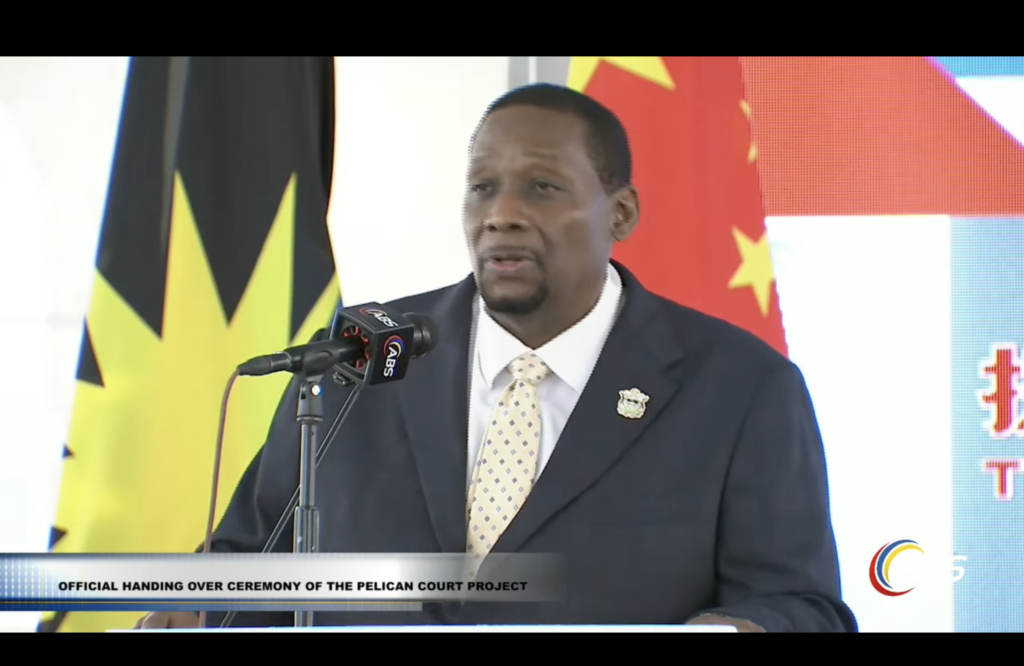
On Thursday, Ambassador Clarence Pilgrim, chairman of the long-delayed Booby Alley redevelopment initiative, made a key announcement: the national government will issue formal certificates of commendation to every individual and stakeholder group that contributed to delivering the transformative 150-unit Pelican Court housing development. The announcement came during an official ceremony marking the final handover of the new residential complex, located in St. John’s City West, Antigua and Barbuda, which replaces the long-standing informal Booby Alley settlement. The project, backed by an approximate EC$50 million grant from the Chinese government, took years of coordinated planning, community relocation, and on-site construction to reach completion. In his address to attendees at the handover, Pilgrim emphasized that the public commendations are intended to honor the hard work and dedication of every party that turned the multi-year legacy project from a blueprint into a tangible community asset.
Pilgrim went out of his way to highlight the contributions of frontline and behind-the-scenes workers across every stage of development. From civil engineers, land surveyors, and primary contractors to utility technicians, administrative support teams, on-site construction crews, heavy machinery operators, and delivery truck drivers, every role was critical to keeping the project on track amid challenges, he noted. Beyond construction staff, he extended gratitude to the public officers who managed the complex process of relocating former Booby Alley residents, local accommodation providers that opened their doors to temporarily displaced households, and the residents themselves who adapted to the upheaval of transitional living arrangements.
The redevelopment required unprecedented cross-agency collaboration across multiple branches of the Antigua and Barbuda government, and Pilgrim formally recognized the participation of every involved public institution: the Ministry of Works, the Ministry of Legal Affairs, the Development Control Authority, the Land Registry, and the Antigua Public Utilities Authority, among other supporting bodies. He also offered special recognition to the core committee members that have worked alongside him since the project’s launch in 2018, naming Joy Dublin, Colin Edwards, Anthony Richardson, Kim Hodge, and Nigel Francis specifically. Additional praise went to Misha Bryan for her outstanding coordination work, as well as all past and present members of the project team that contributed their time and expertise over the years.
Pilgrim openly acknowledged the myriad hurdles that tested the team’s patience and persistence over the project’s multi-year timeline. Significant community resistance during the relocation phase and widespread operational disruptions triggered by the global COVID-19 pandemic created unforeseen delays and challenges. He recalled multiple incidents where project committee members and frontline workers faced direct harassment, including verbal abuse and even having stones and bottles thrown at them. Despite these hostile encounters, Pilgrim noted that sustained collaboration and unwavering commitment to the project’s goals allowed work to continue moving forward steadily.
In a somber moment during the address, the project chairman paid tribute to community members and project team members who contributed to the initiative but did not live to see the completed development. Among those honored was Corey “Father Bear” Wilkins, a beloved member of the project team.
Pilgrim repeatedly stressed that ongoing participation from incoming Pelican Court residents was fundamental to the project’s success from its earliest planning phases, and that the long-term welfare of those residents will remain a central priority through the final transition period. “Your patience, your questions, and your participation helped shape this undertaking,” he told resident attendees. Looking ahead to the next chapter of the development, Pilgrim outlined three core requirements to preserve the quality and value of Pelican Court for future generations: establishing clear, structured maintenance protocols, implementing transparent, accountable community management, and fostering a culture of cooperation between new neighbors.