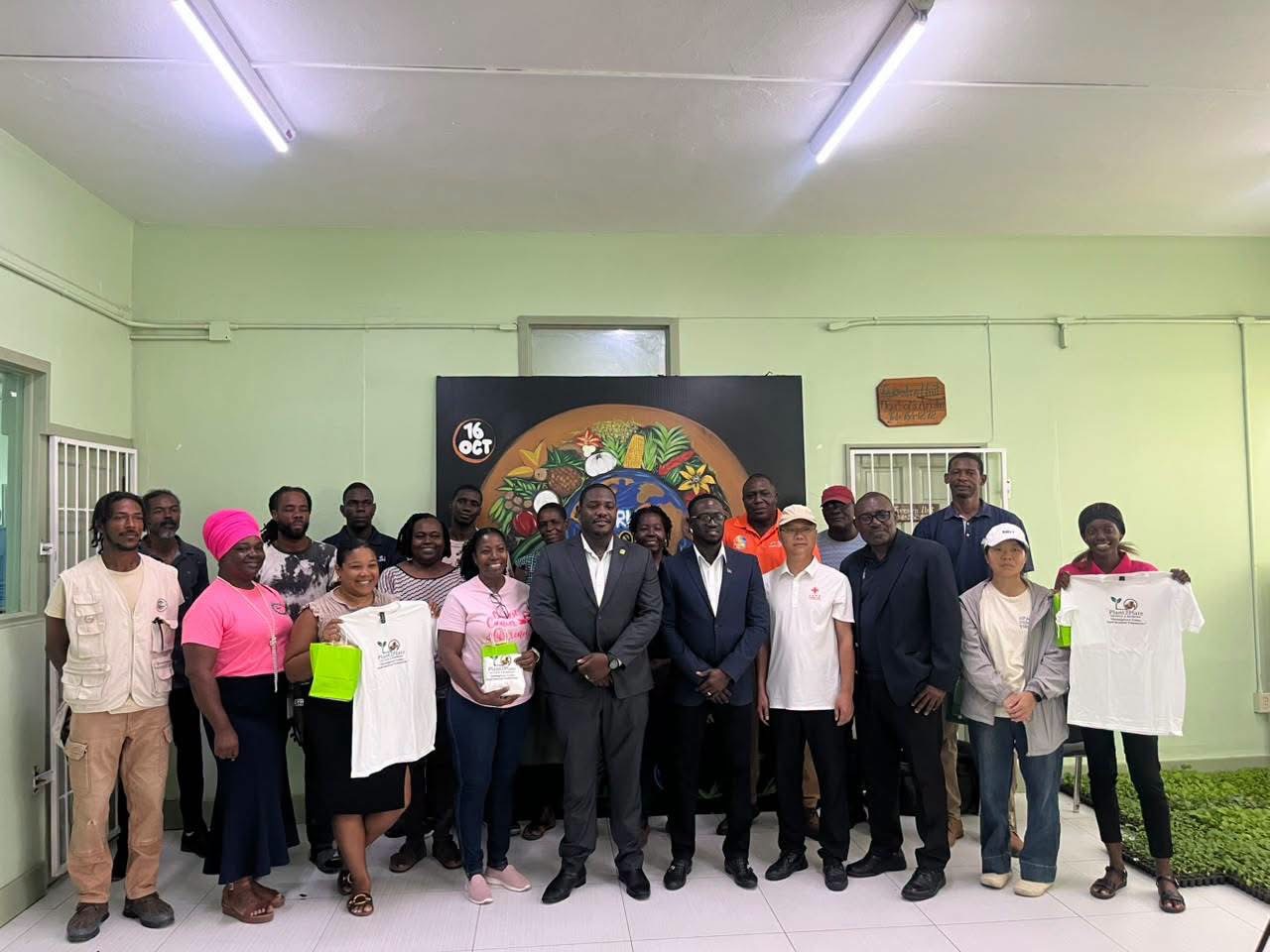
Against a backdrop of ongoing national efforts to shore up domestic food production and reduce reliance on foreign agricultural imports, the Caribbean nation of Antigua and Barbuda has launched a major seedling distribution initiative tied to 2026 World Food Day celebrations, delivering more than 30,000 edible crop seedlings to small-scale commercial farmers and backyard home growers across the country.
Two senior cabinet members — Agriculture Minister Anthony Smith Jr. and Minister Randy Baltimore — publicly spotlighted the community-focused project during a public event held Friday, framing the distribution as a tangible, actionable measure to expand local output of fresh produce and cut the country’s long-standing dependence on food imported from overseas. The event brought together a broad cross-section of stakeholders invested in Antigua and Barbuda’s agricultural future, including working smallholder farmers, education professionals, K-12 and university students, leading agricultural industry partners, and government representatives from multiple relevant agencies.
The range of seedlings delivered covers a wide selection of crop varieties well-suited to small-scale backyard growing: common table vegetables including eggplant, cucumbers, bell peppers, tomatoes, and Chinese cabbage, legumes such as beans, fruiting crops including melons, and a selection of popular culinary herbs and spices. This diversity of offerings ensures participating households can grow a varied selection of fresh produce to support their own nutritional needs.
Designed to serve both small-scale agricultural producers who rely on farming for income and ordinary households seeking to grow food for family consumption, the initiative aligns with long-standing national policy goals to strengthen Antigua and Barbuda’s agricultural sector, grow the volume of food produced domestically, and encourage greater household-level participation in small-scale farming. Speaking at the celebration, the two joint ministers emphasized the project’s cumulative impact, noting that “Every seedling planted is another step towards a more food-secure Antigua and Barbuda.”
Visual records from the event show curated displays of a range of fresh, fully mature locally grown produce, including large watermelons, nutrient-dense root crops, and multiple varieties of seasonal vegetables, alongside participating students and agricultural officials taking part in World Food Day activities. A core secondary goal of the distribution drive is to highlight the critical need to engage young people in the agricultural sector, and build broader public awareness around the economic and food security benefits of supporting local food production.
This national seedling distribution initiative aligns with guidance and programming from the United Nations Food and Agriculture Organization, which has scheduled Antigua and Barbuda’s national distribution drive for the official World Food Day date of October 16. The FAO-endorsed program centers specifically on expanding home gardening and school garden projects across the country, extending the impact of the initiative beyond commercial and hobbyist home growers to educational institutions that can teach younger generations basic farming skills.