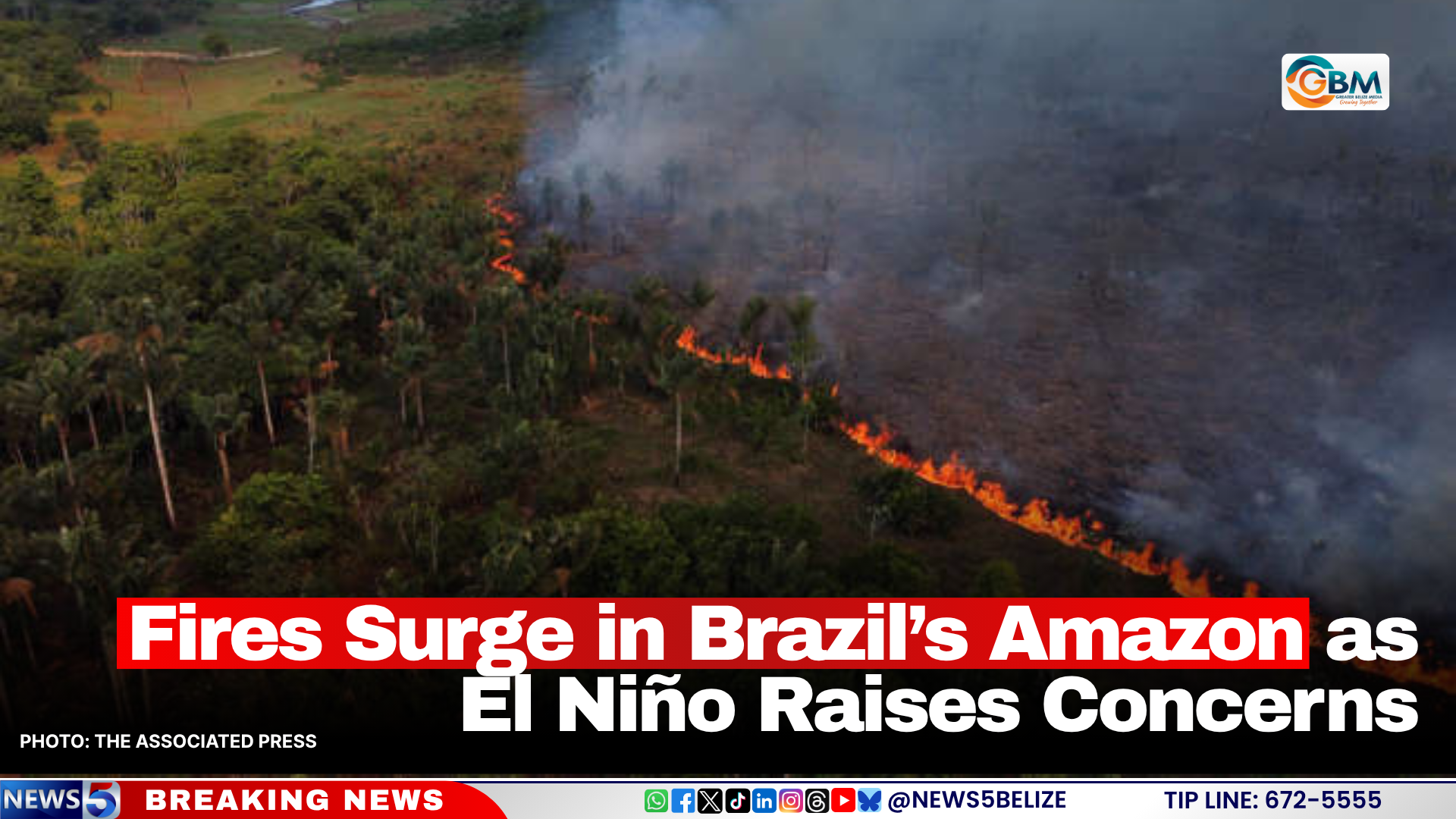
In the first half of October 2026, Brazil’s northern Amazonas state has experienced an explosive surge in wildfire activity, with preliminary official data showing a 253% jump in fire detections compared to the same two-week period in 2025. The unprecedented spike, which saw 1,679 active fire spots recorded between October 1 and 14, has been fueled by a dangerous combination of extreme dry conditions, human ignitions, and the amplifying effects of a projected record-strength El Niño event, creating a rapidly escalating public and ecological crisis across the region.
At least 36 municipalities across Amazonas have now declared formal states of emergency, as thick smoke blanketing populated and rural areas has triggered widespread public health concerns and disrupted nearly all outdoor economic and social activity. On October 14, the state capital Manaus took the extraordinary step of closing all public schools, as air quality indexes plummeted to hazardous levels that put children, elderly residents, and people with preexisting respiratory conditions at severe risk.
Climate researchers and environmental regulators have repeatedly warned that the interplay between a long-term trend of human-caused climate change and the current El Niño event has created near-perfect conditions for catastrophic wildfire activity across the Amazon basin. El Niño patterns consistently shift global weather dynamics to bring hotter, drier conditions to the Brazilian Amazon, parching vegetation and turning even small accidental ignitions into large, hard-to-contain blazes. Current climate forecasts give an 83% probability that this year’s El Niño will rank as the strongest such event recorded since 1950, raising fears that the fire surge will worsen in the coming months.
Brazil’s Environment Minister João Paulo Capobianco confirmed alarming new findings from an October 11 aerial inspection of the region: multiple active fire outbreaks were discovered burning deep inside legally protected preserved forest areas. “We saw fire outbreaks in the middle of preserved forest, countless outbreaks,” Capobianco stated in comments to reporters. The minister noted that the location and pattern of these fires strongly indicate they are deliberately set by actors seeking to clear intact forest land for agricultural or commercial development, rather than being naturally occurring blazes. The Ministry of Environment has launched a formal investigation into the illegal ignitions and pledged to bring violators to justice.
In response to the escalating crisis, Brazil’s federal government, working alongside state civil defence authorities, has already deployed additional firefighting resources to the region, including specialized water-bombing aircraft and ground teams to contain the spreading blazes. Even with this intervention, experts warn that without significant rainfall, the risk of further fire expansion and ecological damage will remain extremely high through the end of the Amazon dry season.