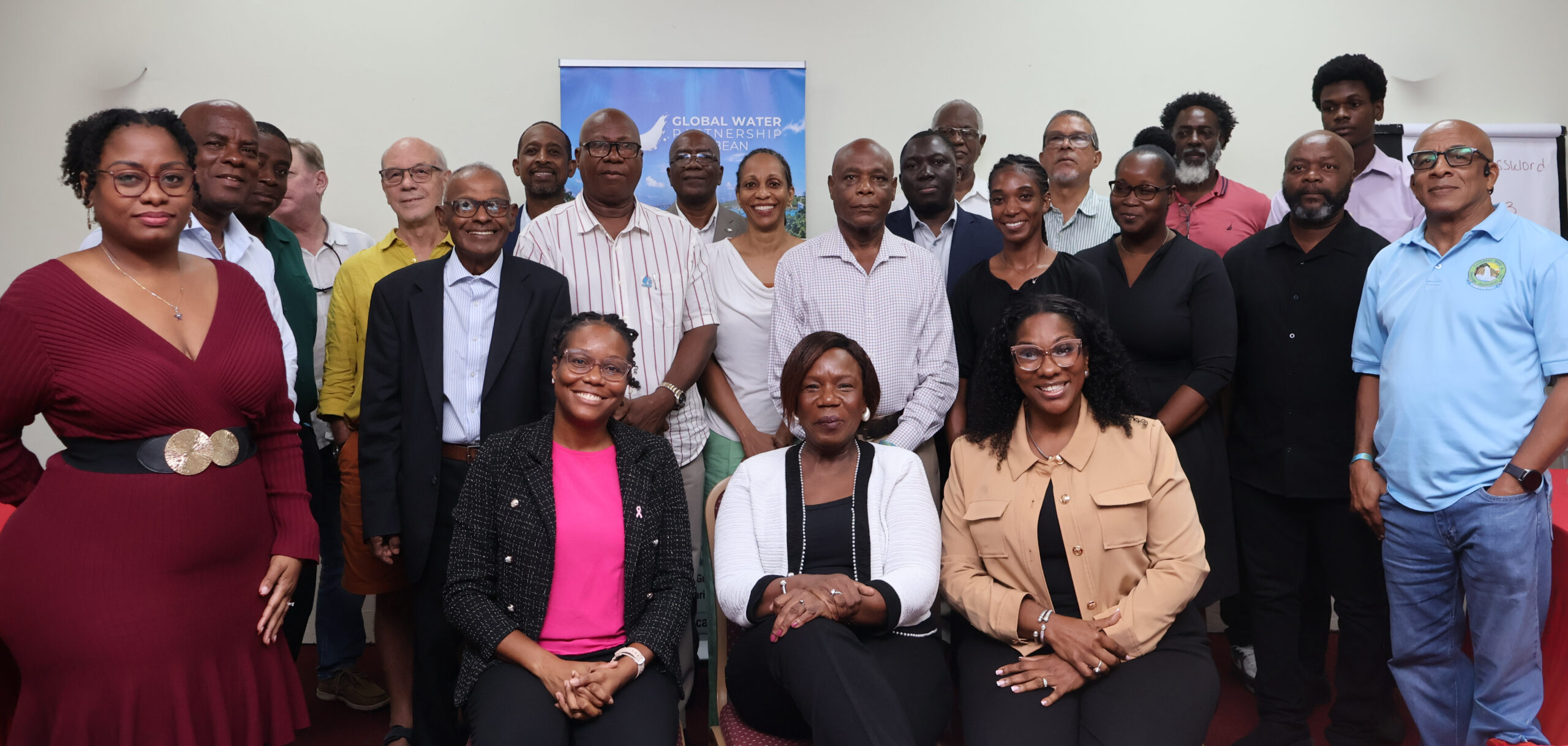
St. GEORGE’S, GRENADA – Following its 2026 Annual General Meeting (AGM) held in Grenada on October 11, the Global Water Partnership-Caribbean (GWP-C) has locked in its renewed commitment to advancing universal water security and climate resilience across the Caribbean region, closing a chapter of institutional progress and opening a new era of strategic action under refreshed leadership.
The hybrid gathering drew water governance experts, regional stakeholders, and partner organizations from across the Caribbean and beyond, offering a structured space to review three years of organizational achievements, reflect on institutional growth since the 2022 AGM, and align on a forward-looking strategic agenda. A central and transformative outcome of the meeting was the election of six new members to GWP-C’s interim steering committee, a key step in the organization’s planned leadership transition. The incoming members – Sharon Archie, Cyprian Gibson, Alphonsus Daniel, Magnus Williams, Zilta Leslie, and Dr. Ronald Roopnarine – will join sitting committee members to shape the partnership’s strategic direction and deepen coordinated regional engagement on water-related challenges.
In her opening address to attendees, outgoing GWP-C Chair Professor Paulette Bynoe underscored the urgent need for unified collective action to advance the organization’s foundational vision of a water-secure Caribbean. Bynoe emphasized that progress will depend on four core priorities: strengthening cross-border water governance, forging more inclusive, impact-driven partnerships, securing long-term institutional sustainability, and integrating water security planning across critical sectors including climate action, agriculture, public health, energy, and broader economic development. Bynoe’s remarks framed the leadership transition as a critical opportunity to accelerate momentum toward the region’s shared water and climate goals.
Outlining the partnership’s track record of progress between 2023 and 2026, GWP-C Regional Coordinator Dr. Roxanne Graham Victor highlighted measurable gains across five core pillars: policy development, governance reform, on-the-ground project implementation, regional collaboration, and institutional strengthening. One of the most prominent achievements was GWP-C’s key contribution to drafting the Caricom Regional Action Framework for Integrated Water Resources Management (IWRM), complemented by region-wide stakeholder consultations and the launch of six country-led IWRM mini action plans designed to strengthen national-level water governance capacity.
Beyond policy work, GWP-C expanded knowledge sharing and skills development across the region through initiatives including the biennial Caribbean Water Science Symposium, targeted regional training programs, and widespread stakeholder engagement campaigns. The partnership also scaled up water and climate education outreach, creating new resources for secondary schools, early-career water professionals, and local community leaders. A landmark advancement in educational access was the migration of five core courses from GWP-C’s popular Water Academy for Youth (WAY) program to the global GWP Water Knowledge Hub, making flexible, self-paced training on IWRM and climate resilience available to a far broader audience across the region.
Dr. Graham Victor also spotlighted tangible, community-focused water security investments delivered across three Caribbean nations over the past three years: In Montserrat, the partnership supported the full rehabilitation of Lawyer’s Spring, restoring daily water production of more than 132,000 gallons to serve 582 local residents. In Barbados, GWP-C collaborated with the Centre for Resource Management and Environmental Studies (CERMES) to deploy a nature-based greywater treatment system at Walker’s Reserve, which has achieved a 46% reduction in phosphate output to protect local water ecosystems. In Grenada, the organization led an irrigation improvement project including dam rehabilitation, installation of a four-mile water feed line, and new water storage infrastructure to support 16 local smallholder farmers.
During the AGM, leadership also highlighted two new strategic partnerships formalized in 2025: a memorandum of understanding with the Caribbean Public Health Agency (CARPHA) to deepen collaboration on the intersection of water security and public health outcomes, and a second agreement with the Partnership Initiative for Sustainable Land Management (PISLM) to advance coordinated sustainable land and water management, drought mitigation, and climate resilience action across the region.
Another major milestone announced at the meeting was GWP-C’s successful reaccreditation for the 2026–2030 period. The reaccreditation, awarded by the Global Water Partnership Organization, validates the strength of GWP-C’s governance structures, financial management practices, and long-term transition planning, while opening new doors for coordinated joint programming with the global partnership network.
As GWP-C enters this new phase with updated governance, a growing portfolio of regional partnerships, and a sharpened focus on delivering on-the-ground impact, the organization remains fully dedicated to supporting Caribbean countries and local communities in building a more water-secure, climate-resilient future for all residents of the region.