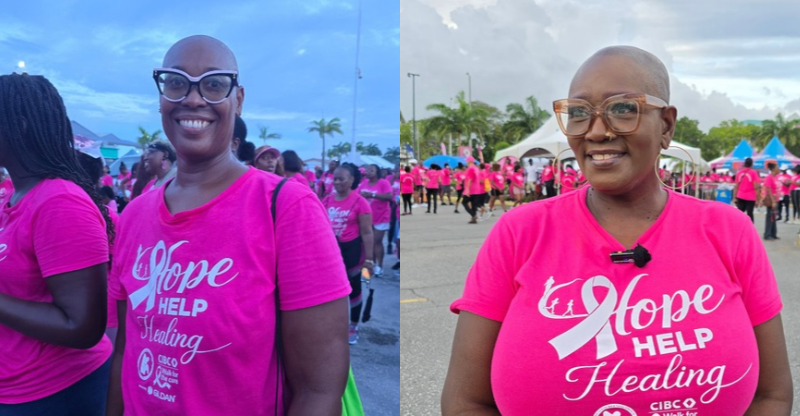
For two women in Barbados, proactive breast cancer screening has transformed life-altering diagnoses into positive treatment outcomes, while shining a light on persistent systemic hurdles including high treatment costs and public health care delays that many local patients face. Forty-nine-year-old Katrina Doughty never expected a routine preventive scan would uncover cancer in 2022. For months after her mother’s death in 2021, Doughty attributed her persistent fatigue and mood shifts to grief and the onset of menopause. It was only when she went in for a scheduled well-woman exam that included both a pap smear and a mammogram that the growth was detected. “I cried for a whole week after I got the results,” Doughty recalled of her diagnosis. A local surgeon initially recommended a full mastectomy of the affected breast with no alternative options, but her family based in New York urged her to pursue a second opinion. When she traveled to New York for retesting, doctors reclassified her cancer as stage 1A, an early-stage diagnosis that allowed for a targeted treatment plan of four rounds of chemotherapy followed by 21 rounds of radiation therapy. Today, Doughty remains on daily maintenance medication, with costs ranging from just $7 to $37 per drug thanks to insurance formulary coverage, and a routine mammogram through the Barbados Cancer Society (BCS) costs approximately $100 for local patients. For Patricia Murray, a veteran science teacher, getting a repeat mammogram was not on her priority list until a push from someone she knew changed her mind. Murray had not undergone screening since 2018, when a former student, working a summer position with the BCS, reached out and encouraged her to book an appointment. That single act of persistence led to an early diagnosis that Murray says likely saved her life. Just two days after her scan, Murray got a call: practitioners had spotted an abnormality that required a biopsy. During the biopsy, a second, previously unseen growth was discovered. “I cried when they told me,” Murray said, adding that she was deeply grateful her mother, who lives abroad, had arranged for a close friend to accompany her to all appointments. Initial samples were tested locally in Barbados, with further confirmatory testing sent to facilities in Miami. The results confirmed an early, non-invasive form of breast cancer. Murray credits her 2018 baseline mammogram with helping clinicians catch the tiny growth that no manual exam could detect. “The abnormality was so small that if they didn’t have the 2018 scan to compare it to, any radiologist could have missed it,” she explained. “I never felt anything, the nurse never felt anything, no one would have picked up on it.” Her surgeon recommended private treatment over the public system, noting that the cancer had displayed aggressive characteristics and public wait times could delay critical care. “I am so grateful I had medical insurance,” Murray said. “I had my surgery done by the first week of November.” Because the cancer was caught at such an early stage, Murray did not need chemotherapy or radiation. She is currently on a 10-year preventive medication plan and follows up with her oncologist every six months. Even with insurance, Murray acknowledges that the burden of a cancer diagnosis remains heavy. “One of the hardest parts is still the cost,” she said. “Even if you go through the public system, there’s still a cost — whether it’s out-of-pocket fees, time lost waiting for care, or the emotional energy it drains from you and your family.” Dr. Shirley Hanoman-Jhagroo, medical coordinator for the BCS Breast Screening Programme, confirms that the challenges Murray and Doughty have encountered are common for breast cancer patients across Barbados. She points to extended surgical wait times in the public sector and prohibitive costs for newer, more effective medications as the most persistent systemic issues. Despite these challenges, Hanoman-Jhagroo notes that treatment protocols have advanced locally in recent years: many patients now receive neoadjuvant chemotherapy before surgery to shrink tumors, enabling less invasive procedures, and full radiation therapy services are now available on the island. Even so, she says, public sector delays and limited access to expensive specialty drugs continue to compromise outcomes for low-income patients. Some newer targeted chemotherapy medications cost upwards of $10,000 per month or per treatment, a price tag that puts them out of reach for many uninsured or underinsured patients, who are often forced to pursue less effective alternative treatments. The BCS has worked to address gaps in local care, recently partnering with the Queen Elizabeth Hospital (QEH) to expand public chemotherapy services. Following a request from the BCS screening program, two existing treatment rooms were fully refurbished and outfitted with seven new chemotherapy treatment chairs. Before the expansion, the QEH could treat just six chemotherapy patients at a time; the upgrade boosts capacity to 13 simultaneous treatments, a change that Hanoman-Jhagroo says will meaningfully reduce wait times and expand access for hundreds of patients seeking care each year. “This expansion will make a real difference in how many patients can receive life-saving treatment every single day,” she added. The stories of both Doughty and Murray underscore a core message pushed by breast health advocates globally and in the Caribbean: routine, proactive screening saves lives by catching cancers at early stages when treatment is far more effective and less invasive. At the same time, their experiences highlight the ongoing work needed to address cost and access barriers that continue to create unequal outcomes for cancer patients across the region.