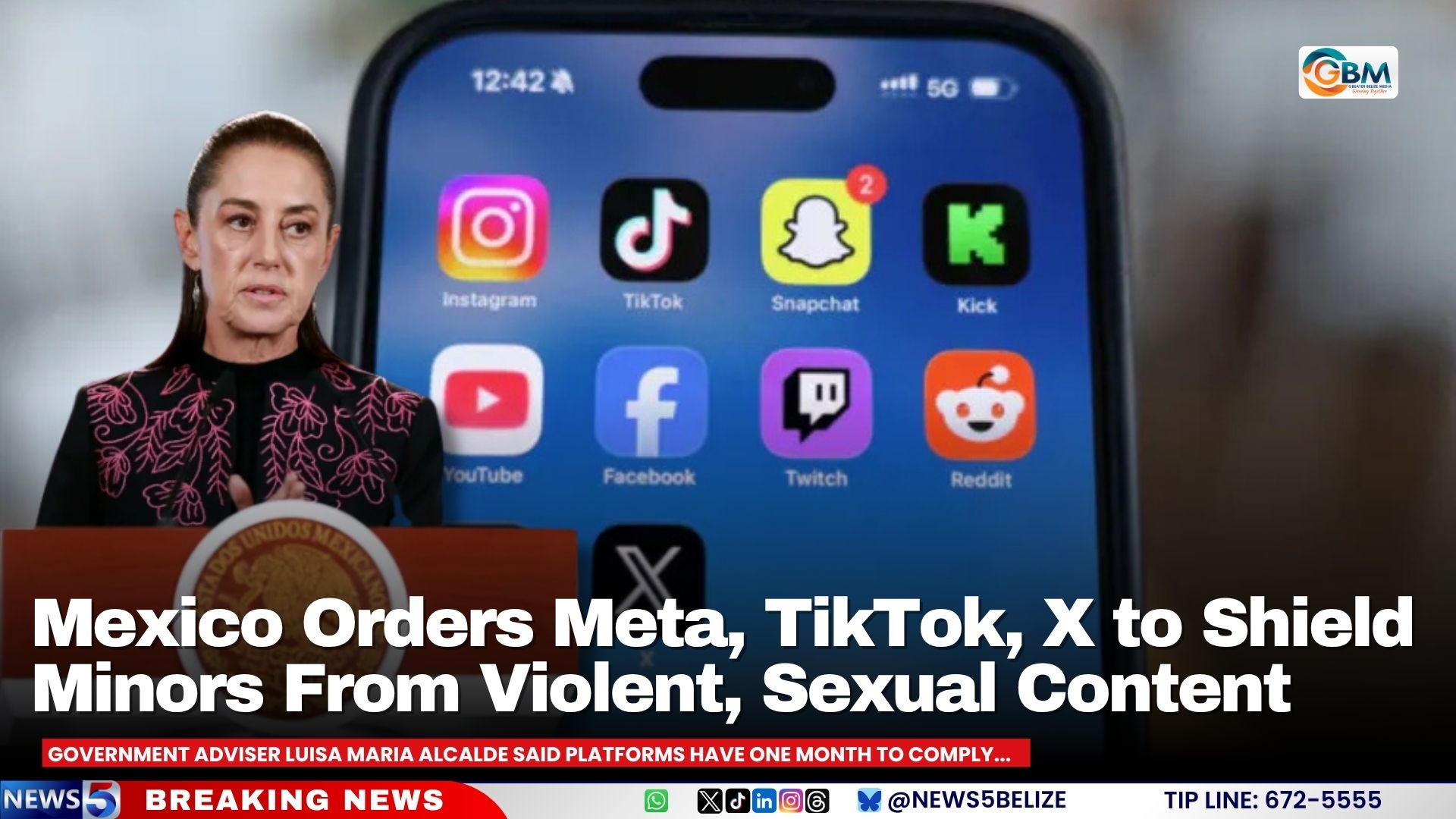
In a landmark move to safeguard young internet users, Mexican President Claudia Sheinbaum has signed an official decree that forces major global digital platforms — including Meta, TikTok, and X — to implement strict protections shielding minors from violent, sexual, and harmful online content, according to reporting from Al Jazeera.
Under the terms of the new executive order, digital platforms are required to build age-appropriate content restrictions into their core design, limiting minor users’ access to material depicting violence, harassment, and sexual abuse. The regulation also mandates that platforms must remove high-risk content from minor accounts without delay. Luisa Maria Alcalde, a senior government advisor, confirmed that platforms have been given a 30-day window to bring their operations into full compliance with the new rules.
President Sheinbaum has made clear that the Mexican government will move forward to codify the order into permanent legislation if companies fail to meet the compliance requirements, adding enforcement penalties for non-compliant entities. “If no progress is made, it would become a law,” Sheinbaum stated, explaining that the core objective of the policy is to force platforms to accept shared responsibility for the content they host and distribute to young users.
“The goal is for digital platforms to take on some of the responsibility and refrain from disseminating, promoting, or spreading content related to this type of information — including criminal acts or violent behaviour,” the president added.
The new decree comes in direct response to a deadly high school attack that shook northern Mexico earlier this month. In early October, two 18-year-olds carried out a shooting at their former high school in the state of Coahuila, leaving one person dead and three others injured. Authorities have not publicly confirmed a direct link between the attack and harmful online content, but the incident accelerated the government’s push for stricter online child protection regulations.
Mexican officials confirmed they have already held preliminary talks on the new rules with representatives from 7 major technology companies: Meta, Microsoft, Apple, TikTok, Google, X, and Huawei. As of October 14, none of the companies had issued a public response to requests for comment from Reuters.
Mexico’s regulatory action is part of a growing global trend of governments tightening online protections for minors. In recent years, European and Australian governments have rolled out stricter oversight regimes for digital platforms, while multiple U.S. states have advanced their own child safety legislation. Brazil has also introduced new rules to strengthen online protections for young people. As Reuters notes, this global wave of regulation has sparked ongoing debate over how to balance the critical goal of protecting minors with the equally important commitments to upholding personal privacy and freedom of expression online.