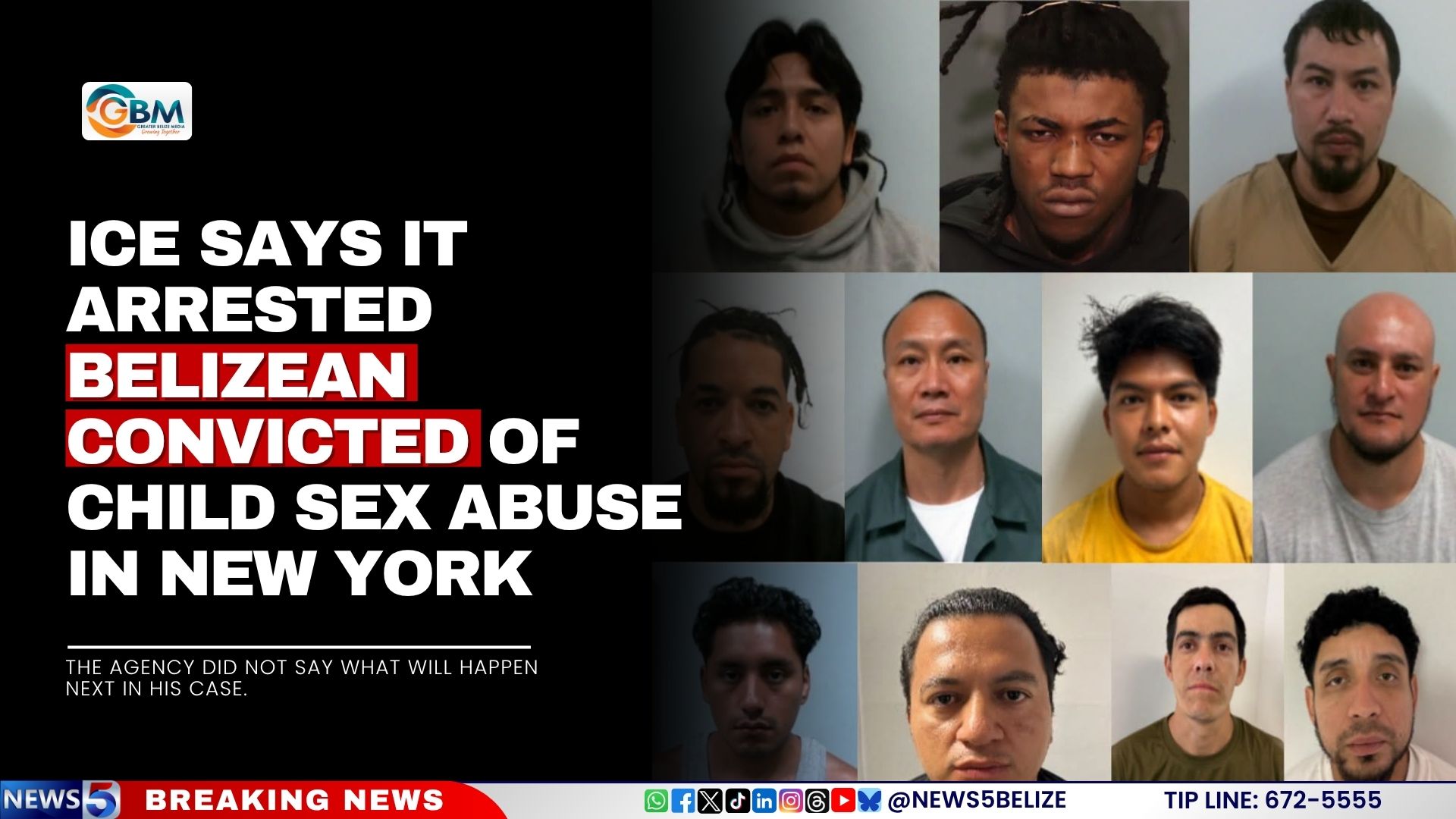
In a recent public announcement made October 14, 2026, U.S. Immigration and Customs Enforcement (ICE) has confirmed the arrest of a Belizean national with a prior conviction for child sexual abuse involving a victim under 11 years old, who was residing in the United States illegally.
The agency identified the arrested man as Angel Agusto De Leon. Via an official post on its public Facebook page, ICE confirmed that De Leon had no legal authorization to be present in the country. Court records cited by ICE show De Leon was previously convicted on two separate charges: “acting in a manner that injures a child less than 17” and first-degree sexual abuse, defined as sexual contact with an individual younger than 11 years old.
Notably, ICE has declined to release key procedural and background details about the case: the agency has not confirmed the exact date or location of the arrest within New York state, De Leon’s current age, the timing of his prior conviction, or the length of the sentence he served for the child abuse offenses. It also has not outlined next steps for his immigration or criminal case, leaving many basic questions unanswered.
De Leon was not taken into custody as part of an isolated operation. He is one of 11 people arrested across New York in this specific enforcement action, all labeled by ICE as “criminal illegal aliens.” The group includes nationals from seven countries beyond Belize: Ecuador, Honduras, Guatemala, Venezuela, China, and El Salvador. ICE reports that all 11 individuals either have prior criminal convictions or pending criminal charges, covering offenses ranging from kidnapping and sexual violence to assault and weapons violations.
The enforcement operation has become a flashpoint in the ongoing national and local debate over U.S. immigration enforcement and sanctuary city policies. ICE explicitly framed the arrests as a direct rebuke of New York City Mayor Zohran Mamdani and other so-called “sanctuary politicians,” who the agency argues prioritize releasing individuals it classifies as dangerous criminals back into public communities instead of cooperating with federal immigration authorities.