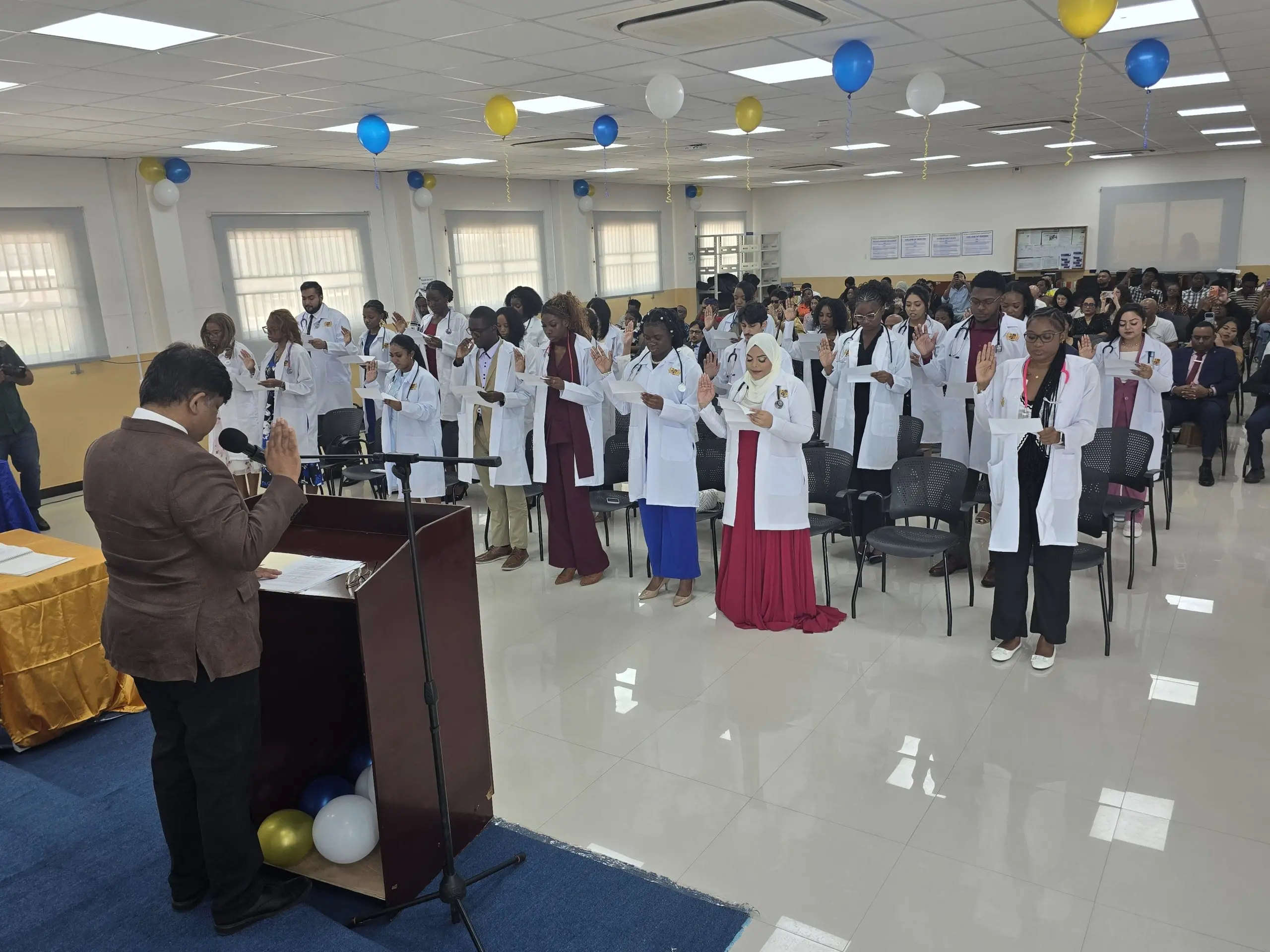
In a landmark move to modernize medical education, Guyana-based Texila American University (TAU) has announced the integration of cutting-edge artificial intelligence technology and a new simulator mannequin laboratory into its doctor training program, TAU Dean Dr. Dheeraj Bansal confirmed Friday during the institution’s annual white coat ceremony for incoming medical students.
The white coat ceremony marks the official beginning of a new cohort’s journey toward becoming licensed physicians, welcoming students drawn from a diverse geographic pool that includes Guyana, across Africa, the Caribbean region, India, and North America. Beyond the traditional in-person classroom instruction that forms the core of medical training, Dr. Bansal outlined that the new program will give students unprecedented access to an innovative AI-powered cyber patient portal designed to build clinical reasoning skills before students work with real patients.
Unlike static training modules, this AI platform lets students practice patient intake by asking questions about medical history, symptoms, and care concerns. The AI-powered virtual patient responds naturally to student queries, walking learners through clinical examinations, diagnostic investigations, and result interpretation. Most critically, the system provides real-time personalized feedback: it flags unnecessary tests that students may have incorrectly ordered, highlights critical examinations that learners missed, and guides students toward evidence-based clinical decision-making.
Complementing the AI training tool, TAU has also made a significant investment in a full suite of high-fidelity simulator mannequins. These lifelike training mannequins replicate key human bodily functions, including cardiac activity, pulmonary responses, and ocular functions, allowing students to practice hands-on clinical procedures in a low-risk, controlled environment. The combination of AI-powered virtual training and physical simulation is designed to bridge the gap between textbook learning and real-world clinical practice, giving early-stage medical students more opportunities to build confidence and competence before they rotate through real hospital departments.
Beyond technical and technological upgrades to the curriculum, Dr. Bansal emphasized that TAU’s medical program prioritizes community engagement and compassionate patient care. Incoming students will not only complete classroom and laboratory work during their studies in Guyana, they will also participate in outreach health camps organized in remote, underserved communities across the country, giving learners hands-on experience serving populations with limited access to care.
Addressing the new cohort directly, Dr. Bansal urged students to cultivate core professional values that go beyond technical medical knowledge. He called on future physicians to practice patience, active listening, respect, and professional conduct both on and off campus. Above all, he emphasized the importance of humanitarian values, ethics, and empathy in clinical practice, reminding students that the core mission of medicine is to reduce patient suffering. “Treat all your patients with care, with empathy and do your best to take the suffering away,” he told the incoming class.