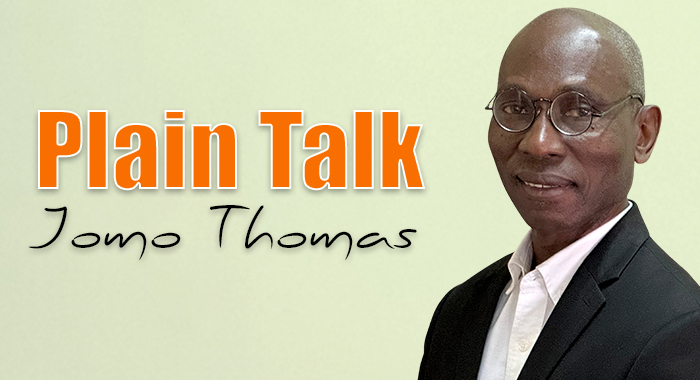
Two contrasting quotes open this analysis of St. Vincent and the Grenadines’ current political and economic crisis: a calypso lyric that prioritizes party power over national good, and an ancient observation that some would rather see a nation collapse than cede control. These opposing mindsets, commentator Jomo Sanga Thomas argues, will shape whether the country navigates its current fiscal challenges or sinks deeper into crisis. When partisan interest is allowed to overshadow the national good, SVG faces a turbulent future — and it falls to citizens who prioritize national prosperity to ensure voters receive full, unvarnished facts before deciding the country’s path.
This context is critical to understanding recent remarks by Security Minister St. Clair Leacock, who openly acknowledged the country is “broke” and urged citizens to prepare for fiscal belt-tightening. Opposition members aligned with the Unity Labour Party (ULP), which was ousted from power after 24 consecutive years of rule in the November 2025 general election, have seized on Leacock’s statement to bolster calls for an early return to government, despite the new National Democratic Party (NDP) administration having only completed 11 months of its constitutionally mandated five-year term.
By its very nature, a parliamentary opposition’s core role is to challenge, propose alternatives, and work toward replacing the sitting government within constitutional bounds. For that reason, the ULP’s vocal outrage and aggressive framing of the fiscal crisis is politically predictable, Thomas argues — but it remains unacceptable, given the ULP’s final decade in office, which was marred by corruption, undemocratic practice, and reckless governance that left the nation’s economy crippled long before the NDP took office in 2026.
The ULP, Thomas emphasizes, created the conditions for the current bankruptcy. It cannot be allowed to posture as the solution to a crisis of its own making.
Critics have framed Leacock’s frank admission of fiscal collapse as a sign of weakness from the new administration, but this perspective misses the mark. Leacock’s statement reveals far more about decades of mismanagement under previous ULP governments than it does about the NDP’s 11 months in office. Minor policy shifts implemented by the new government — including two VAT-free shopping days and the hiring of a small number of Vincentians at senior salary levels — are far too small to have drained the national treasury. Any close observer of SVG’s economy knows it has been on life support for well over a decade, with former ULP Prime Minister Ralph Gonsalves masking the collapse through reckless borrowing and unsustainable spending to create a false facade of economic stability.
The scale of the fiscal deterioration is staggering: in 2020, SVG’s total national debt stood at approximately EC$1.87 billion. By the end of Gonsalves’ final term on December 31, 2025, that figure had swollen to an estimated EC$3.5 billion, a near-doubling of the national debt in just five years.
The former ULP government has attempted to shift blame for this 87% debt increase to three external shocks: the COVID-19 pandemic, the 2021 eruption of the La Soufrière volcano, and damage caused by Hurricane Beryl. While it is true that these events required emergency borrowing, as calypso artist Man Sick notes, SVG has no tangible progress or public infrastructure to show for the more than EC$1.5 billion in new debt accumulated under Gonsalves’ watch.
Multiple instances of unaccountable spending and misallocation of public funds paint a clear picture of the ULP’s priorities. During his tenure, Gonsalves openly boasted that his administration borrowed millions from the International Monetary Fund only to distribute the funds directly to political supporters. In 2024, East Kingstown Member of Parliament Fitz Bramble revealed that the Taiwanese government offered Gonsalves US$126 million earmarked for construction of a new national hospital, with no formal oversight requirements attached to the funding.
A Caribbean Development Bank (CDB) analysis found that a US$20 million loan would have been sufficient to rehabilitate SVG’s existing main port to meet the country’s needs for decades. Gonsalves nonetheless rejected this cost-effective option, moving forward with a new port construction project that carried a US$250 million price tag. Other examples of misspending include more than EC$12 million in National Lottery funds wasted on the failed Peniston casino development, and EC$7.6 million in pre-election handouts ordered by senior ULP officials between June and October 2025, distributed in a last-ditch attempt to secure a sixth consecutive term in office.
Gonsalves reallocated an initial US$100 million loan from the World Bank and OPEC Fund, which had been specifically designated for hospital construction, to Hurricane Beryl relief — a choice that reflected his overriding priority of holding onto political power, rather than advancing long-term national development. Today, SVG owes more than EC$1 billion to Taiwan, a direct result of Gonsalves’ pattern of unaccountable borrowing for short-term political gain.
This long record of mismanagement puts Leacock’s recent “broke” admission in proper context. It also echoes a warning Gonsalves himself gave during the COVID-19 pandemic, when he acknowledged the country could soon be unable to meet monthly salary payments for public sector workers. Ultimately, the current bankruptcy is the end result of the Gonsalves administration’s decades of profligate, self-serving policy — a far cry from the promised economic takeoff Gonsalves touted before his party’s landslide defeat in 2025.
For voters, this history is not something to be forgotten.
Turning back to the current NDP administration, Leacock’s candor about the fiscal crisis is a necessary first step, but it is not enough to fix the damage. The NDP campaigned for the right to govern on the promise that Gonsalves had prioritized enriching his family and political allies over national progress, an argument that resonated enough with voters to deliver a decisive election victory in 2025. Beyond that critique, the party also promised it would govern more competently and deliver better outcomes for all Vincentians.
Eleven months into the new term, many voters who supported the NDP harbor quiet doubts about the administration’s progress, though they have not abandoned their support for the party. There remains significant public goodwill toward the new government, even if the widespread enthusiasm of the campaign has cooled. Vincentian voters have a long history of giving elected leaders time to deliver on their promises: former NDP Prime Minister James Mitchell won four consecutive terms between 1984 and 2001, and Gonsalves’ ULP held power for five straight terms before its 2025 defeat.
Thomas argues that it is long past time for Vincentians to abandon the habit of passive acceptance that has allowed ruling politicians to accumulate wealth and comfort while ordinary citizens bear the burden of bad policy. While Prime Minister Dr. Friday and his NDP team deserve time to stabilize the national economy and deliver on their campaign promises, voters must remain actively vigilant and hold their leaders accountable, ensuring elected officials serve the public good rather than their own personal interests.
For the moment, Thomas’ message to the public is clear: don’t panic. Next week, he plans to publish a series of policy proposals outlining steps the NDP administration can take to regain momentum and chart a sustainable path toward long-term national development.
Jomo Sanga Thomas is a lawyer, journalist, social commentator, and former Speaker of the House of Assembly of St. Vincent and the Grenadines. The opinions expressed in this piece are the author’s own and do not necessarily represent the editorial stance of iWitness News.