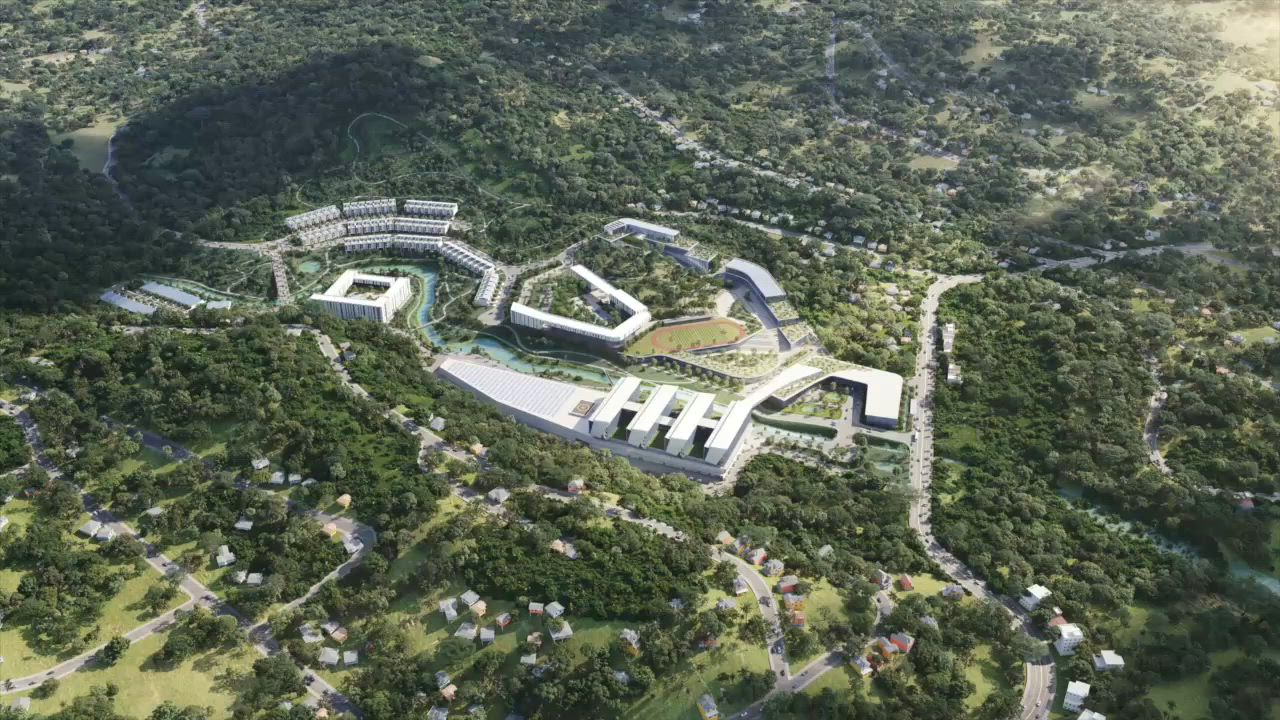
Grenada’s long-awaited 250-bed public hospital project is moving forward with a key site adjustment, after geotechnical engineering assessments delivered clear cost-saving recommendations that altered the development’s layout. Prime Minister Dickon Mitchell confirmed this week that the facility will now be constructed on the eastern portion of the 84-acre Project Polaris site in Calivigny, St George, taking over the former location of the Caribbean Agricultural Research and Development Institute (CARDI)’s Grenada national office.
Previously, planners had considered placing the hospital on the plot’s western edge, which borders a local river. Mitchell explained that engineering evaluations found building on that western parcel would require extensive deep piling work to create a stable foundation, a costly and time-intensive process. By contrast, the eastern site, where the CARDI office has stood since 1982, has naturally solid ground that requires no piling at all. “On that basis alone, the cost of construction has come down significantly,” Mitchell said, noting that officials followed the formal recommendations of technical specialists to finalize the new location.
The climate-resilient hospital is the centerpiece of Project Polaris, a major infrastructure initiative launched by Mitchell’s administration, which purchased the full 84-acre Calivigny site for development back in November 2023. An official groundbreaking ceremony for the project was held on March 27, 2026, with the prime minister confirming that total construction will take roughly three years once full operations get underway. CARDI, a regional research body that serves 12 Caribbean Community (CARICOM) member states, has already completed its temporary relocation from the 6.5-acre plot to new offices in La Sagesse, St David, clearing the way for construction preparations.
To date, the Grenadian government has secured $185 million in financing for the hospital, which carries a total projected cost of $250 million. While funding is largely in place, the selection of a main construction contractor is still ongoing, with a final appointment targeted by early 2027. Mitchell emphasized that the selection process must strictly adhere to the transparency and procurement rules set by the project’s international financing partners, a requirement the government cannot bypass even with allocated funds already available.
“Lenders require assurances that the procurement process is transparent and delivers true value for money,” Mitchell explained. “For example, some of the funders require that bids are advertised publicly for a set minimum period, so we are working through that formal process step by step. We are confident that by the new year, we will have our main contractor in place to begin full construction activities.”
In the meantime, the project team is targeting November 2026 to launch major site earthworks, putting the development on track to meet its overall three-year construction timeline despite the late adjustment to the site plan.