# Cuba Rolls Out Pilot Neighborhood Market Initiative to Ease Cost-of-Living Pressures
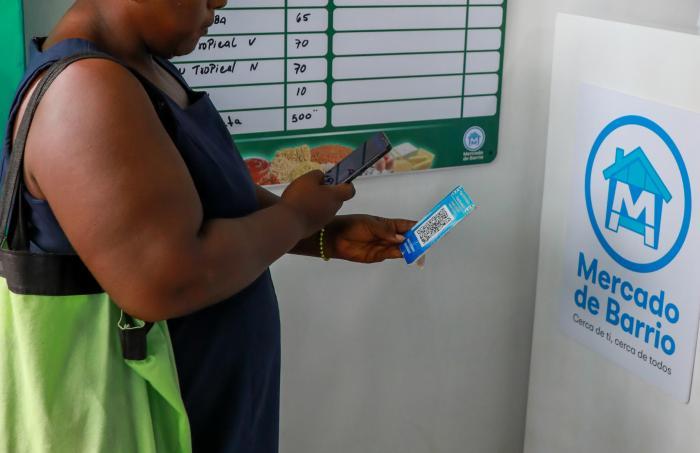
As Cuba advances sweeping economic and social transformations, a new pilot program aimed at reducing household expenses has moved from policy drafting to on-the-ground implementation, with 37 neighborhood markets already up and running across nine of the country’s provinces.
The concept behind the initiative is straightforward yet targeted: repurpose underused or vacant state-owned commercial spaces to bring essential goods closer to residential communities, with targeted incentives designed to cut retail prices by roughly 15 percent compared to other market segments. For Cuban residents grappling with stagnant state salaries and high living costs, even this modest reduction offers a small but tangible reprieve.
One of the earliest converts to the model is Ariel González Vega, who operates the La Sirenita market in Havana’s La Lisa municipality. Since 2024, González has held a lease for the corner lot on 23a Street, where he built a steady customer base after converting the former multi-goods store into a neighborhood shopping stop. On August 13, he joined the pilot program, rebranding his business as an official neighborhood market.
Like other participating merchants, González receives significant tax and cost breaks to keep prices low: he is exempt from the 10 percent wholesale sales tax and 5 percent retail sales tax for priority goods, and pays no rent on his state-owned premises for a two-to-three-year period. In exchange, he sells essential items including rice, meat, cooking oil, and detergent at the mandated discounted rates. His business model has shifted to compensate: while profit margins per item are narrower, higher sales volume keeps his operation viable.
“I face the same challenges as everyone else – sourcing consistent stock, managing cash flow, and dealing with daily power outages that cut into operating hours,” González explained in an interview on-site. “But this is my neighborhood, and this is a service people here really need.”
That commitment extends beyond just selling goods. La Sirenita also supports the local community’s Family Care System dining hall and helps nearly 20 local residents process their pension payments on-site, forging deep ties between the shop and the neighborhood it serves.
For shoppers like 70-year-old Ramón, the discounted market fills a critical gap. While he notes that prices still remain out of reach for many state workers and retirees on fixed incomes, he still chooses La Sirenita for most of his weekly shopping. “Products are cheaper here, and at least I can find what I need and save a few pesos,” he said, securing his purchases to his well-worn bicycle.
This small, local success story is one of dozens currently operating across the country, in provinces ranging from Pinar del Río in the west to Guantánamo in the east. Marpessa Portal de Villiers, Director General of Merchandise Sales at Cuba’s Ministry of Domestic Trade (Mincin), told *Granma* that locations for the new network were selected based on a set of clear criteria, including existing facility condition, population density, and local community needs. Existing commercial spaces – including underused grocery stores, public markets, and butcher shops – were prioritized to leverage already built infrastructure.
Only priority goods – a list that includes staple foods, hygiene products, and household cleaning supplies – qualify for the tax incentives; merchants are allowed to sell additional non-priority items to meet local demand, but those do not receive the same cost breaks. All sales are required to be conducted in Cuban pesos, with electronic payment options mandatory, and participating markets are encouraged to add extra services like delivery and pre-packaged goods to improve the customer experience.
Even with early momentum, program leaders acknowledge that significant challenges remain. Stable, consistent product supply is the most pressing hurdle to long-term success. Mincin officials have noted that early pilot sites have faced issues including incomplete contracts that fail to outline clear resupply rules, locations that lack most of the planned priority products, and poor in-store merchandise organization.
To address supply gaps, the program is planning to draw on multiple sources: domestic Cuban production of staple goods, and new wholesale markets set to launch in multiple provinces in the coming months. The model also allows for non-state economic entities to participate in both supply and operations, either independently or in partnership with other actors. Importantly, all premises remain state property; operators only lease or purchase existing assets based on their needs, and existing employees at selected locations get priority to stay on, either as staff or as the non-state operators of the site.
Because of these unresolved challenges, the Cuban government is not rushing a nationwide rollout. Expansion of the network will proceed gradually, with new locations added only after suitable local spaces are identified, a competitive tender process is completed, and contracts with reliable operators are finalized.
Beyond just lowering prices, the initiative carries an explicit social mandate. Participating markets are required to set aside controlled allocations of key products for vulnerable groups including pregnant people, children, and elderly residents. All outlets are also held to strict regulatory standards covering pricing accuracy, food safety, product origin, and payment transparency, with violations handled under existing commercial penalty frameworks.
In essence, the neighborhood market pilot is designed to test whether repurposing existing infrastructure and incentivizing independent operators can deliver meaningful relief to Cuban households. As officials note, the success of the program will not be measured by how many new locations open, but by the daily experience of the shoppers who use them: whether they can consistently find the goods they need at prices that actually save them money.
For the residents queuing outside La Sireneta every morning at 8 a.m., that success can already be felt in small ways. The larger challenge ahead will be scaling that local success into a sustained national model that delivers on its promise of tangible economic relief for working and retired Cubans across the country.