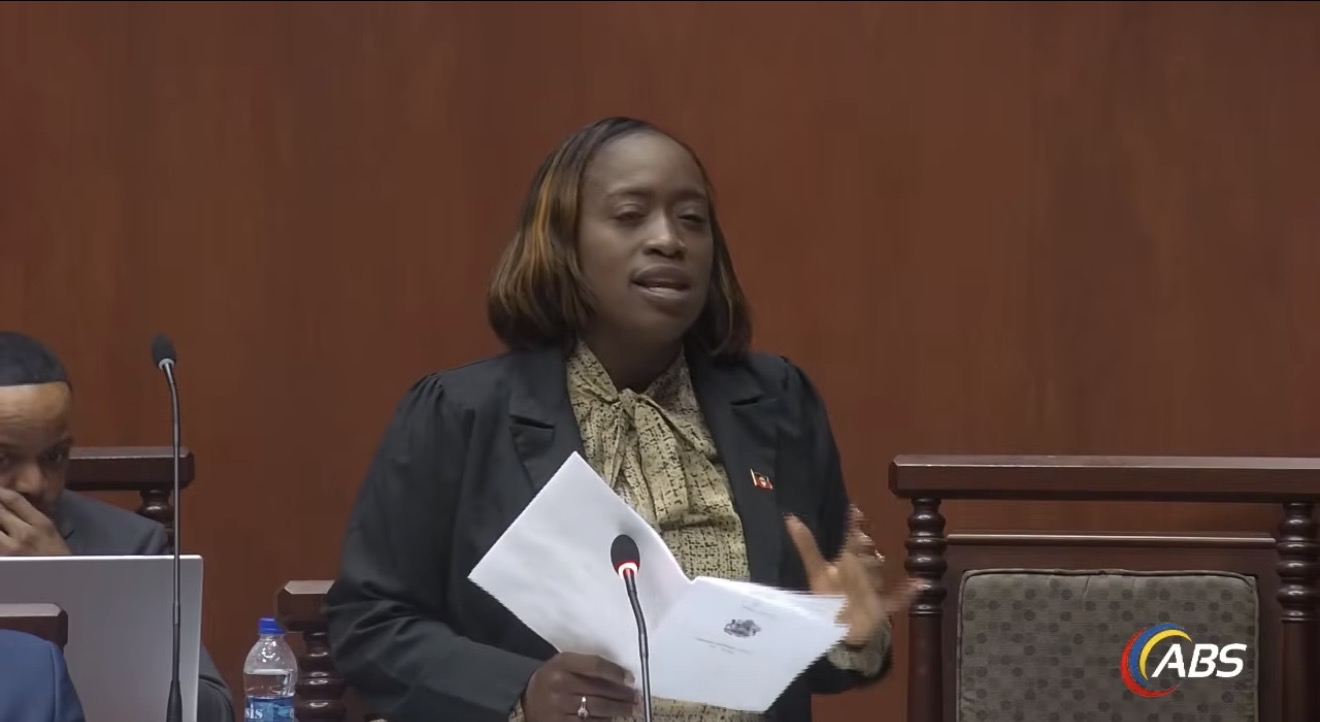
As Antigua and Barbuda grapples with a alarming surge in gun-related violence, a senior government senator has sparked debate by pushing back against claims that economic hardship and youth joblessness are driving young people toward illegal firearm activity. Sen. Shenella Govia, who leads government business in the national Senate, made the controversial argument while formally introducing the Firearms Amendment Bill 2026, landmark legislation that enforces harsher mandatory prison sentences for a range of firearms offenses.
Govia directly pushed back against opposition framing that ties the recent rise in violent crime to the country’s economic conditions, arguing that job opportunities are widely available across Antigua and Barbuda for young people willing to work. “You can’t say that people don’t have work to do in Antigua and Barbuda,” Govia stated during debate on the bill. She pointed to the booming construction sector visible across every region of the country as evidence of widespread economic activity, noting that a growing construction market directly translates to more disposable income for working people. In fact, Govia added, many local contractors and business owners are currently facing critical labor shortages, forcing them to recruit skilled workers from overseas to fill open roles. Instead of a lack of jobs, she argues the root of youth participation in gun crime is a preference for easy, illicit income over stable, honest work. “These people don’t want to work,” she said. “Some of them, they want to stay on the block.”
The senator’s comments came amid growing concern over the sharply rising number of teenagers and young adults implicated in firearm-related offenses across the country. She referenced recent local media reports naming 18- and 19-year-old suspects in violent incidents, and noted that two young men arrested in connection with the fatal shooting of a shopkeeper in Freemans Village were no older than 21. “There’s work out there for everyone who wants to work,” Govia emphasized. “But they don’t want to work hard. They want the quick money so they can buy the shoe.”
To steer young people toward legal opportunity, Govia encouraged youth who do not thrive in traditional academic settings to pursue vocational training at the Harrison Centre, where they can learn in-demand skilled trades including automotive mechanics and welding. She also argued that parents and broader community norms share some responsibility for the rising violence, noting that many parents accept expensive goods and financial support from their unemployed children without questioning the source of that income. She described a pattern where young men return home with high-end designer footwear, branded clothing, and cover household grocery costs, while parents choose not to investigate how they earned the money. “What kind of society are we raising?” she asked.
Govia added that community-level intervention to guide at-risk youth has also broken down in recent years, as growing numbers of community members fear confronting misbehaving young people over the risk of conflict with the youth or their parents. To illustrate how severe gun violence has become in the country, she cited a string of high-profile recent fatal incidents: the shooting death of a 21-year-old pregnant woman, the killing of a shopkeeper during an armed robbery, and a series of attacks on local service stations. “Gone are the days where people are robbing and they take what they want and leave,” she told the chamber. “It’s a gun they put into your head, Madam President, and it’s becoming scary. This is not the Antigua and Barbuda that we know.”
Govia outlined that the national government has already poured significant resources into boosting public security, including deploying more than 200 new public surveillance cameras across high-traffic areas and providing updated equipment to the Antigua and Barbuda Defence Force to strengthen border security controls. The Firearms Amendment Bill, she said, is the next critical step in the government’s whole-of-government response to the violence, declaring that “enough is enough.”
Under the terms of the new legislation, mandatory minimum prison sentences are introduced for multiple firearms offenses. For anyone convicted of illegally carrying a firearm or ammunition in a designated public space, the sentence will range from five to 10 years behind bars. Exemptions are carved out for on-duty law enforcement personnel, including police officers, Defence Force members, ONDCP staff and other authorized officials. The legislation also grants the responsible minister power to grant exemptions to specific individuals or groups of people. Govia concluded that harsher penalties are necessary because the widespread use of firearms has turned routine robberies, personal disputes and public gatherings far deadlier and more dangerous for all residents.