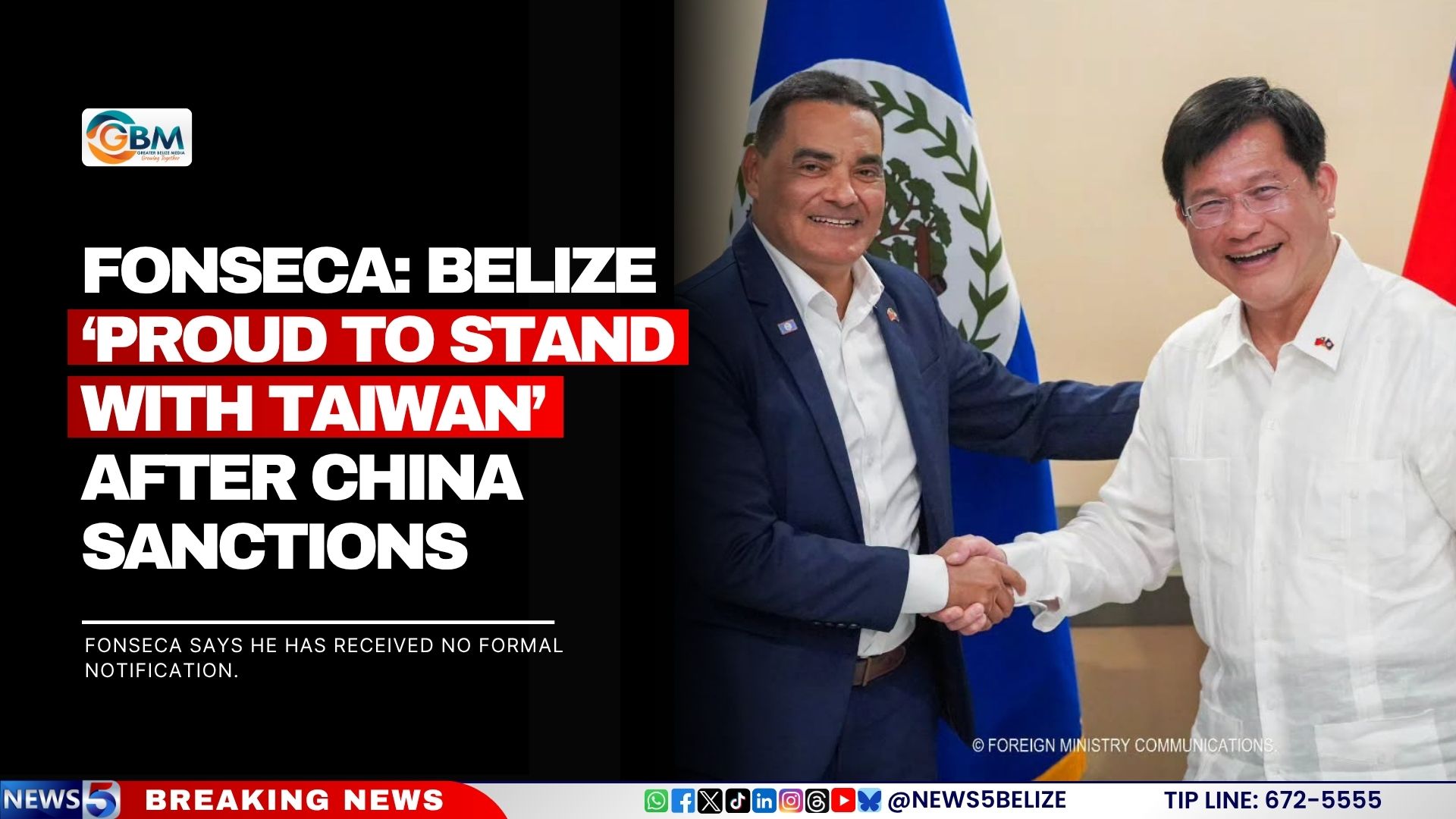
On Monday, October 12, 2026, China announced a new round of targeted sanctions against two senior government officials from Belize and Paraguay, drawing sharp condemnation from Taipei and defiant pushback from the affected politicians. The measures target Belizean Foreign Minister Francis Fonseca and Paraguayan Minister of Information and Communication Technologies Gustavo Villate, framed by Beijing as punishment for their open support of diplomatic ties between their respective nations and Taiwan.
According to China’s Foreign Ministry, the sanctions bar Fonseca and Villate from obtaining entry visas to China’s Hong Kong and Macau special administrative regions. They also prohibit any Chinese entity or individual from entering into commercial transactions, collaborative projects, or any other formal engagement with the two officials. Beijing describes the pair as “willing pawns” of Taiwan that have spread misinformation and interfered in China’s internal affairs.
Chinese Foreign Ministry spokesperson Mao Ning clarified in a press briefing in Beijing that the actions were taken to defend national sovereignty and security. She accused the two officials of spreading false claims about Chinese cyber activities, openly smearing Beijing’s position, and actively pushing for their governments to maintain formal diplomatic recognition of Taiwan. She further urged the 11 other remaining countries that still recognize Taipei to avoid being manipulated by what she called “Taiwan independence separatist forces.”
The People’s Republic of China has long held the position that Taiwan is an inalienable part of its territory, a provincial region with no legal right to conduct formal state-to-state diplomacy. Taiwan’s democratically elected government, by contrast, rejects this claim outright and asserts its status as a sovereign independent state. Currently, only 12 United Nations member states maintain full official diplomatic relations with Taipei, a number that has shrunk steadily in recent years as Beijing has offered economic incentives to encourage countries to switch recognition. Nauru cut ties with Taiwan in 2024, following Honduras’ switch to Beijing in 2023, as part of this ongoing diplomatic pressure campaign.
In his first public response to the announcement, Fonseca confirmed that he had not received any formal notification of the sanctions from Beijing. “Once confirmed, the Foreign Ministry will issue a full response, and I will address the matter directly,” he said in an official statement, doubling down on Belize’s longstanding position. “Belize is proud to stand with Taiwan in support of the principles of self-determination and international law.”
The timing of the announcement comes just one day after the Belizean embassy in Taipei publicly marked the 37th anniversary of diplomatic relations between the two countries on October 11. In a social media post on Facebook, the embassy wrote: “Together, we look forward to a future of growth, opportunity, and lasting friendship.” Fonseca also met with Taiwanese Foreign Minister Lin Chia-lung just one month earlier in Belize to discuss bilateral cooperation.
Paraguay’s Villate echoed Fonseca’s defiance, telling local media that the sanctions came as no surprise given ongoing collaborative projects between Asunción and Taipei, including a joint data center initiative. “This move was to be expected,” he said. “We are very calm. We will continue working on all the projects we have, and we will push this even more strongly.”
Taipei has roundly condemned Beijing’s actions, with Taiwan’s Ministry of Foreign Affairs calling the sanctions a “blatant interference in the sovereignty and foreign policies of other nations.” The ministry emphasized that Beijing has no legal authority to meddle in Taipei’s official diplomatic relationships with sovereign states.
News agency Reuters analysis notes that the sanctions are largely symbolic in practical terms, as senior officials from Taiwan’s diplomatic allies rarely travel to mainland China for official or private visits. Beijing has previously deployed similar targeted sanctions against Western politicians who have expressed public support for democratic Taiwan, establishing a pattern of punitive measures against foreign officials who challenge its claim over the island.