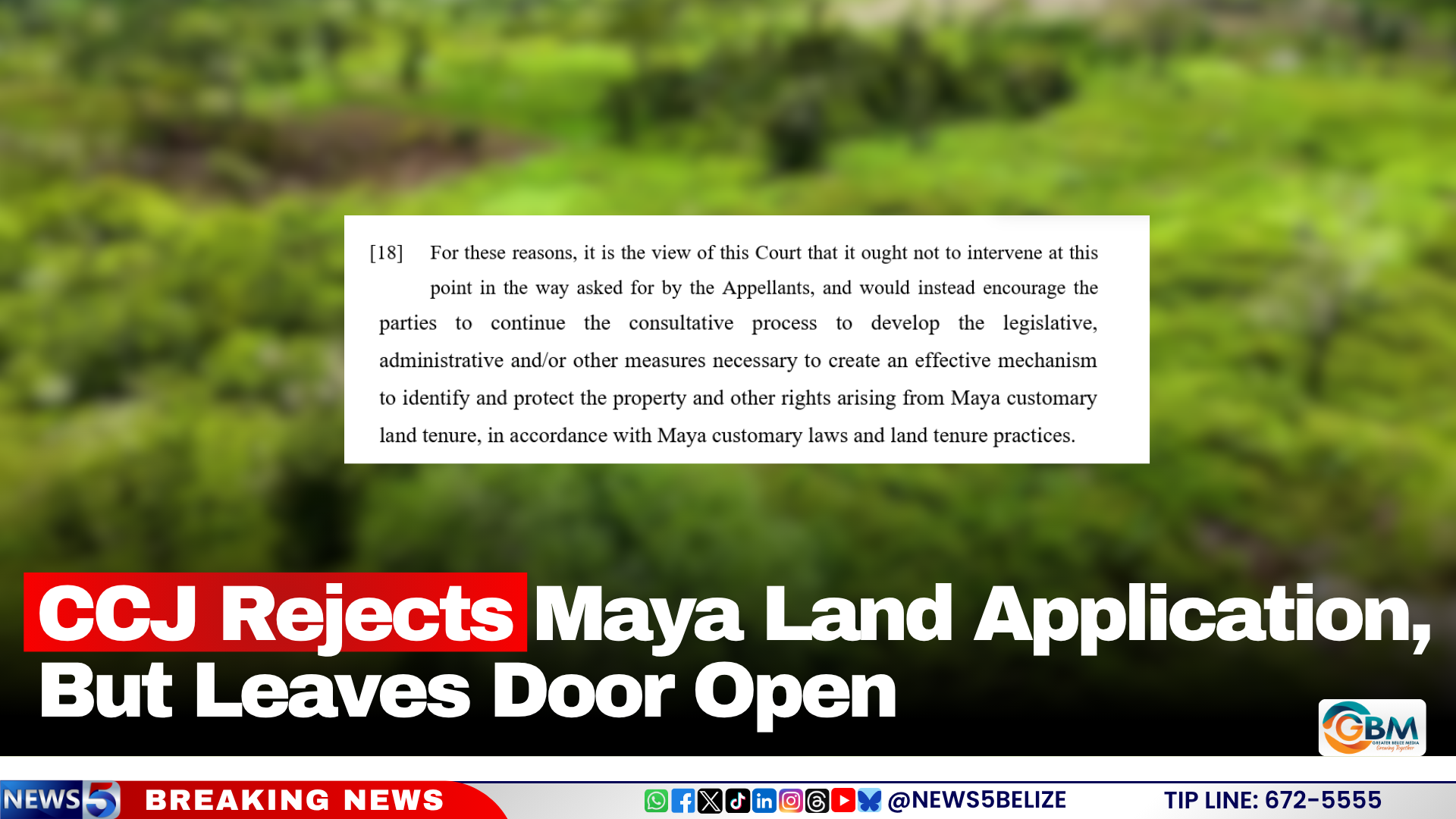
On October 5, 2026, the Caribbean Court of Justice (CCJ) delivered a landmark ruling on a long-running land rights dispute between Maya communities in Belize and the national government, dismissing a pre-emptive legal challenge from indigenous representatives while preserving their right to seek redress at a later stage of the legislative process.
The legal action was brought jointly by the Maya Leaders Alliance, the Toledo Alcaldes Association, and representatives of multiple Maya villages across Belize. The groups asked the CCJ to review six specific provisions of the proposed Maya Customary Land Tenure Bill, arguing that the draft clauses threatened to erode the indigenous land rights formally recognized by the 2015 Consent Order.
That 2015 agreement marked a historic milestone for indigenous rights in the region, legally acknowledging that Maya customary land tenure is a long-standing system in Belize that falls under the protection of the country’s constitutional property rights provisions. It also mandated that the Belizean government develop formal regulatory frameworks to identify and formally protect these shared land rights, with the requirement that all steps in the process include meaningful consultation with Maya stakeholders.
In its final ruling, the CCJ made clear that it lacks the jurisdiction to review draft legislation that has not yet been enacted into law. The court further clarified that the 2015 Consent Order does not grant the judicial body authority to rewrite or expand on the terms of the existing settlement between the Maya communities and the government. Instead, the court directed that all current disagreements over the bill’s content must be resolved through inclusive consultation between the parties and the established legislative process.
In a procedural note, the CCJ dismissed the application without issuing an order requiring the applicants to cover the government’s legal costs. Critically, the ruling also left the door open for future legal action: if the draft bill is ultimately passed in its current form and Maya representatives conclude that it violates their constitutionally protected land rights, they will be eligible to file a separate, full constitutional challenge to the enacted legislation.