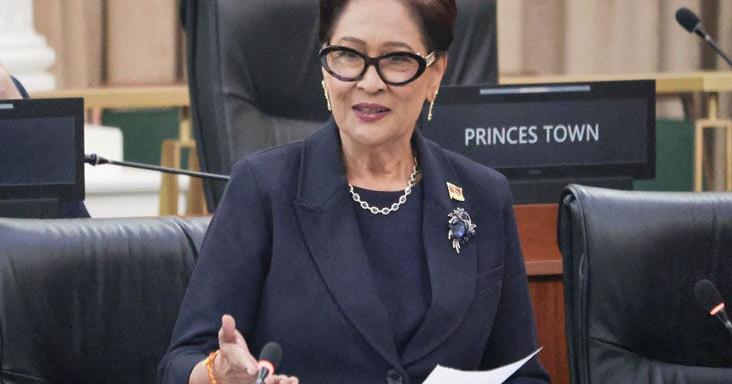
Trinidad is poised to undergo the most significant restructuring of its local government system in decades, as the national government prepares to introduce legislation that will expand the number of municipal corporations from 14 to 17, Prime Minister Kamla Persad-Bissessar has confirmed. The proposed overhaul addresses long-standing inequities in resource allocation and political representation that have emerged as population patterns and regional development have shifted dramatically since the current boundaries were first established.
In an interview with local outlet *Trinidad Express*, Persad-Bissessar emphasized that the decades-old status quo has become untenable. Boundaries for cities, boroughs, and regional corporations have remained largely unadjusted for generations, even as some regions have experienced explosive population growth while others have seen electorate numbers decline or stagnate. This imbalance has left growing communities under-resourced and underrepresented, creating gaps in service delivery that directly impact quality of life for residents.
Under the terms of the draft legislation, three new boroughs will be created: Barataria, St. Augustine, and Couva. The proposal also includes upgrades to the status of two existing municipalities: the current Borough of Chaguanas will be elevated to the City of Chaguanas, while the Sangre Grande Regional Corporation will be reclassified as the Borough of Sangre Grande.
Multiple existing regional corporations will see major boundary adjustments to accommodate these changes. The Tunapuna/Piarco Regional Corporation will be split to make way for the new Borough of St. Augustine, while also ceding additional territory to the Arima Borough Corporation. The remaining territory will be reorganized into the smaller Tunapuna Regional Corporation. The San Juan/Laventille Regional Corporation will also see its territory reduced, with a portion carved out to form the new Borough of Barataria. For the Couva/Tabaquite/Talparo Regional Corporation, the proposed changes would create the independent Borough of Couva, leaving the remaining area as the smaller Tabaquite/Talparo Regional Corporation.
Geographic expansion is also on the table for several established municipalities. In southern Trinidad, both the City of San Fernando and the Borough of Point Fortin will gain additional territory, with Point Fortin absorbing one electoral district currently part of the Borough of Siparia. On the western side of the island, the Diego Martin Borough Corporation will cede territory to expand the geographic and population size of the City of Port of Spain.
Persad-Bissessar noted that discussions around local government reform have stretched on for years, but growing disparities have made action unavoidable. She argued that municipal corporations are the level of government closest to communities and their daily needs, so a functional, equitable structure is critical to delivering responsive services that improve residents’ quality of life.
The Prime Minister also pushed back against opposition claims that her government has unfairly allocated resources to opposition-controlled municipal corporations, asserting that it was the previous People’s National Movement administration that oversaw inequitable distribution. She added that the reforms are designed to eliminate disparities rooted in outdated boundary lines, ensuring all communities receive adequate resources regardless of their location.
Full details of the restructuring plan will be included in the legislation, which will be debated in Parliament in the coming weeks. Passage only requires a simple majority, putting the reform on track to be approved if the government maintains party discipline. The overhaul comes on the heels of the 2023 local government election, which ended in a deadlock: the ruling United National Congress and opposition People’s National Movement each won seven of the 14 existing municipal corporations.